President Prabowo Subianto Convenes Coalition Leaders at Bogor Palace to Discuss Vice Presidential Succession

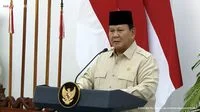
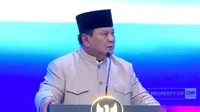
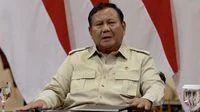
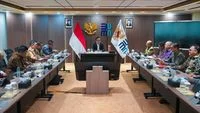
President Prabowo Subianto held a high-level consultative meeting with the chairmen of the political parties comprising the government’s coalition at the Bogor Presidential Palace in West Java on Friday, November 13, 2026. The meeting, which marks a pivotal moment in the current administration’s legislative agenda, focused on the mechanism and selection process for a new Vice President of the Republic of Indonesia. The gathering signals an acceleration in political maneuvering ahead of the upcoming People’s Consultative Assembly (MPR) plenary session, which is scheduled for December 2, 2026.
Prominent figures in attendance included Bahlil Lahadalia, Chairman of the Golkar Party; Agus Harimurti Yudhoyono, Chairman of the Democratic Party; Muhaimin Iskandar, Chairman of the National Awakening Party (PKB); Almuzzammil Yusuf, President of the Prosperous Justice Party (PKS); and Zulkifli Hasan, Chairman of the National Mandate Party (PAN). The presence of these leaders underscores the cohesion of the ruling coalition as it navigates the vacancy in the vice-presidential office.
Contextualizing the Vacancy and Legislative Urgency
The necessity for this meeting stems from the constitutional requirement to maintain stability within the executive branch. In the Indonesian political system, the MPR holds the mandate to finalize the appointment of a Vice President in the event of a vacancy or during specific transitional periods defined by constitutional amendments. The December 2, 2026, session is expected to serve as the official venue for the nomination, confirmation, and subsequent inauguration of the new official.
The urgency expressed by the President during the meeting suggests a desire to minimize political friction and ensure that the government’s transition remains seamless. President Prabowo has reportedly tasked the coalition leaders with finalizing their internal deliberations within a one-week timeframe. This compressed timeline indicates that the President is prioritizing administrative continuity over prolonged political horse-trading, aiming to secure a candidate who aligns with the vision of his current administration.
Statements from Coalition Leaders
Following the meeting, Zulkifli Hasan (Zulhas), the Coordinating Minister and Chairman of PAN, provided insight into the President’s directives. Speaking to the media outside the gates of the Bogor Presidential Palace, Zulhas emphasized that the coalition has been given a clear mandate to prepare for the selection.
"We were instructed to prepare everything within the next week," Zulhas stated. Regarding the specific stance of the National Mandate Party (PAN), he clarified that the party is adopting a pragmatic approach, choosing to defer to President Prabowo’s judgment. "Regarding who will ultimately become the Vice President, that remains entirely his [Prabowo’s] decision. As for PAN, we have no internal candidates putting themselves forward for the position."
Zulhas also addressed concerns regarding the timing of the announcement. He clarified that an immediate public declaration is unlikely, as the President has a packed schedule of state duties. President Prabowo is slated for an official working visit to Palu, Central Sulawesi, to attend the Tanwir Muhammadiyah—a significant national event for one of Indonesia’s largest Islamic organizations—followed by a trip to Manila, Philippines, for the ASEAN Summit.
"Once he returns from these engagements, we will reconvene in one week to discuss the most suitable candidates within our internal circles. Only then will those recommendations be formally submitted to him," Zulhas added.
The Preference for Continuity
A notable point raised by Zulhas during his press briefing was his personal perspective on the ideal profile for the next Vice President. Suggesting a preference for internal alignment, Zulhas noted that a candidate from the Great Indonesia Movement Party (Gerindra), which serves as the President’s own political vehicle, might be the most logical choice to maintain policy consistency.
"If you ask our opinion, perhaps our colleagues from Gerindra would be the most appropriate," he remarked. This sentiment reflects a broader trend in Indonesian coalition politics, where the incumbent President often seeks a deputy who shares deep ideological roots and organizational familiarity to prevent administrative bottlenecks.
Analysis: Implications for Political Stability
The move to solidify the vice-presidential appointment carries significant implications for the stability of the Indonesian government. By involving all major coalition parties in the consultative process, President Prabowo is effectively practicing a "consensus-building" approach. This strategy serves to mitigate potential dissent among coalition members, who might otherwise feel marginalized if a candidate were chosen unilaterally.
From an analytical standpoint, the choice of a Vice President in this specific political climate is not merely about filling a vacant seat; it is about reinforcing the coalition’s longevity. With the 2026 legislative and administrative roadmap already in motion, the new Vice President will likely be expected to play a substantial role in implementing the "Asta Cita" or the eight-point development vision championed by the current administration.
Furthermore, the involvement of parties like PKS and PKB—which historically hold distinct ideological bases—indicates that the coalition is operating on a platform of broad national unity. The challenge for the President will be balancing the ambition of his coalition partners with the need for a competent, non-controversial figure who can command the respect of both the public and the parliament.
The Road to December 2, 2026
The timeline leading up to the December 2, 2026, MPR plenary session is structured as follows:
- Mid-November 2026: Initial consultation with coalition leaders to define criteria for the Vice Presidential nomination.
- Late November 2026: President Prabowo’s official duties in Central Sulawesi and the ASEAN Summit, allowing coalition parties to conduct internal deliberations.
- Late November 2026 (Post-Return): Follow-up meeting at the Palace to finalize the selection of two primary candidates.
- December 2, 2026: Formal MPR Plenary Session, where the chosen candidates will undergo the vetting and election process, culminating in the inauguration of the new Vice President.
This structured approach is designed to ensure that the MPR session is more of a formal confirmation rather than a contested political debate. By pre-vetting the candidates through a consensus mechanism, the administration aims to present a united front to the public and the legislature.
Broader Economic and Global Context
The selection of a Vice President comes at a time when Indonesia is navigating complex global economic headwinds. As the country prepares for the ASEAN Summit, the importance of a fully functioning executive branch cannot be overstated. Investors and international partners are watching the political process closely, as stability in the executive office is a primary metric for market confidence in emerging economies like Indonesia.
The fact that the government is operating on a strict, professional timeline suggests that the administration is eager to move past the transitional phase and refocus entirely on domestic policy, economic growth, and the strengthening of regional diplomatic ties. The President’s upcoming attendance at the ASEAN Summit serves as a reminder that Indonesia’s domestic political affairs are inextricably linked to its standing in the international arena.
Conclusion
As the coalition parties prepare for their next round of discussions, the political landscape in Jakarta remains focused on the Bogor Palace. The decision to select a new Vice President is being handled with a high degree of discipline, reflecting the President’s desire to maintain the momentum of his government. While Zulkifli Hasan has signaled a preference for a Gerindra-affiliated candidate, the final choice rests in the hands of President Prabowo.
The coming week will be critical, as coalition partners weigh the benefits of supporting a Gerindra candidate against their own political interests. Regardless of the outcome, the process reflects a maturing political system in Indonesia, where major legislative decisions are increasingly managed through dialogue and structured consultation, ensuring that the transition of power serves the broader interests of national stability and governance. As December 2 approaches, all eyes will be on the MPR, where the next chapter of the current administration’s leadership will be formally inaugurated.