EmuFive Emulator Successfully Runs PlayStation 5 Games on Jailbroken PlayStation 4 Consoles Through Experimental Linux Environment

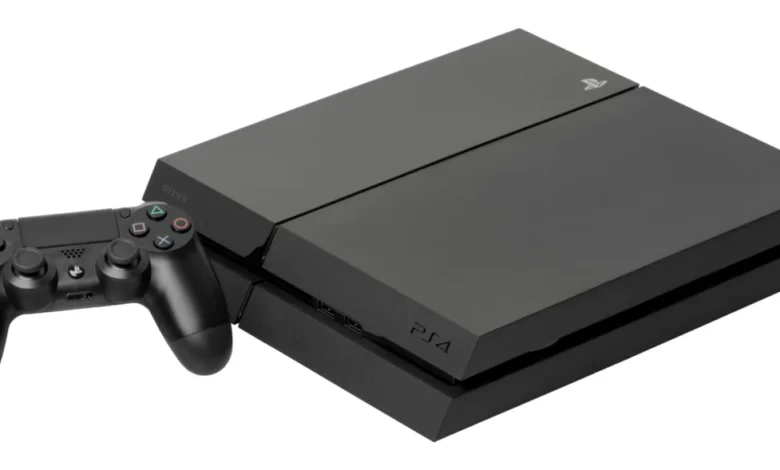
The boundaries of console emulation and cross-generation software compatibility have been pushed further following a breakthrough achievement by independent developer Chokri Hammedi. Hammedi has introduced EmuFive, an experimental emulator designed to run PlayStation 5 software on modified PlayStation 4 hardware. This development marks a significant milestone in homebrew scene history, demonstrating that architectural emulation between disparate console generations is technically achievable, albeit with severe hardware limitations. Initial testing conducted on enhanced PlayStation 4 Pro hardware revealed that certain software titles could successfully boot and achieve performance metrics reaching approximately 40 frames per second.
The demonstration of this software capability highlights the ongoing evolution of reverse-engineering efforts within the video game community. While previous emulation breakthroughs traditionally focused on running older hardware generations on modern, high-performance personal computers, this project reverses the paradigm by attempting to execute current-generation console software on legacy hardware platforms. The implications of this technical feat extend beyond mere novelty, offering researchers and enthusiasts new insights into binary translation, hardware instruction set architectures, and the complexities of cross-platform software execution.
Technical Architecture and Implementation Methods
Operating the EmuFive emulator requires a highly specific and modified software environment rather than standard consumer firmware. The application does not function natively within the default Sony PlayStation 4 operating system. Instead, the project relies on a specialized Linux distribution deployed via a PlayStation 4 Multiboot configuration. Furthermore, successful deployment necessitates a jailbroken console utilizing the GoldHEN homebrew enabler, alongside precise firmware and system configuration parameters. Users must supply their own legally acquired game assets, as the emulator package contains neither proprietary operating system components nor bundled software titles.
The foundational design of EmuFive incorporates technology derived from KytyPS5, an open-source PlayStation 5 emulator originally engineered for personal computer environments. Adapting PC-centric emulation architecture to run on console hardware presented formidable engineering challenges, primarily originating from processor discrepancies. The PlayStation 4 relies on an AMD Jaguar Central Processing Unit architecture, which lacks native support for numerous advanced instruction sets utilized by modern PlayStation 5 software, including Advanced Vector Extensions 2 (AVX2), Fused Multiply-Add (FMA), and Bit Manipulation Instruction Set 2 (BMI2). To circumvent this hardware deficit, the developer engineered a complex software translation layer capable of interpreting these missing instructions dynamically so that they can be processed by the aging Jaguar CPU cores.
Performance Metrics and Hardware Bottlenecks

Despite the technical triumph of booting current-generation software on legacy architecture, real-world performance remains heavily constrained by physical hardware limitations. During public demonstrations, the emulator successfully executed select titles, most notably achieving an operational framerate of approximately 40 frames per second when running the PlayStation 5 version of God of War: Sons of Sparta on a PlayStation 4 Pro system. Additionally, the highly anticipated indie title Hollow Knight: Silksong successfully executed its initial boot sequence under the emulation environment.
However, these isolated successes do not reflect uniform performance across the broader software library. The AMD Jaguar processor utilized in the PlayStation 4 and PlayStation 4 Pro is fundamentally slower and less efficient than the custom AMD Zen 2 architecture found within the PlayStation 5. Moreover, the computational overhead introduced by real-time instruction translation imposes a substantial burden on the legacy CPU, severely impacting overall processing efficiency. Consequently, the vast majority of tested software titles experience extreme performance throttling, rendering graphically demanding three-dimensional titles entirely unplayable at acceptable frame rates. The most stable and functional results reported thus far remain strictly confined to the enhanced PlayStation 4 Pro hardware tier, whereas base PlayStation 4 models struggle significantly more with the computational demands
of the emulation layer.
Background Context of Console Emulation and Reverse Engineering
The emergence of EmuFive arrives amid a broader, highly active period for console emulation and homebrew research. Over the past several years, the timeline of reverse engineering has accelerated significantly. While earlier generations of hardware, such as the PlayStation 2 and PlayStation 3, required decades of iterative community development to achieve stable emulation on personal computers, modern consoles share architectural similarities with standard PC components—primarily utilizing x86-64 processor designs and custom graphics processing units derived from standard architectures. This architectural convergence has theoretically shortened the timeline for understanding modern console operating systems and proprietary file formats.
The process of jailbreaking and modifying PlayStation 4 hardware has likewise matured significantly over the lifespan of the console. Security researchers and homebrew developers have methodically identified kernel vulnerabilities across various firmware versions, allowing for arbitrary code execution and the deployment of custom loaders like GoldHEN. These foundational exploits created the necessary technical gateway for advanced experimentation, culminating in the deployment of custom Linux environments capable of hosting complex software projects like EmuFive. Despite these advancements, executing software designed for a vastly superior hardware tier on a predecessor console remains an unprecedented venture, shifting the focus of homebrew developers from preservation to cross-generational hardware stress-testing.
Industry Implications and Security Considerations

From a technical and analytical perspective, projects like EmuFive provide valuable data regarding the scalability of game engines and software architecture. Game developers frequently utilize dynamic compilation and scalable asset streaming to deploy software across varied performance tiers, particularly when supporting both base and mid-generation console refreshes. The ability to translate instruction sets dynamically demonstrates the theoretical flexibility of compiled code, yet it simultaneously underscores the rigid physical limits imposed by silicon architecture.
Platform holders, including Sony Interactive Entertainment, closely monitor developments within the homebrew and emulation communities. Modifications that bypass console security measures—such as jailbreaking and the execution of unsigned code—violate end-user license agreements and frequently intersect with legal debates surrounding digital rights management and software preservation. While the stated intentions of independent developers often center on academic research, technical curiosity, and software preservation, the practical applications of jailbroken hardware frequently prompt rigorous security updates and patches from hardware manufacturers.
Future Outlook for Cross-Generation Emulation
As EmuFive remains strictly in an experimental development phase, its long-term viability as a practical method for playing current-generation software on legacy hardware appears mathematically improbable. The immense disparity in processing power, memory bandwidth, and storage velocity—highlighted by the PlayStation 5’s ultra-high-speed solid-state drive architecture compared to the mechanical hard drives or standard SATA SSDs of the PlayStation 4—creates insurmountable bottlenecks for heavy computational tasks.
Nevertheless, the project serves as a testament to the ingenuity of the independent developer community. By pushing legacy hardware far beyond its originally intended operational parameters, projects of this nature continue to expand the theoretical boundaries of software compatibility and digital archaeology. Whether future iterations of EmuFive will yield optimization improvements or remain a fascinating proof-of-concept will depend on ongoing community contributions and the continuous evolution of low-level software translation techniques.
Related posts: