
Spanyol faces a profound socio-economic standoff as trade unions across the country launched a massive 24-hour national general strike. The sweeping industrial action, which brought major commercial hubs and transport vectors to a temporary halt, was orchestrated to protest an escalating housing crisis that has left millions of working-class citizens unable to afford basic shelter. The strike underscores a growing disconnect between stagnant wage growth and skyrocketing property values, culminating in a fierce public outcry that threatens to overshadow the nation’s political landscape.
The Epicenter of Discontent: Protests at Mercamadrid
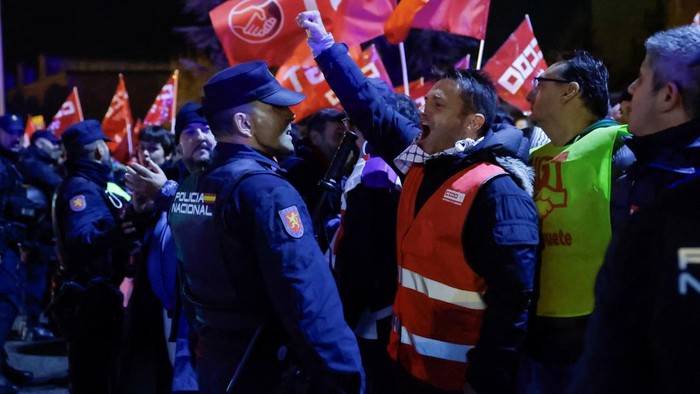
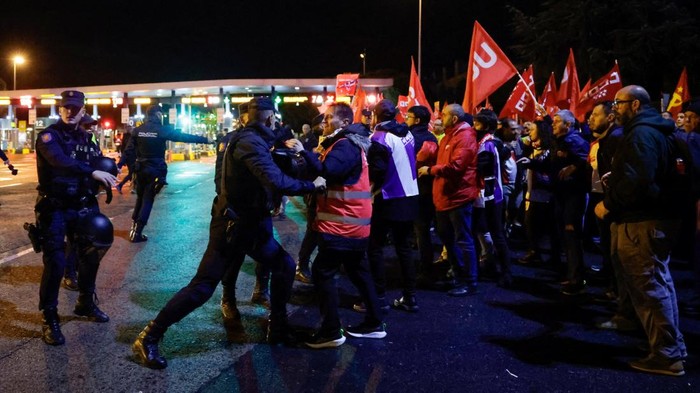
The demonstrations materialized on Wednesday, November 11, 2026, with trade union members staging coordinated rallies and picket lines at critical economic flashpoints. Among the primary focal points was Mercamadrid, the sprawling central wholesale market for fresh produce in the Spanish capital. Hundreds of workers gathered at the facility’s entrances before dawn, demanding systemic reforms to address the housing emergency.

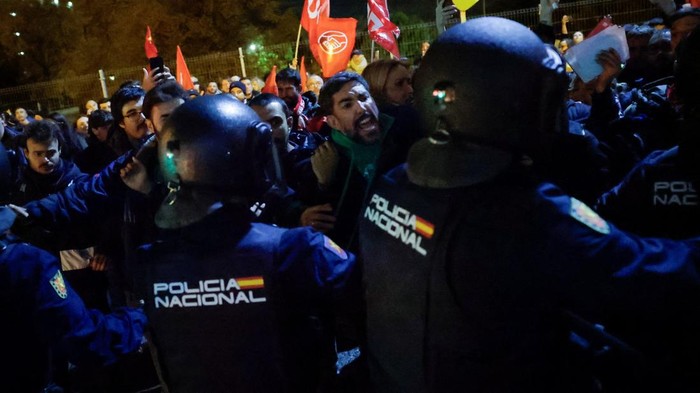
The atmosphere at Mercamadrid quickly grew tense as union organizers blocked the flow of delivery trucks and distribution logistics. Security forces, heavily deployed by the national government, stood guard around the perimeter. Minor clashes and heated verbal altercations erupted between picketers and police officers attempting to maintain public order and ensure the uninterrupted passage of essential goods. Despite the friction, the strike maintained its momentum, serving as a powerful visual testament to the desperation felt by the labor force.
Demonstrators carried banners and chanted slogans emphasizing a simple yet elusive premise: that a hard day’s work should guarantee a secure place to live. According to statements released by labor coalitions, the current minimum wage and median salary frameworks have been entirely divorced from the reality of contemporary real estate costs, forcing younger generations and low-income families into overcrowded conditions or extreme financial precarity.
Background Context: A Decade of Housing Insecurity
The roots of the 2026 national strike trace back to a compounding housing crisis that has plagued Spain for well over a decade. Following the recovery from the global financial crisis and the subsequent post-pandemic economic shifts, Spanish cities—most notably Madrid, Barcelona, Valencia, and coastal tourist hotspots—have experienced an unprecedented surge in real estate prices and rental rates.
Several systemic factors have fueled this crisis:
- Tourism and Short-Term Rentals: The proliferation of platform-based short-term holiday rentals has drastically reduced the inventory of long-term residential housing, pricing local residents out of historical neighborhoods.
- Foreign Investment: High-net-worth foreign buyers and institutional investment funds have increasingly acquired residential properties as speculative assets, driving purchase prices beyond the reach of domestic earners.
- Stagnant Real Estate Development: Public housing construction has lagged significantly behind demographic demand, leaving municipal authorities with insufficient social housing stock to cushion vulnerable populations.
- Wage Compression: While living costs, utility rates, and housing expenditures have climbed exponentially, nominal wages in key sectors such as hospitality, retail, and agriculture have remained largely flat.
Economic think-tanks note that the average Spanish worker now spends well over 50% of their net monthly income on rent or mortgage payments, far exceeding the recommended threshold of 30%. This disproportionate burden has effectively eroded disposable income, stymied domestic consumption, and delayed major life milestones such as family planning and long-term savings among young adults.
Timeline of Escalation and Political Conjointly
The path to the 24-hour national general strike was marked by months of incremental labor mobilization, legislative deadlock, and mounting societal frustration.
- Early 2026: Grassroots tenants’ unions and labor organizations begin organizing localized neighborhood protests against speculative landlords and rising eviction rates.
- September 2026: Following failed negotiations with employer associations regarding emergency wage adjustments, major trade unions announce their intent to ballot members for a nationwide general strike.
- October 2026: Parliament attempts to introduce limited rent-control measures, but the legislative package stalls amid fierce political debate and legal challenges from regional conservative governments.
- November 11, 2026: The 24-hour national general strike takes effect. Workers across transportation, manufacturing, and agricultural distribution sectors walk off the job.
- November 29, 2026 (Upcoming): The strike occurs just weeks ahead of a scheduled snap general election in Spain, placing housing reform and labor rights at the very center of the national political debate.
Union leaders strategically timed the industrial action to maximize political pressure. With the snap general election looming on November 29, 2026, labor organizers aimed to force political parties of all stripes to incorporate aggressive housing affordability mandates and sweeping labor reforms into their official campaign manifestos.
Official Responses and Stakeholder Reactions
The nationwide strike has drawn polarized reactions from the political spectrum, business associations, and civil society organizations.
Government officials defended their ongoing economic policies while acknowledging the legitimacy of public grievances regarding housing accessibility. In official press briefings, representatives of the ruling coalition pointed to recent allocations for social housing development and proposed subsidies for first-time home buyers. However, administration critics argue that these measures are too little, too late, and fail to tackle the root causes of speculative market pricing.

Conversely, employer associations and business federations sharply criticized the 24-hour strike, warning that sweeping work stoppages risk damaging fragile economic growth and disrupting supply chains at a sensitive time. Representatives from major business chambers argued that artificial wage mandates imposed via government decree could compel companies to downsize, freeze hiring, or pass increased costs directly onto consumers through inflation.
Real estate industry representatives have similarly pushed back against sweeping rent caps, asserting that restrictive regulatory interventions ultimately discourage private construction investment and contract housing supply further over the long term. Instead, they advocate for supply-side deregulation to incentivize the rapid building of new residential units.
Broader Socio-Economic Implications
The 2026 Spanish general strike is widely viewed by economists and political analysts as a bellwether for broader European socio-economic trends. As urban centers across the continent grapple with post-pandemic inflation, cost-of-living pressures, and housing shortages, the friction between labor compensation and asset inflation has reached a critical juncture.
The immediate implications of the strike are multifaceted:
- Political Realignment: The upcoming November 29 election is now widely framed as a referendum on housing policy. Parties that fail to present credible, enforceable solutions to the housing crisis risk severe electoral backlash from disenfranchised urban voters.
- Labor Movement Revitalization: The success of the coordinated general strike demonstrates the renewed potency of traditional trade unionism in mobilizing younger, non-traditional workers around issues outside the conventional scope of collective bargaining, such as urban planning and cost-of-living economics.
- Regulatory Pressure: Future administrations in Spain will face immense public and institutional pressure to implement robust market interventions, which may include stricter regulations on short-term rentals, expanded public housing mandates, and regionally enforced housing price stabilization mechanisms.
As Spain moves toward its pivotal electoral date, the echoes of the 24-hour national strike remain a potent reminder that the foundational right to housing is inextricably linked to the dignity and sustainability of the modern labor force.