Hidayat Nur Wahid Resigns as Deputy Speaker of the MPR RI to Lead BKSAP DPR RI Amid Focus on Global Diplomacy and Palestinian Sovereignty

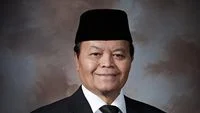
In a significant leadership transition within the Indonesian legislature, Hidayat Nur Wahid, a senior statesman and prominent figure within the Prosperous Justice Party (PKS), has officially stepped down from his position as Deputy Speaker of the People’s Consultative Assembly of the Republic of Indonesia (MPR RI). The resignation was formally accepted by the MPR leadership during a plenary session held on Tuesday, November 10, 2026. This move marks a strategic shift in the party’s parliamentary focus, moving one of its most experienced political figures from the domestic oversight role of the MPR to the high-stakes arena of international parliamentary diplomacy.
Ahmad Muzani, the Chairman of the MPR RI, confirmed the acceptance of the resignation through his official communication channels, stating that the institution would proceed with the necessary administrative and legal processes to facilitate the transition. While the departure of a high-ranking official often signals internal party friction in many political climates, the transition in this instance has been characterized by the leadership as a calculated strategic pivot designed to enhance Indonesia’s influence on the global stage.
Strategic Realignment: The Shift to BKSAP
The decision for Hidayat Nur Wahid to vacate his seat in the MPR was driven by a new, specific mandate from the PKS leadership: to serve as the Chairman of the Committee for Inter-Parliamentary Cooperation (BKSAP) at the House of Representatives (DPR RI). The BKSAP is the primary organ of the Indonesian parliament responsible for managing relations with international parliamentary organizations and individual foreign legislatures.
Muhammad Kholid, the Secretary-General of PKS, emphasized that the decision was not a demotion but rather a mobilization of "human capital" toward a critical external front. According to Kholid, Hidayat’s deep institutional experience and established international network are viewed as essential assets for navigating complex geopolitical landscapes.
"The role of the BKSAP is increasingly pivotal," Kholid noted in a press statement. "With the world facing multi-faceted crises, from economic instability to humanitarian disasters, the need for Indonesia to project its values through parliamentary diplomacy has never been more urgent. We need a figure of Hidayat’s caliber to bridge the gaps between national interests and international expectations."
The Focus on Global Islam and Palestinian Advocacy
Central to this leadership shift is the declared objective of strengthening ties within the Islamic world and intensifying Indonesia’s role as a global advocate for Palestinian independence. Historically, Indonesia has maintained a consistent foreign policy stance regarding Palestine, often utilizing the Organization of Islamic Cooperation (OIC) and the Non-Aligned Movement to advocate for a two-state solution.
By placing Hidayat—a figure with extensive academic and religious background—at the helm of the BKSAP, PKS aims to transition from general diplomatic rhetoric to what Kholid describes as "concrete, outcome-oriented diplomacy." The goals set forth for the new BKSAP leadership include:
- Humanitarian Advocacy: Securing sustained and safe access for international aid to reach civilian populations in conflict zones.
- Legal Pressure: Encouraging parliaments across the globe to uphold international law and hold accountable those who violate humanitarian norms.
- Sovereignty Support: Actively lobbying for the recognition of a fully sovereign and independent Palestinian state within international parliamentary forums.
- Network Expansion: Moving beyond traditional diplomatic circles to engage with legislatures in neutral or non-aligned regions that hold the power to sway their respective governments’ foreign policies.
The Career Context: Hidayat Nur Wahid’s Legislative Legacy
Hidayat Nur Wahid is a veteran of Indonesian politics, having served as the Speaker of the MPR RI from 2004 to 2009. His career has been defined by his ability to navigate the complexities of Indonesia’s post-reformasi political landscape. His tenure as Deputy Speaker of the MPR in recent years saw him involved in crucial debates regarding constitutional amendments, national state ideology, and the strengthening of the legislative oversight function.
His transition to the BKSAP is viewed by political analysts as an attempt by the PKS to leverage his gravitas to bolster the party’s image as a serious, internationally-engaged political entity. In a global political climate where "parliamentary diplomacy" is often dismissed as symbolic, the party is betting that Hidayat’s established relationships with foreign counterparts can translate into substantive legislative support for Indonesia’s foreign policy agenda.
The Succession Plan: Mohamad Sohibul Iman
Following the announcement of Hidayat’s resignation, the PKS leadership moved swiftly to fill the vacancy. The party has officially designated Mohamad Sohibul Iman, the Chairman of the PKS Advisory Council (Majelis Syuro), as the successor to the MPR Deputy Speaker position.
Sohibul Iman, a former President of PKS and an experienced legislator, brings a different background to the MPR. With an academic foundation in engineering and a long history of legislative service, his appointment is expected to maintain the stability of the MPR’s current leadership coalition. The transition will now move through the formal administrative channels of the MPR, which requires the recommendation of the PKS faction to be processed by the MPR leadership and eventually ratified by the plenary session.
Implications for Indonesian Foreign Policy
The resignation and subsequent appointment reflect a broader trend in Indonesian politics: the increasing professionalization of the BKSAP. Historically, committee leadership roles in the DPR were often seen as secondary to internal domestic ministerial roles. However, as the global order becomes more fragmented, the Indonesian legislature has recognized that parliamentary diplomacy can act as a "soft power" force-multiplier.
By prioritizing the BKSAP, the Indonesian parliament is positioning itself to be more proactive. This shift is particularly significant given the ongoing conflicts in the Middle East, where Indonesia—as the world’s largest Muslim-majority nation—feels a profound moral and political imperative to lead. Analysts suggest that the success of this new leadership will be measured by its ability to move beyond mere declarations of solidarity and toward establishing tangible parliamentary-to-parliamentary (P2P) agreements that compel governments to act on human rights and sovereignty issues.
Conclusion: A Calculated Pivot
The resignation of Hidayat Nur Wahid is a high-level recalibration of political focus. While it removes a key voice from the inner circle of the MPR, it injects a veteran diplomat into the heart of Indonesia’s international parliamentary outreach. As the nation prepares for the challenges of the coming years, this move underscores a growing consensus within the Indonesian political elite that the country’s influence on the world stage must be asserted with greater vigor and professional diplomacy.
As the MPR prepares to welcome Mohamad Sohibul Iman, the institution remains stable, yet the eyes of observers remain fixed on the BKSAP. Whether this shift will result in a more impactful international posture for Indonesia remains to be seen, but the intent—to merge domestic political strength with global humanitarian advocacy—is clear. The coming months will provide the first test of whether this new leadership structure can deliver the concrete outcomes the party has promised regarding its international commitments, particularly in the contentious and critical pursuit of a free and independent Palestine.