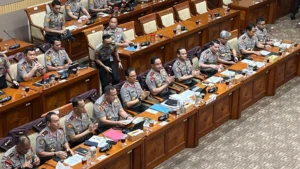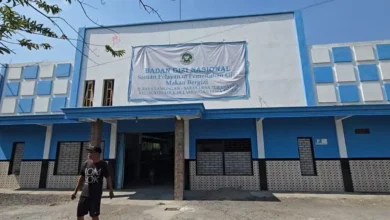
In a massive coordinated operation aimed at dismantling entrenched narcotics networks within the Indonesian penal system, the National Police’s Criminal Investigation Department (Bareskrim Polri), in collaboration with the Bali Regional Police, the National Narcotics Agency (BNN), and the Directorate General of Corrections and Immigration (Ditjen Imipas), successfully executed a raid on the Kerobokan Class IIA Penitentiary in Bali. The operation, which took place on Friday, November 13, 2026, resulted in the apprehension of 36 inmates suspected of involvement in the illicit trade, alongside the seizure of significant quantities of crystal methamphetamine and ecstasy.
The raid represents a significant escalation in the government’s ongoing campaign to purge corruption and illicit activities from within correctional facilities, which have long been criticized for their vulnerability to internal drug trafficking operations. This high-profile intervention marks a pivotal moment in the national effort to disrupt the supply chain of illicit substances, extending the reach of law enforcement from street-level dealers to those operating from within the confines of maximum-security institutions.
The Chronology of the Operation
The tactical operation began in the early hours of Friday morning, following weeks of meticulous intelligence gathering. Authorities had reportedly tracked the flow of illicit substances into the facility, noting that despite strict security measures, contraband was still finding its way to inmates.
Before the physical search of the prison blocks commenced, a critical tactical decision was made by the leadership of the joint task force: all mobile communication devices belonging to the prison staff were confiscated. This measure was implemented to prevent the leaking of operational details to inmates, ensuring the element of surprise was maintained throughout the sweep.
Once the perimeter was secured and internal communication lines were monitored, the joint forces—comprising elite units from the Bareskrim Narcotics Directorate, specialized teams from the Bali Police, and agents from the BNN—proceeded to conduct a cell-by-cell inspection. The thorough search involved the use of K-9 units and advanced scanning technology to detect hidden compartments within the cells. By the conclusion of the operation, 36 individuals had been detained for further investigation, and various quantities of narcotics were seized, providing critical forensic evidence that investigators believe will link internal actors to external supplier networks.
Statements from Law Enforcement Leadership
Addressing the media following the raid, Bali Police Chief Inspector General Pasma Royce emphasized that the operation was not a standalone incident but rather a direct execution of a broader mandate issued by the National Police Chief to eliminate drug distribution channels.
"This operation is in strict alignment with the directives of the National Police Chief regarding the eradication of narcotics. We are focusing on comprehensive law enforcement, which requires us to dismantle the entire network, from the primary suppliers down to the distributors and the end-point sellers," Inspector General Royce stated.
The involvement of the Directorate General of Corrections and Immigration (Ditjen Imipas) underscores the systemic nature of the problem. By working alongside prison authorities, the police are signaling a shift toward inter-agency accountability. The presence of immigration officials also points to a growing concern regarding the potential involvement of foreign nationals in high-level narcotics distribution networks operating within Indonesian prisons, a factor that has increasingly complicated the security landscape in Bali.
Contextualizing the Problem: The Prison-to-Street Pipeline
The Kerobokan Penitentiary has historically been a focal point of security concerns. Over the past decade, the facility has faced numerous challenges, including overcrowding and staffing shortages, which create an environment where illegal activity can flourish. Experts in criminology often describe the "prison-to-street" pipeline as one of the most difficult challenges for Indonesian law enforcement.
According to data from the Ministry of Law and Human Rights, drug-related offenses constitute the largest share of the inmate population in Indonesia. The sheer volume of individuals incarcerated for narcotics-related crimes creates a captive market for traffickers. When high-level dealers continue to conduct business from behind bars, they often leverage the vulnerability of underpaid guards or exploit loopholes in visitation protocols.
The raid at Kerobokan serves as a case study for the persistent challenges in prison management. The use of communication devices by inmates to coordinate external drug shipments has been a recurring theme in previous investigations, highlighting the necessity of the precautionary measures taken by the police during Friday’s operation, such as the temporary seizure of guards’ communication tools.
Forensic Analysis and Implications
The evidence seized during the raid—specifically the methamphetamine and ecstasy—is currently undergoing intensive forensic analysis at the National Police laboratory. Investigators are focused on identifying the chemical signatures of the drugs, which can often trace the substances back to specific laboratories or international smuggling routes.
The implications of this raid are twofold. First, it serves as a warning to other correctional facilities across the archipelago that the state is shifting its focus toward internal oversight. Second, the interrogation of the 36 detained inmates is expected to yield actionable intelligence that could lead to the arrest of high-level kingpins who have previously managed to evade detection.
Legal analysts suggest that if the investigation confirms the involvement of prison staff in facilitating these activities, the legal repercussions could be severe. Under current Indonesian law, prison officials found to be complicit in narcotics distribution face not only immediate termination but also rigorous criminal prosecution, potentially carrying sentences that mirror those given to the traffickers themselves.
Broader Impact on National Narcotics Strategy
The Indonesian government’s renewed focus on prison security is a response to the growing societal pressure to address the public health crisis exacerbated by the drug trade. With the rise of synthetic narcotics, the lethality of the trade has increased, leading to higher rates of addiction and drug-related deaths.
The collaboration between Bareskrim, BNN, and Ditjen Imipas represents a "whole-of-government" approach that is increasingly being viewed as the only viable path forward. By integrating the investigative capabilities of the police with the regulatory oversight of the corrections department, the government aims to close the gaps that have allowed prisons to serve as command centers for criminal syndicates.
Furthermore, the raid is expected to have a cooling effect on drug distribution networks in the Bali region. Bali, being an international tourism hub, is a high-priority target for drug syndicates looking to distribute narcotics to both domestic users and international visitors. By decapitating the distribution channels linked to the Kerobokan facility, law enforcement hopes to reduce the overall availability of drugs in the region.
Moving Toward Reform
While the raid was a tactical success, it has also sparked a national conversation regarding the need for broader structural reforms within the Indonesian prison system. Security experts argue that raids are merely symptomatic treatments and that long-term solutions must include the digitalization of prison monitoring, improved rehabilitation programs that separate non-violent offenders from career criminals, and increased investment in staff training and anti-corruption measures.
As the investigation into the 36 detainees continues, the public and the media remain focused on the findings. The ability of the authorities to translate these arrests into successful, high-profile convictions will be the ultimate measure of the operation’s success. For now, the raid on Kerobokan stands as a firm declaration that no facility is beyond the reach of the law, and that the efforts to dismantle narcotics networks have entered a new, more aggressive phase.
The joint task force has indicated that this operation is part of a series of scheduled inspections across the country. By keeping the element of surprise and maintaining inter-agency cooperation, the National Police aims to sustain pressure on criminal syndicates, ultimately aiming to restore the integrity of the correctional system and protect the public from the devastating effects of the narcotics trade. The case of the 36 inmates at Kerobokan is expected to be a key catalyst for ongoing policy discussions in the Indonesian House of Representatives regarding the future of prison oversight and the modernization of security technology in the nation’s jails.