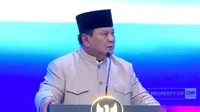
President Prabowo Subianto has issued a stern rebuke regarding the emergence of the "Indonesia Gelap" (Dark Indonesia) narrative, characterizing the rhetoric as a malicious attempt to undermine the nation’s stability. Addressing a crowd during the 15th anniversary of the NasDem Party in Jakarta on Wednesday evening, November 11, 2026, the President asserted that the origins of this narrative have been identified and warned against the dangerous implications of spreading misinformation that depicts the country as being in a state of chaos or collapse.
The President’s remarks come at a time when the Indonesian government is navigating complex geopolitical shifts and domestic economic transitions. By labeling the narrative as a product of "evil intent," Prabowo underscored a clear distinction between legitimate political opposition and what he perceives as systemic efforts to destabilize the state’s foundations.
The Anatomy of the Indonesia Gelap Narrative
The "Indonesia Gelap" narrative, which began circulating across various digital platforms and political discourse circles, suggests that the country is sliding into a period of institutional failure, economic despair, and social unrest. Proponents of this view have often pointed to localized issues—ranging from energy distribution challenges to administrative friction—as evidence of a broader, systemic breakdown.
However, government officials and security analysts have consistently countered these claims, citing stable macroeconomic indicators and a functioning democratic framework. The President’s speech on Wednesday served as the most direct address to this phenomenon to date. Prabowo distinguished between the "rivalry" inherent in a healthy democracy and the "malicious" nature of existential fear-mongering.
"If you want to criticize me, call me ugly, call me bad, that is the essence of political rivalry. I accept that as part of the process," Prabowo stated. "But to claim that the nation is ‘dark’ or ‘in chaos,’ and to actively incite riots or call for the destruction of government infrastructure built with taxpayer money—that is not politics. That is evil."
Chronology of Escalating Political Tensions
The rhetoric surrounding the state of the nation has intensified over the latter half of 2026. The timeline of this discourse can be mapped through several key developments:
- Early 2026: Initial murmurs of economic uncertainty began to appear in online spaces, largely driven by global commodity price fluctuations.
- Mid-2026: Opposition-aligned commentators began utilizing the hashtag #IndonesiaGelap, framing local infrastructure maintenance issues as evidence of state neglect.
- September 2026: A series of minor protests regarding energy subsidies occurred, which were quickly seized upon by social media agitators to validate the "chaos" narrative.
- October 2026: The government initiated a task force to monitor misinformation campaigns, specifically those advocating for the physical disruption of public services.
- November 11, 2026: President Prabowo’s address at the NasDem anniversary officially categorized the narrative as an organized, malicious campaign rather than organic public discontent.
Economic Context and Data Analysis
To understand the disconnect between the "Indonesia Gelap" narrative and reality, one must examine the current macroeconomic performance of the Indonesian state. As of the third quarter of 2026, Indonesia has maintained a GDP growth rate consistent with its post-pandemic recovery trajectory.
According to data from the Central Statistics Agency (BPS) and the Ministry of Finance, the country’s inflation remains within the target corridor set by Bank Indonesia, and foreign direct investment (FDI) has seen a steady increase compared to the previous year. Infrastructure projects, particularly those related to the transition to green energy and the ongoing development of the national capital, have continued to attract international interest.
"When we look at the data, the narrative of a ‘dark’ Indonesia is fundamentally unsupported by the economic indicators," said an independent political analyst based in Jakarta. "The rhetoric is purely psychological. It seeks to erode public trust in the state apparatus by exaggerating localized administrative hurdles into a narrative of total collapse."
The Ethical and Moral Dimension
President Prabowo’s address moved beyond mere political defense, invoking both religious and cultural frameworks to appeal to the national conscience. By referencing the concept of shiratal mustaqim (the straight path) and the Javanese proverb sing becik ketitik, sing ala ketara—which suggests that good deeds will be noted while evil ones will eventually be exposed—the President signaled a shift toward a more moralistic approach to governance.
This rhetorical strategy serves a dual purpose. Firstly, it positions the administration as one guided by traditional wisdom and transparency. Secondly, it acts as a warning to those involved in the dissemination of the "Indonesia Gelap" narrative that their identities and motivations are known to state intelligence and security apparatuses.
Official Responses and Political Implications
The choice of the NasDem Party’s anniversary as the platform for this speech is significant. NasDem, as a key coalition partner, has consistently stood by the administration’s policies. By speaking at this event, Prabowo reinforced the solidarity of his governing coalition against external and internal pressures.
Other political stakeholders have reacted with caution. While some opposition figures maintain that their criticisms of the government are legitimate, many have distanced themselves from the "Indonesia Gelap" narrative, fearing that the rhetoric has crossed the line into sedition.
"We believe in critical oversight," stated a representative from a prominent political party, speaking on condition of anonymity. "However, there is a clear difference between questioning a policy and attempting to set the house on fire. The President’s message is a reminder that national stability is a shared responsibility."
The Risk of Disinformation in a Digital Age
The proliferation of the "Indonesia Gelap" narrative highlights a growing vulnerability in modern Indonesian democracy: the speed at which unsubstantiated claims can mobilize public emotion. Digital literacy remains a priority for the Ministry of Communication, yet the viral nature of fear-based narratives often outpaces official fact-checking efforts.
The implications for the next electoral cycle are profound. If political discourse is dominated by existential threats and hyperbolic depictions of "darkness," the substantive debate regarding policy, education, and healthcare is relegated to the background.
Broader Impact and Future Outlook
The President’s firm stance indicates that the government is unlikely to remain passive in the face of what it defines as "malicious" misinformation. Analysts expect a more rigorous enforcement of digital safety laws and a possible expansion of the task force dedicated to identifying the architects of organized disinformation campaigns.
For the international community and investors, the key takeaway is the government’s commitment to maintaining order. By identifying the "culprits" behind the narrative, the administration aims to reassure the public that it retains control over the information environment.
As Indonesia looks toward the end of 2026 and into 2027, the challenge for the Prabowo administration will be to balance the protection of national stability with the preservation of democratic freedom. While the "Indonesia Gelap" narrative has been dismissed by the head of state as a fabrication, the underlying public desire for transparency and economic improvement remains a vital component of the country’s political landscape.
In conclusion, the President’s speech serves as a line in the sand. By invoking traditional morality and signaling that the perpetrators of the "Indonesia Gelap" narrative are known, he has shifted the burden of proof back onto those attempting to destabilize the nation. Whether this approach will effectively neutralize the narrative or further polarize the political climate remains a point of intense interest for observers of Indonesian politics. The coming months will likely see whether this "straight path" leads to increased unity or a further hardening of political lines in the world’s fourth-largest democracy.