President Prabowo Subianto Signals Massive Impending Foreign Investment Influx to Accelerate National Economic Growth

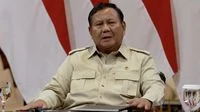
President Prabowo Subianto has signaled a major turning point for the Indonesian economy, announcing that a significant wave of foreign direct investment (FDI) is poised to enter the country in the coming weeks. Speaking during an exclusive dialogue with senior journalists and industry experts at the Padepokan Garuda Yaksa in Hambalang, West Java, the President underscored his administration’s commitment to strengthening the national investment climate despite a volatile global landscape.
The revelation, which occurred on September 6, 2026, and was broadcast on September 16, 2026, serves as a cornerstone of the administration’s strategy to bolster the country’s industrial capacity, create millions of jobs, and cement Indonesia’s trajectory toward becoming one of the world’s top five economies by 2050.
The Landscape of Indonesian Investment
The discourse surrounding investment was prompted by inquiries from Wahyu Daniel, Editor-in-Chief of CNBC Indonesia, regarding the government’s competitive strategy. In an era where Southeast Asian neighbors such as Malaysia and Vietnam are aggressively courting global capital, Indonesia faces the dual challenge of maintaining its domestic appeal while navigating complex geopolitical tensions.
Prabowo addressed these concerns by pointing to the robust performance of the Indonesian economy thus far in 2026. Official data reveals that as of June 2026, the country had already secured Rp 1,010 trillion in investment realization. This follows a record-breaking performance in 2025, where the total investment realization reached Rp 1,931 trillion.
The President emphasized that these figures represent genuine capital inflow into the productive sectors of the economy, distinct from government-led social welfare initiatives like the Makan Bergizi Gratis (Nutritious Meals Program) or the Koperasi Desa/Kelurahan Merah Putih (KDKMP). By insulating these investment figures from state-sponsored consumption programs, the administration aims to demonstrate that private sector confidence in Indonesia’s macroeconomic stability remains unshaken.
Evidence-Based Governance and Strategic Secrecy
While the President hinted at a "massive" influx of capital, he refrained from disclosing the identities of the investors or the specific sectors involved. This strategic reticence is rooted in his preference for an "evidence-based" approach to governance.
"I have always been a person who prioritizes evidence-based decision-making," Prabowo stated during the dialogue. "If there is no concrete evidence or finalized agreement, I prefer not to speak prematurely. However, I assure you that in the coming weeks, you will see the results."
This approach reflects a shift toward a more disciplined communication style within the administration, where high-level announcements are made only when deal closures are imminent. The President noted that he has been in direct contact with major global players, suggesting that these entities have conducted extensive due diligence on Indonesia’s economic fundamentals and found them to be both secure and promising.
Economic Resilience Amid Global Volatility
The President’s optimism is set against a backdrop of global economic uncertainty, characterized by fluctuating interest rates, supply chain shifts, and geopolitical friction. Despite these headwinds, Prabowo argued that Indonesia’s potential is frequently understated or, in some cases, actively suppressed by external forces.
"I sometimes struggle to understand whether it is political in nature or foreign interference, but there seems to be a persistent attempt to undermine Indonesia," he remarked. "Every time we are on the verge of taking off—because we are a large and resource-rich nation—there are forces that try to hinder our progress."
Despite these external pressures, the President highlighted the unanimous consensus among international financial institutions regarding Indonesia’s long-term potential. He specifically cited projections from global investment bank Goldman Sachs, which has identified Indonesia as a candidate to become the fourth-largest economy in the world by 2050. This 25-year roadmap is the primary driver behind the current administration’s focus on industrial downstreaming and infrastructure development.
Employment and Economic Transformation
A critical metric for the Prabowo administration is the creation of high-quality employment. According to the President, the government successfully facilitated the creation of 2.7 million new jobs in 2025. In the first half of 2026 alone, 1.4 million jobs were added to the market.
These numbers are vital for Indonesia’s demographic dividend—a period where the working-age population outnumbers dependents. To sustain this growth, the administration is moving beyond the traditional export of raw commodities. The strategy involves building domestic processing facilities, which necessitates significant FDI in sectors such as electric vehicle (EV) battery manufacturing, green energy infrastructure, and digital technology.
Analysts suggest that if the anticipated investments are directed toward these high-value sectors, it could trigger a structural transformation in the Indonesian labor market, shifting the workforce from informal agricultural roles to formal manufacturing and high-tech service sectors.
Fact-Based Implications for the Future
The implications of this potential investment surge are far-reaching. If Indonesia continues to attract foreign capital at the current pace, the country will likely see:
- Enhanced Fiscal Stability: Consistent FDI inflows stabilize the Rupiah and bolster foreign exchange reserves, providing a buffer against external economic shocks.
- Industrial Downstreaming: By securing capital for value-added industries, Indonesia can reduce its reliance on volatile commodity prices and increase the complexity of its export basket.
- Improved Competitive Edge: Successful investment absorption will force improvements in regulatory transparency and infrastructure efficiency, making the country even more attractive for future rounds of funding.
However, challenges remain. Investors typically demand policy consistency, legal certainty, and an efficient bureaucracy. The administration’s ability to translate "massive investment" into actual operational projects will depend on its success in cutting red tape at the regional level and ensuring that the legal framework governing foreign ownership remains predictable.
Looking Ahead
The coming weeks are expected to be a test of the administration’s ability to deliver on its promises. Should the rumored deals manifest, they will likely serve as a catalyst for further private sector confidence, potentially creating a "virtuous cycle" of growth.
The dialogue at Hambalang served as more than just a press briefing; it was a reaffirmation of the President’s vision for Indonesia as a pivotal player in the global economy. By aligning the nation’s vast natural wealth with strategic capital investments, Prabowo is betting on a future where Indonesia is no longer just a spectator in the global market, but a primary engine of growth.
For the international investment community, the signal is clear: Indonesia is open for business, but the administration expects partners to align with its long-term goals of industrialization and national prosperity. As the government prepares to unveil the details of these new ventures, stakeholders across the archipelago and beyond will be watching to see if the reality matches the ambition.
In the final assessment, the success of these initiatives will be measured not by the rhetoric of the announcement, but by the tangible impact on GDP growth, poverty reduction, and the sustained expansion of the Indonesian middle class. The President’s insistence on "evidence-based" results suggests that the administration is prepared to be held accountable by these metrics in the years to come.