Frozen Conflict Looms as US-Iran Standoff Enters a Protracted Phase of Economic Siege and Geopolitical Stagnation

The escalating tensions between the United States, Israel, and Iran are increasingly gravitating toward a "frozen conflict" scenario, a state of suspended hostility where major kinetic warfare gives way to a grinding, long-term geopolitical stalemate. Despite the subsiding of large-scale military exchanges, the region remains trapped in a volatile equilibrium characterized by maritime blockades, punitive economic sanctions, and the persistent threat of renewed military escalation. This shift represents a transition from high-intensity active combat to a permanent state of belligerence that lacks a formal peace agreement, effectively paralyzing diplomatic progress while keeping global energy markets on edge.
The Stance from Washington: A Strategy of Attrition
President Donald Trump has signaled that the United States is in no immediate hurry to resolve the confrontation through diplomatic concessions. In a recent communication via his Truth Social platform, the President articulated a hardening position, stating, "We do not need a deal with Iran. Those days are long gone. We have their money, hundreds of billions of dollars, and we have their Strait!"
This rhetoric underscores a pivot in American strategy, viewing the existing pressure points—specifically the control of the Strait of Hormuz and the sequestration of Iranian assets—as sufficient leverage to maintain the status quo without the need for a formal treaty. Trump’s current posture reflects a broader political calculation. While he has previously claimed the military phase of the conflict was effectively concluded, he retains the option of renewed kinetic action should diplomatic avenues continue to bear no fruit. However, his administration is increasingly sensitive to domestic political pressures, particularly following the Republican party’s setbacks in the November 3 midterm elections, which were exacerbated by voter anxiety over rising domestic fuel prices and inflation.
Chronology of a Collapsing Diplomacy
The current impasse is the result of a steady deterioration of diplomatic efforts throughout the year. The primary turning point occurred in July, when the tentative ceasefire agreement established in June collapsed entirely, ending a brief period of optimism.
- January – May: Initial period of heightened rhetoric following a series of maritime incidents near the Strait of Hormuz.
- June: A brief, fragile ceasefire is brokered, raising hopes for a return to the negotiating table.
- July: The ceasefire fails as both sides accuse the other of violating territorial and maritime norms; the conflict shifts from a series of airstrikes to a sustained naval and economic siege.
- September: Inflation in Iran hits a staggering 83.8%, signaling the severe impact of sustained international sanctions and the effective closure of key export routes.
- November 9: President Masoud Pezeshkian of Iran issues a statement indicating Teheran’s willingness to negotiate, but emphatically rejects any terms that require capitulation under duress.
Economic Realities and the Cost of Containment
The human and economic cost of this "frozen conflict" is becoming increasingly unsustainable for the Iranian state. Recent data indicates that the Iranian economy contracted by 10.1% year-on-year during the period of March to June. This contraction is directly attributable to the dual impact of the naval blockade and the aggressive enforcement of international sanctions, which have crippled the country’s ability to move crude oil through its traditional channels.
Teheran has attempted to mitigate these losses by deepening its economic reliance on China, which remains the primary buyer of Iranian petroleum. However, even this lifeline is under constant threat. The US-led maritime blockade has made the transport of Iranian oil increasingly hazardous and expensive, with insurance premiums for vessels operating in the region reaching prohibitive levels. This has effectively tightened the noose around the Iranian economy, forcing the government to prioritize basic survival over long-term development.
The Strategic Value of the Strait of Hormuz
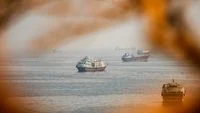
The primary engine of this conflict remains the Strait of Hormuz, a critical chokepoint through which approximately 20% of the world’s total oil consumption flowed prior to the onset of hostilities. The "frozen" nature of this conflict creates a permanent risk premium for global energy markets.
As noted by Muhanad Seloom, a security analyst at the Doha Institute for Graduate Studies, the war has undergone a metamorphosis. "The war has changed form, from an air campaign into a siege," Seloom observed. This distinction is vital; while the absence of daily airstrikes may create an illusion of peace, the reality is a suffocating economic blockade that prevents the normal flow of commerce. The ongoing harassment of merchant vessels in the region ensures that the Strait remains a high-risk zone, keeping global shipping costs elevated and regional stability precarious.
Official Positions and the Negotiating Deadlock
The inability to find a diplomatic off-ramp is rooted in the diametrically opposed demands of the two powers. Iran’s position, articulated by both President Pezeshkian and Speaker of Parliament Mohammad Bagher Ghalibaf, requires a comprehensive reversal of US policy: the lifting of the maritime blockade, the easing of sanctions, the release of frozen financial assets, and a cessation of US involvement in regional conflicts, including those in Lebanon.
Conversely, the United States finds itself in a strategic bind. For the Trump administration, abandoning the blockade or allowing Iran to regain control over the Strait of Hormuz without significant concessions would be viewed as a major failure of foreign policy, effectively neutralizing the leverage gained through months of high-stakes maneuvering. Furthermore, while the US military maintains a significant presence in the region, there is deep-seated public opposition within the United States to a large-scale land invasion, with memories of the long-term, costly commitments in Iraq and Afghanistan serving as a powerful deterrent against further escalation.
Analytical Implications: Lessons from History
Tallha Abdulrazaq, a researcher at the University of Exeter, suggests that this deadlock could persist for years, if not decades. "The conflict can continue to drag on as long as Washington and Teheran maintain their current negotiation positions," Abdulrazaq noted. He highlights that the US faces a classic "escalation or concession" dilemma: either increase the risk of an all-out military confrontation or accept a limited, potentially unpopular, negotiated settlement.
The historical precedent of the Korean Peninsula—which has remained in a state of "frozen" conflict since the 1953 armistice—serves as a cautionary tale. However, the Iran-US situation carries a distinct set of risks. Unlike the Korean border, which is largely terrestrial and localized, the Iranian theater of operations is inextricably linked to the global energy supply chain. A permanent state of "frozen" conflict in the Persian Gulf ensures that volatility will remain a permanent feature of the global economy.
Broader Geopolitical Consequences
The stagnation of this conflict has broader implications for international security. First, it forces regional neighbors to constantly calibrate their own foreign policies to avoid becoming collateral damage in the ongoing US-Iran standoff. Second, it limits the ability of international organizations, such as the United Nations, to act as effective intermediaries, as both primary actors view the current status quo as a necessary, if painful, element of their respective national security doctrines.
Furthermore, the duration of this conflict is likely to accelerate efforts by other global powers to bypass US-led maritime security architectures, potentially leading to a more fragmented global trade system. As Teheran and Washington remain locked in this cycle of defiance, the international community is left to manage the fallout of a conflict that is neither hot enough to resolve through decisive action, nor cool enough to be considered a lasting peace.
As the calendar turns toward 2027, the prospect of a diplomatic breakthrough appears increasingly distant. Both Washington and Teheran are currently prioritizing the preservation of their respective political narratives over the compromises required for de-escalation. For the world, this means the threat of regional instability, energy market shocks, and persistent maritime insecurity is likely to remain a defining feature of the global geopolitical landscape for the foreseeable future.