Strategic Considerations for Selecting Preschools in Jakarta and the Impact of Daily Commutes on Early Childhood Development

The morning routine in Jakarta is a complex logistical operation, often defined by the intersection of tight school schedules and the city’s notoriously high traffic density. For families with children at the preschool level, the selection of an educational institution is no longer merely an academic decision based on curriculum or pedagogy; it has become a strategic exercise in urban logistics. As parents in areas like Kelapa Gading, Pulomas, and Kayu Putih navigate the competitive landscape of early childhood education, the physical distance between home and school has emerged as a primary determinant of a child’s long-term academic and emotional wellbeing.
The Dynamics of Urban Commuting and Early Childhood
In metropolitan Jakarta, the "distance" between home and school is deceptive. According to recent urban mobility reports, traffic congestion during the morning peak hours (06:30 AM to 08:30 AM) can inflate travel times by as much as 200% compared to off-peak periods. For a child in the critical preschool developmental stage—typically ages three to five—these extra minutes in a vehicle are not merely a nuisance; they are a disruption to the child’s circadian rhythm and psychological readiness for learning.
Child development experts emphasize that the ages between three and five are vital for establishing a consistent routine. When a child is subjected to a long, stagnant commute, they often arrive at the classroom in a state of exhaustion or agitation. This emotional baseline can hinder their ability to engage with teachers and peers, effectively nullifying the benefits of a high-quality educational program. A 2023 study on urban education indicated that children who experienced shorter, less stressful morning commutes showed a 15% higher retention rate in early literacy tasks compared to those subjected to commutes exceeding 45 minutes.

Beyond the Kilometer: The Logistics of School Access
The reliance on Google Maps to determine school proximity is a common pitfall for parents. Digital mapping services often measure distance in kilometers or off-peak travel time, neither of which accounts for the specific "drop-off" friction at school gates.
Infrastructure in residential hubs like Kelapa Gading and Pulomas presents unique challenges. Many schools are located on arterial roads where illegal parking or narrow access points can create localized bottlenecks. Parents must evaluate the "last 100 meters" of the commute:
- Drop-off Efficiency: Does the school have a dedicated drive-through lane, or must parents park and walk? In the rain or heat, this can be the difference between a pleasant start and a chaotic one.
- Post-Drop-off Logistics: For working parents, the school must be situated on a vector that aligns with their commute to their office. A school that requires a 15-minute diversion in the opposite direction of the primary destination adds an unnecessary 30 minutes of daily transit time.
- The Human Factor: For families relying on grandparents or caregivers for school runs, the ease of navigation, safety of pedestrian crossings, and proximity to public transport nodes or ride-sharing pickup points are non-negotiable variables.
Regional Case Study: The Kelapa Gading and Pulomas Corridor
The residential corridors of North and East Jakarta—specifically the triangle formed by Kelapa Gading, Pulomas, and Kayu Putih—represent a high-density area where school competition is intense. Because these areas are separated by distinct administrative boundaries and major infrastructure like the inner-city toll roads, the "perceived distance" between two points can fluctuate wildly depending on the specific neighborhood entry points.
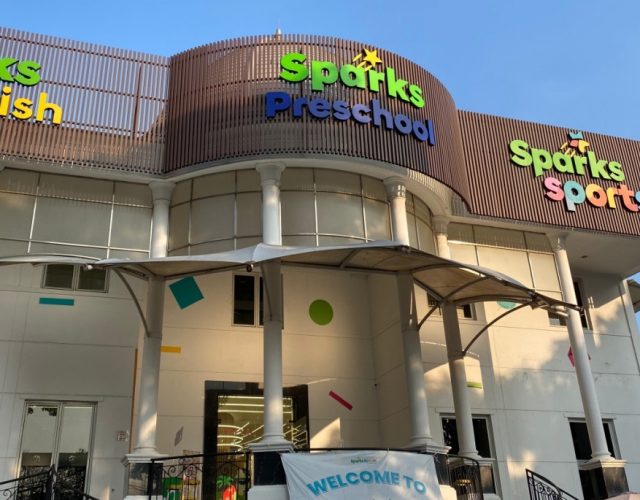
Institutions such as Sparks Preschool, located on Jalan Kayu Putih Raya, exemplify the strategic placement that families now prioritize. By positioning themselves within the Pulomas-Kayu Putih axis, such facilities aim to serve as a nexus for families transitioning between the residential zones of East and North Jakarta. However, education analysts warn that even a "strategically located" school must be subjected to a real-world feasibility test.
Conducting a Practical Travel Simulation
To mitigate the risk of choosing an inconvenient location, urban planners and educational consultants recommend a "commute simulation." This process involves a three-step verification:
- The Baseline Test: Parents should perform the school run at exactly the time they intend to drop their child off on a Tuesday or Wednesday—the busiest days of the work week. This provides a realistic estimate of total travel time.
- Environment Assessment: Observe the school during dismissal hours. Is the area prone to flash flooding? Are the sidewalks congested? Is there adequate security for children transitioning from vehicles to the school entrance?
- The Child’s Perspective: Does the commute allow the child to remain calm, or is the environment overstimulating?
Integrating Educational Quality with Daily Realities
While logistical convenience is paramount, it cannot come at the expense of educational quality. The pedagogical approach must remain the foundation of the decision. When visiting schools, administrators suggest that parents look beyond the brochures.
A school’s response to a child’s initial separation anxiety is perhaps the most significant indicator of its quality. A facility that has structured, empathetic, and communicative procedures for helping children integrate into the classroom demonstrates a level of professional maturity that ensures long-term success. Furthermore, parents should inquire about the school’s communication protocols. In an era where real-time updates are standard, the ability of a school to provide feedback on a child’s day—especially during the first few months—is crucial for parental peace of mind.
The Broader Implications for Jakarta Families
The decision-making process for preschool enrollment in Jakarta is a reflection of the city’s evolving urban identity. As the city continues to expand and infrastructure projects reshape traffic patterns, the "ideal" location for a school is moving away from the concept of a "neighborhood school" toward the "commute-aligned school."
Data suggests that as the cost of time increases, families are increasingly willing to pay a premium for schools that offer flexible hours, robust security, and, most importantly, accessibility that does not degrade the quality of life for either the parent or the child. The financial and emotional investment in a child’s early education is significant; therefore, the physical journey to that education must be treated with the same level of scrutiny as the curriculum itself.
Conclusion: A Sustainable Approach
Ultimately, the most successful preschool experience is one that is sustainable. If a school’s location necessitates waking a child at 5:30 AM to beat the traffic, the subsequent sleep deprivation may negate the child’s learning potential in the classroom. Conversely, a school that is slightly further away but located on a smooth, predictable route might offer a more stable and enriching daily experience.
Parents are encouraged to view their preschool choice as a long-term contract with their daily schedule. By prioritizing real-world simulation over digital convenience, and by balancing developmental needs with logistical realities, families can establish a foundation that supports both academic growth and a healthy, harmonious household dynamic. As Jakarta continues to navigate its urban growth, the parents who succeed in this environment will be those who treat their child’s education as a total experience—from the moment they step out the front door to the moment they return home.