Trump and Putin Growing Closer as Europe and Ukraine Face Heightened Geopolitical Uncertainty

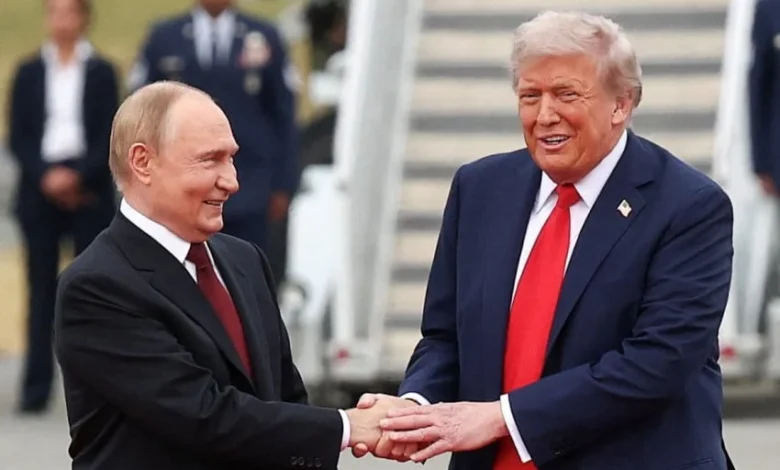
The geopolitical landscape of the Atlantic alliance is undergoing a seismic shift as the administration of U.S. President Donald Trump increasingly pivots toward a policy of rapprochement with Russian President Vladimir Putin. Long-standing suspicions among European leaders and Ukrainian officials regarding the nature of the U.S.-Russia relationship have transitioned from speculative concern to urgent alarm. Recent policy maneuvers, including the relaxation of economic sanctions, reported energy agreements, and a cooling of rhetoric toward the Kremlin, suggest a fundamental realignment of American foreign policy that threatens to undermine the collective security framework established since the Cold War.
The Emerging Rapprochement: A Shift in Washington’s Strategy
The current trajectory of U.S. foreign policy has moved far beyond the initial campaign promises of "America First" isolationism. Observers note that President Trump has begun to actively dismantle the architecture of economic pressure that his own administration—and his predecessors—had carefully constructed. The recent disregard for established sanctions legislation, combined with efforts to facilitate trade in fossil fuels, has signaled to global markets and international actors that the U.S. may be prioritizing a transactional peace over the territorial integrity of sovereign nations.
In Kyiv, the atmosphere is one of profound apprehension. The sudden, unexplained technical constraints placed on Starlink—the satellite internet system critical for Ukrainian battlefield coordination—have sparked intense debate regarding the influence of billionaire Elon Musk, an increasingly prominent figure in Trump’s inner circle. Simultaneously, the unpredictable delays in the delivery of U.S.-manufactured weapon systems have left Ukrainian military planners struggling to maintain their defensive lines. These developments, coupled with the White House’s increasingly harsh rhetoric toward President Volodymyr Zelenskyy, suggest that the diplomatic support once deemed unconditional is now subject to severe negotiation.
Chronology of Escalating Tensions and Policy Shifts
The evolution of this rapprochement can be traced through a series of key events over the past several months:
- Early 2024: Reports emerge of back-channel communications between U.S. envoys and Russian officials regarding potential "Grand Bargains."
- Mid-2024: President Trump publicly questions the efficacy of the NATO alliance, suggesting that security guarantees should be contingent upon increased financial contributions from European members.
- September 2024: The U.S. begins to unilaterally waive specific financial sanctions on Russian entities, citing the need for "energy stability."
- October 2024: During a summit of world leaders, President Trump expresses an openness to a trilateral meeting with Putin and Chinese President Xi Jinping, a move intended to bypass traditional European diplomatic channels.
- November 2024: Kaja Kallas, the European Union’s foreign policy chief, publicly warns the European Parliament that U.S. negotiators have been pressuring Kyiv to accept a ceasefire on terms highly favorable to Moscow.
Analyzing the Economic and Diplomatic Dimensions
The Kremlin’s strategy is clear: by exploiting the perceived cracks in Western unity, Moscow seeks to regain its status as an indispensable global superpower. Russia’s economy, which has faced significant pressure from international sanctions and the rising costs of the war, is in urgent need of a diplomatic breakthrough. A trilateral summit with the United States and China would, in the eyes of the Kremlin, grant Putin a level of international legitimacy that has been systematically denied to him since the annexation of Crimea in 2014 and the full-scale invasion of 2022.
Economic analysts point out that the Russian economy is currently roughly the size of Italy’s, making it a middle-tier economic power despite its nuclear arsenal. However, the prospect of lifting frozen Russian assets and re-establishing energy exports to Europe serves as a potent lure. U.S. special envoys Steve Witkoff and Jared Kushner have reportedly explored these avenues, drawing sharp rebukes from European capitals. The European Union remains steadfast in its position that lifting sanctions without a complete withdrawal of Russian forces would constitute a dangerous precedent for international law.
The Real Estate Diplomacy: A New Approach to Foreign Policy
A significant point of concern for European diplomatic circles is the personnel tasked with these sensitive negotiations. The appointment of Steve Witkoff and the continued influence of Jared Kushner—both of whom share a background in commercial real estate—has introduced a business-centric methodology to foreign policy. Critics argue that this approach treats sovereign territory as a negotiable asset in a property deal rather than a matter of geopolitical security.
The recent controversy involving Witkoff’s characterization of Putin as a "humanitarian" has been widely condemned by European officials. The timing of such rhetoric was particularly damaging; the remarks occurred mere hours before a massive Russian missile strike on Kyiv, which utilized cluster munitions—weapons specifically designed for high casualty rates in urban centers. This juxtaposition of diplomatic praise from the U.S. and kinetic escalation from Russia has deepened the rift between Washington and its traditional European allies.
Official Responses and European Anxiety
The reaction from European capitals has been one of mounting frustration. Kaja Kallas’s recent remarks in the European Parliament served as a watershed moment in the relationship between the EU and the current U.S. administration. "The reason why Ukraine has not surrendered to Putin’s terms is because Europe continues to support Ukraine," Kallas stated, highlighting that the U.S. effort to reach a "Nobel-worthy" peace deal is being pursued at the direct expense of European safety.
Senior European officials have begun to voice concerns that the U.S. is essentially attempting to "partition" Eastern Europe. A common sentiment among these diplomats is that the White House fails to understand the long-term implications of allowing a revisionist power to dictate the borders of Europe. The reliance on transactional, business-style diplomacy is viewed as a fundamental misunderstanding of the ideological and security motivations driving the Russian leadership.
Implications for Global Security and the Future of NATO
The potential for a U.S.-led pivot toward Russia holds significant implications for the future of global alliances:
- Fragmentation of NATO: Should the U.S. move toward a bilateral arrangement with Russia, the cohesion of NATO will be severely tested. Eastern European nations, particularly the Baltic states and Poland, may feel compelled to seek independent defense arrangements or shift their diplomatic focus away from Washington.
- Economic Disruption: A unilateral lifting of sanctions by the U.S. would create a fractured global financial system. European companies would be forced to navigate conflicting regulatory requirements, potentially leading to a decline in transatlantic trade and cooperation.
- The China Factor: By inviting China to a trilateral summit, the U.S. risks legitimizing Beijing’s influence in European security matters. This could encourage China to further support Russian military and economic objectives, creating a new bipolar global structure that is increasingly hostile to democratic interests.
- Erosion of International Law: The abandonment of the principle that borders cannot be changed by force undermines the United Nations Charter. If the world’s leading democracy adopts a policy of "peace at any price," other authoritarian regimes may be emboldened to pursue territorial expansion, believing that the U.S. is no longer willing to enforce the international order.
Conclusion: A Turning Point for the West
The growing closeness between Washington and Moscow marks a pivotal moment in 21st-century diplomacy. As the U.S. pursues a path of transactional engagement with the Kremlin, the European Union finds itself in the uncomfortable position of having to lead the defense of the rules-based international order. The upcoming months will be critical in determining whether this realignment is a temporary diplomatic maneuver or a permanent departure from the values and alliances that have defined the post-war era.
For the people of Ukraine, the stakes could not be higher. They remain caught in the crosshairs of a shifting American agenda that appears increasingly willing to sacrifice their sovereignty for a semblance of global stability. As the international community watches, the fundamental question remains: can a peace built on the abandonment of allies truly be sustainable, or does it merely set the stage for a more volatile and uncertain future? The divergence between the U.S. approach and the European commitment to democratic security suggests that the Atlantic alliance is entering its most challenging chapter in decades.