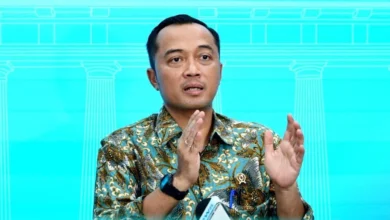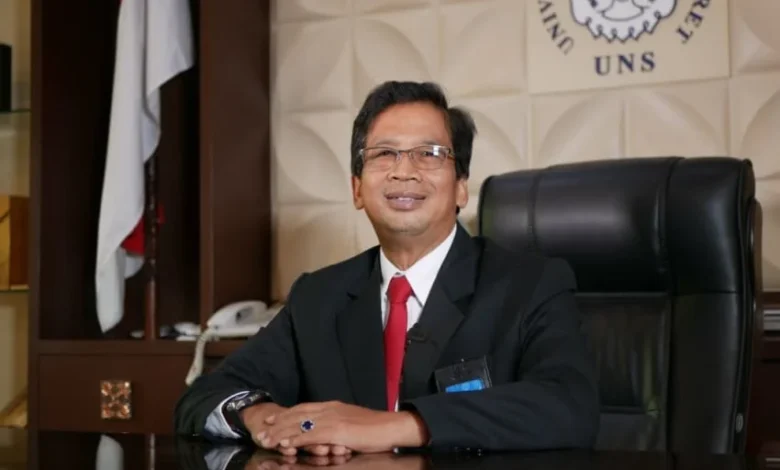
Professor Dr. Jamal Wiwoho, S.H., M.Hum, a distinguished Professor of Law at Universitas Sebelas Maret (UNS) and the former Rector of UNS (2019-2024), recently offered a profound perspective on the FIFA World Cup 2026. In a thought-provoking analysis, Professor Wiwoho envisioned a hypothetical conclusion to the tournament, set across the United States, Canada, and Mexico. In this compelling scenario, Spain emerged as the new world champion, triumphing over reigning champions Argentina with a decisive 1-0 victory. The crucial goal, scored by Ferran Torres in the 106th minute of extra time, not only secured Spain’s hypothetical title but also elevated them to the top of the global football rankings. This narrative, while fictional, serves as a powerful framework for Professor Wiwoho to underscore the often-overlooked yet fundamental twin pillars that underpin the success of such a monumental global event: law and economics.
Every four years, the FIFA World Cup captivates billions worldwide, transcending mere sport to become a cultural phenomenon. The roar of the crowds, the vibrant spectacle in the stadiums, and the dazzling performances of football’s greatest stars are merely the visible manifestations of an intricate web of planning and execution. Beneath this glittering surface, as Professor Wiwoho meticulously articulates, lie the indispensable foundations of robust legal frameworks and immense economic power. These two elements are not tangential but are, in fact, the very bedrock upon which the tournament’s global appeal and operational viability are built.
Many observers perceive the World Cup solely as a football competition. However, the 2026 tournament, marking the first time 48 nations will compete, involves millions of spectators, thousands of athletes, hundreds of sponsors, and a financial turnover projected to reach billions of US dollars. Such an undertaking would be impossible without absolute legal certainty and formidable economic strength. Law and economics, in this context, function as two sides of the same coin, mutually reinforcing and indispensable for the successful orchestration of an event of this unparalleled scale.
The Economic Engine: Fueling Global Football
From an economic vantage point, the FIFA World Cup has evolved into a colossal global sports industry. FIFA, the international governing body of football, projects an astounding revenue of approximately USD 8.911 billion (equivalent to roughly IDR 145-150 trillion) for the 2026 edition. This colossal income stream is diversified across several key components, each contributing significantly to the overall financial health of the tournament and the organization. Television broadcasting rights represent the largest share, accounting for an estimated USD 3.925 billion, or 44% of the total revenue. This highlights the immense value media companies place on exclusive access to the tournament’s global audience.
Following closely are ticket sales and hospitality packages, which are expected to generate around USD 3.017 billion, comprising 34% of the total. This category underscores the massive demand for live attendance and premium experiences associated with the World Cup. Marketing rights and sponsorships contribute approximately USD 1.786 billion, or 20%, reflecting the eagerness of global brands to associate themselves with one of the world’s most watched events. The remaining revenue, albeit a smaller percentage, comes from merchandise licensing, royalties, and other diverse income streams such as digital platforms, the FIFA Museum, FIFA quality programs, video games, and various other ventures.
As a non-profit organization, FIFA strategically allocates the majority of its substantial revenue towards the development and governance of football worldwide. A significant portion, estimated at USD 4.235 billion, is earmarked for the organization of competitions and events, ensuring the continuous staging of global tournaments, including the World Cup itself. Furthermore, approximately USD 1.726 billion is dedicated to football development and education programs, fostering talent and infrastructure across member associations. The governance of football receives around USD 54 million, covering FIFA’s administrative costs, marketing and broadcasting operations, technological advancements, logistics, transportation, security, accreditation, and guest services. This detailed financial breakdown unequivocally demonstrates that sports, particularly football at this elite level, have cemented their position as one of the most lucrative and impactful industries globally.
The Legal Framework: Ensuring Order and Fair Play
While economics provides the resources, law provides the essential structure, rules, and certainty without which such a complex international event would descend into chaos. The legal scaffolding of the FIFA World Cup is multifaceted, encompassing international agreements, national laws, and FIFA’s own extensive regulatory framework.
At the highest level, the hosting of the World Cup is governed by an intricate Host City Agreement and Host Country Agreement between FIFA and the respective national governments and cities. These agreements are legally binding treaties that cover everything from infrastructure development, security provisions, customs and immigration facilitations, tax exemptions, and intellectual property rights protection to human rights commitments and dispute resolution mechanisms. For the 2026 tournament, with its unprecedented three host nations (USA, Canada, Mexico), the legal complexities are amplified, requiring trilateral coordination and harmonization of diverse national legal systems. Each country has its own sovereignty, necessitating meticulous negotiation to ensure uniformity in event execution while respecting local laws.
Intellectual property (IP) rights are another critical legal domain. FIFA rigorously protects its trademarks, logos, official names (e.g., "FIFA World Cup 2026"), imagery, and even unique phrases associated with the tournament. This protection extends globally, preventing unauthorized use by ambush marketers or counterfeiters. The commercial value derived from these IP assets is enormous, directly contributing to the marketing and licensing revenue streams identified by Professor Wiwoho. Legal teams work tirelessly to monitor and enforce these rights, ensuring that only official sponsors and licensees benefit from association with the brand.
Furthermore, labor laws, anti-doping regulations, and anti-corruption measures form crucial components of the legal framework. Following past controversies surrounding labor conditions in host nations, FIFA has increasingly emphasized human rights clauses in its hosting agreements, requiring adherence to international labor standards. The World Anti-Doping Agency (WADA) code is strictly enforced to ensure fair play and protect the integrity of the athletes and the competition. Anti-corruption frameworks, including strict rules on betting and match-fixing, are vital to maintain public trust and the credibility of the sport. The FIFA Ethics Committee and independent judicial bodies play a significant role in upholding these standards.
Chronology and Preparation for the 2026 World Cup
The road to the 2026 FIFA World Cup has been a lengthy and meticulously planned journey, far predating Professor Wiwoho’s hypothetical conclusion.
- October 2016: FIFA announces its intention to expand the World Cup to 48 teams.
- January 2017: The FIFA Council unanimously decides to expand the World Cup from 32 to 48 teams, starting from the 2026 edition. This decision fundamentally altered the scale and logistical requirements of the tournament.
- April 2017: The bidding process officially opens. The joint bid from Canada, Mexico, and the United States, branded as "United 2026," quickly emerged as a strong contender.
- June 2018: At the 68th FIFA Congress in Moscow, the "United 2026" bid successfully wins the right to host the 2026 FIFA World Cup, defeating a rival bid from Morocco. This marked the first time the tournament would be hosted by three nations.
- March 2022: FIFA President Gianni Infantino confirms that the 2026 tournament will feature 104 matches, an increase from the originally planned 80, due to a revised format for the 48 teams (12 groups of four).
- June 2022: Sixteen host cities across the three nations are officially announced: 11 in the USA, 3 in Mexico, and 2 in Canada. This selection involved extensive evaluation of stadium readiness, infrastructure, logistical capabilities, and local support.
- Ongoing (2023-2025): Intensive planning and infrastructure development continue. This includes stadium upgrades, transportation network enhancements, accommodation arrangements, security planning, and the establishment of legal and commercial frameworks for each host city and nation.
- 2025: Draw for the qualification rounds for the tournament.
- 2026: Final draw for the tournament groups, followed by the commencement of the FIFA World Cup in June 2026.
This timeline underscores the multi-year, multi-billion dollar investment in preparation, involving countless stakeholders from national governments to local municipalities, construction companies, tourism boards, and security agencies, all operating within a complex legal and financial framework.
Broader Impact and Implications
The FIFA World Cup, as highlighted by Professor Wiwoho, extends far beyond the football pitch, leaving a significant imprint on host nations and the global community.
Socio-Economic Impact:
The economic benefits are multifaceted. Beyond FIFA’s direct revenues, host cities anticipate massive injections of capital through tourism, increased local spending, and job creation. New infrastructure projects, from stadium renovations to public transport upgrades, often serve as catalysts for urban development, leaving a lasting legacy. For the 2026 hosts, the sheer scale across three countries means the economic impact will be distributed but still substantial. The US, with its vast economy and existing infrastructure, will see significant economic activity, while Canada and Mexico will also benefit from the influx of visitors and media attention. However, it’s crucial to acknowledge potential downsides, such as cost overruns for infrastructure, displacement of local communities, and the risk of "white elephant" stadiums if post-tournament utilization is not carefully planned.
Legal Precedents and Challenges:
The 2026 World Cup’s tri-national hosting model sets new legal precedents for mega-events. Harmonizing tax regimes, visa requirements, security protocols, and intellectual property enforcement across three sovereign nations presents unprecedented challenges. The legal agreements must be robust enough to handle cross-border disputes, ensure consistent application of rules, and protect the rights of all involved parties, from players to fans and commercial partners. This model could serve as a blueprint or a cautionary tale for future multi-country bids for global events.
Geopolitical and Cultural Significance:
Hosting the World Cup offers immense soft power benefits. It provides an opportunity for host nations to showcase their culture, hospitality, and organizational capabilities on a global stage. It can foster national pride and international goodwill. For the United States, Canada, and Mexico, the "United 2026" bid carried a message of regional cooperation and unity, which holds significant geopolitical symbolism, particularly in a complex global environment. The tournament becomes a platform for cultural exchange, bringing together diverse populations under the shared passion for football.
Sustainability and Legacy:
Modern mega-event planning places increasing emphasis on sustainability and legacy. FIFA and the host nations are under pressure to minimize the environmental footprint of the tournament, from carbon emissions related to travel to waste management at venues. The legacy aspect goes beyond physical infrastructure; it includes developing local football talent, promoting healthy lifestyles, and creating long-term economic opportunities for local businesses. Professor Wiwoho’s analysis implicitly calls for a holistic view of the World Cup, one where the immediate spectacle is balanced with long-term responsible planning.
In conclusion, Professor Dr. Jamal Wiwoho’s insightful analysis, while using a hypothetical scenario, profoundly illuminates the intricate relationship between law and economics in the execution of a global phenomenon like the FIFA World Cup. The tournament is not merely a series of football matches; it is a meticulously constructed global enterprise, sustained by billions of dollars in economic activity and governed by an expansive, complex legal framework. As the world anticipates the actual commencement of the 2026 FIFA World Cup across North America, the ongoing preparations continue to solidify these two unseen pillars, ensuring that the grand spectacle of football can unfold successfully, ethically, and sustainably on the global stage.