Coldplay Donates Advanced Neon Moon II Trash Interceptor to Clean Indonesia’s Cisadane River

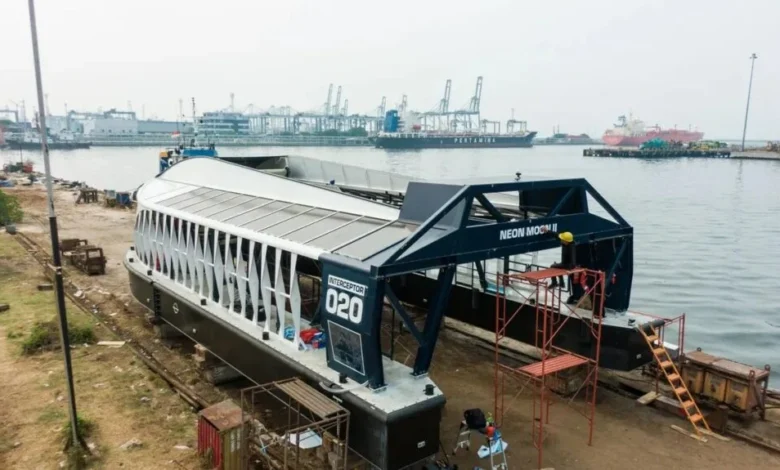
British rock band Coldplay has left a lasting environmental legacy in Indonesia following their historic debut concert at Gelora Bung Karno (GBK) Stadium in Jakarta on Wednesday, November 15. Beyond delivering a memorable musical performance to thousands of ecstatic fans, the band demonstrated its ongoing commitment to global sustainability by donating a high-tech trash-cleaning vessel known as the Interceptor 020. Named "Neon Moon II," the advanced cleanup boat is slated to operate along the critical Cisadane River, which spans from West Java to Banten, cutting through Bogor and Tangerang before emptying into the Java Sea.
The initiative is part of an ongoing partnership between Coldplay and The Ocean Cleanup, an international nonprofit environmental engineering organization dedicated to ridding the world’s oceans and rivers of plastic pollution. The donation underscores a growing trend of major musical acts leveraging their platform and financial resources to address pressing ecological crises in the regions where they perform. With Indonesia facing severe challenges regarding marine debris and riverine plastic leakage, the arrival of Neon Moon II represents a timely and vital intervention.
The Environmental Crisis of the Cisadane River
The Cisadane River is one of the most vital waterways in western Java, serving as a source of freshwater, irrigation, and daily sustenance for millions of residents. However, rapid urbanization, inadequate waste management infrastructure, and population growth along its banks have turned the river into a major conduit for plastic waste flowing directly into the Java Sea.
According to environmental data and assessments by The Ocean Cleanup, approximately 1,000 tons of plastic waste enter the Java Sea from the Cisadane River annually. This staggering volume contributes significantly to the microplastic burden in Indonesian waters, threatening marine biodiversity, local fisheries, and coastal communities. Microplastics—tiny plastic fragments smaller than five millimeters—pose severe ecological and health hazards as they infiltrate the marine food chain.

Without proactive intervention, the accumulation of plastic debris threatens to overwhelm local ecosystems. The deployment of the Interceptor 020 is specifically designed to stem this flow, intercepting trash before it can disperse across the open ocean where retrieval becomes virtually impossible.
Specifications and Capabilities of Neon Moon II
Valued at approximately $777,000 USD (equivalent to roughly IDR 11.9 billion), the Interceptor 020 is a marvel of modern environmental engineering. Measuring 24 meters in length, the vessel is engineered to operate autonomously, leveraging renewable energy to minimize its own carbon footprint.
Powered entirely by solar energy, Neon Moon II is completely emission-free and operates quietly, ensuring minimal disruption to local aquatic life and nearby human settlements. Despite running unmanned, the vessel is capable of continuous 24-hour operation, adapting to shifting river currents and varying volumes of debris. Depending on weather conditions and the density of the garbage, the boat can extract between 50 and 100 tons of trash per day.
The technology utilizes a long barrier deployed across the river to guide floating debris toward the mouth of the vessel. Once inside, a conveyor belt lifts the trash from the water and deposits it into automated dumpsters onboard. This systematic approach ensures that both large plastic items and smaller floating pollutants are efficiently captured and contained for proper sorting, recycling, and disposal.
A Proven Partnership: From Malaysia to Indonesia
The collaboration between Coldplay and The Ocean Cleanup is not a novel endeavor. The band previously forged a partnership with the nonprofit in 2018, resulting in the deployment of the first iteration of this technology, known as "Neon Moon I" (Interceptor 005), to the heavily polluted Klang River in Malaysia.

Over years of continuous operation, Neon Moon I achieved monumental success, successfully extracting more than 1 million kilograms (1,000 metric tons) of plastic waste from the Klang River. The undeniable efficacy of the Malaysian pilot project provided the blueprint and confidence for expanding the initiative to other heavily polluted river systems in Southeast Asia.
Impressed by the tangible results achieved in Malaysia, Coldplay committed to funding a second interceptor vessel specifically designated for Indonesia. By targeting rivers that rank among the world’s most significant contributors to oceanic plastic pollution, the partnership aims to create a scalable model for riverine cleanup across developing nations.
Official Responses and Collaborative Framework
The successful deployment of Neon Moon II relies heavily on coordination between international environmental organizations, local governments, and community stakeholders. While The Ocean Cleanup provides the technology and operational expertise, regional authorities in West Java, Bogor, and Tangerang play an essential role in managing the onshore logistics, waste sorting facilities, and ultimate recycling pathways for the collected materials.
Local environmental agencies and regional water utilities, such as PDAM Tirta Benteng, have expressed optimism regarding the deployment of the vessel. By reducing the concentration of pollutants in the Cisadane River, the initiative is expected to ease the burden on water treatment facilities, lower purification costs, and improve overall water quality for downstream communities.
Although Coldplay members did not issue extensive public commentary regarding the donation during their Jakarta concert, the band’s documented environmental ethos speaks volumes. Throughout their "Music of the Spheres World Tour," Coldplay has implemented rigorous sustainability measures, including powering stages with kinetic dance floors and bicycle generators, reducing tour emissions by over 50 percentage points compared to their previous major outing, and actively funding environmental restoration projects worldwide.

Broader Socio-Economic and Environmental Implications
The arrival of the Interceptor 020 carries profound implications for Indonesia’s broader national waste management strategy. Indonesia has pledged ambitious targets to reduce marine plastic debris by 70% by the year 2025. Achieving such a goal requires a multi-pronged approach encompassing upstream policy changes, improved municipal waste collection infrastructure, and downstream technological interventions like those provided by The Ocean Cleanup.
While technological solutions such as Neon Moon II are critical for managing existing pollution, environmental experts emphasize that interceptors alone cannot solve the crisis. Analysts point out that long-term success depends heavily on systemic behavioral changes among local populations. Preventing single-use plastics from entering waterways in the first place remains the most cost-effective and sustainable solution.
Public reaction in Indonesia has been overwhelmingly positive. Social media platforms and news outlets have widely praised Coldplay not only for their artistic contribution during the Jakarta concert but also for leaving behind a tangible, enduring asset that addresses one of the nation’s most stubborn environmental challenges.
As Neon Moon II commences its operations on the Cisadane River, it serves as a powerful reminder of the intersection between pop culture, philanthropy, and practical engineering. For Indonesia, the vessel is more than just a piece of high-tech machinery; it is a catalyst for renewed environmental awareness, urging citizens, policymakers, and industries alike to take collective responsibility for the health of the nation’s waterways and the preservation of its natural ecosystems for future generations.