Navigating International Administrative Requirements: A Comprehensive Guide to Certified Translation, Apostille, and Document Legalization


The aspiration to study, work, marry, or relocate abroad is an increasingly common pursuit in a globalized economy, yet the administrative bridge between nations remains complex and unforgiving. Behind every visa application, university enrollment, or employment contract lies a rigorous framework of document verification that serves as the bedrock of international legal recognition. For millions of individuals, the process often stalls due to a fundamental misunderstanding of three critical components: certified translation, the Apostille Convention, and document legalization. These are not merely bureaucratic hurdles; they are the essential mechanisms that ensure the integrity of civil and academic records across sovereign borders.
The landscape of international documentation has undergone significant transformation in recent years, particularly following the widespread adoption of the Hague Apostille Convention. As more countries join the convention, the requirement for traditional, time-consuming "consular legalization" has been replaced by the more streamlined Apostille process. However, this evolution has also introduced new layers of complexity, as applicants must now discern which documents require standard notarization, which require certified translation, and which fall under the purview of the Apostille mechanism. Failure to adhere to these specific protocols often results in immediate rejection by foreign embassies, immigration departments, or educational institutions, leading to lost time, financial strain, and the potential derailment of career or academic plans.
The Evolution and Necessity of Certified Translation
Certified translation is the cornerstone of international document processing. It is distinct from standard translation in that it carries a formal certification—often including a signature, stamp, or official statement—attesting to the accuracy and completeness of the translation relative to the original document. This is typically performed by a translator who has been officially recognized or "sworn" by a government authority, such as the Ministry of Law and Human Rights in Indonesia.
The requirement for certified translation stems from the need for foreign authorities to verify the legitimacy of educational certificates, birth records, and legal declarations. For instance, an Indonesian diploma presented to a university in Germany must not only be translated into German or English but must be validated as a faithful representation of the original. When a document is translated by an uncertified entity, the receiving institution lacks a legal basis to verify the translation’s reliability, rendering the document effectively useless for official purposes.

Data suggests that administrative delays related to documentation are among the top three reasons for visa processing setbacks globally. Applicants often underestimate the time required for these services, which can range from a few days to several weeks depending on the volume and complexity of the records. Furthermore, the nuances in terminology—such as the difference between a "transcript of records" and a "degree certificate"—require a level of precision that only experienced, specialized translation services can guarantee.
The Role of the Apostille Convention
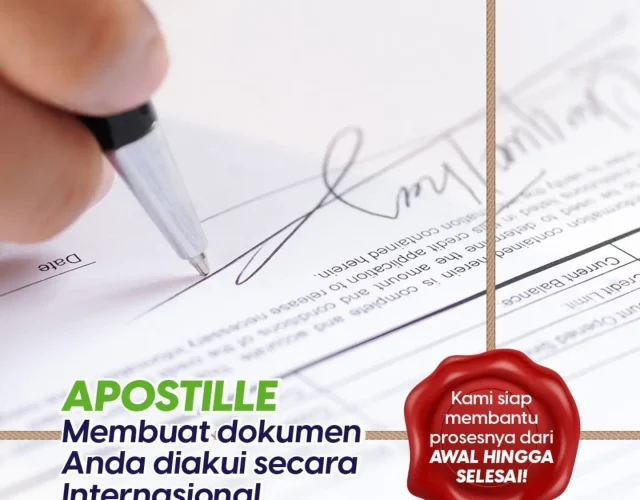
The Hague Convention of 1961, which abolished the requirement of legalization for foreign public documents, remains one of the most significant international legal agreements in history. An "Apostille" is a certificate attached to an original document to verify the authenticity of the signatory’s signature, the capacity in which the person signed, and the identity of any seal or stamp on the document.
The introduction of the Apostille mechanism in Indonesia has significantly simplified the process of document recognition for member states. By centralizing the authentication process through the Ministry of Law and Human Rights, the government has provided a clear, digitized, and more predictable path for citizens. However, the misconception remains that an Apostille is a universal "seal of approval" that validates the content of a document. In reality, an Apostille only authenticates the document’s origin. It does not provide legal weight to the veracity of the information contained within the document itself, nor does it override the specific requirements of a foreign agency.
For example, a marriage certificate issued in Indonesia for a couple planning to reside in a European Union nation must be apostilled to be recognized as a valid civil record. Without this, the foreign civil registry may refuse to acknowledge the marital status of the applicants, creating significant legal complications regarding residency rights, tax status, and social security benefits.
Strategic Management of the SKCK for International Use
The Surat Keterangan Catatan Kepolisian (SKCK), or Police Clearance Certificate, serves as a vital document for those seeking to work or reside abroad. This document, issued by the Indonesian National Police (Mabes Polri), is the primary evidence of an individual’s legal standing and criminal record—or lack thereof—in their home country.

The process of obtaining an SKCK for international purposes is more rigorous than for local requirements. It involves verifying fingerprints, ensuring the document is translated by a certified professional, and frequently undergoing the Apostille process to ensure it is accepted by foreign labor ministries or immigration bureaus.
Chronologically, the acquisition of an SKCK should be one of the final steps in a document preparation timeline, as these documents typically have a short shelf life—often remaining valid for only three to six months. Applying for an SKCK too early can lead to its expiration before the visa or employment permit is finalized, while applying too late can create a bottleneck. Expert guidance in this area is crucial to ensure the certificate remains valid at the exact moment it is presented to foreign authorities.
Impact and Broader Implications
The systemic implications of poor document management are substantial. From a macro-economic perspective, the inability of professionals to relocate for work or students to enroll in international programs due to documentation failures represents a loss of human capital mobility. At an individual level, the stress of navigating these requirements can be debilitating.
Professional service providers, such as Legalization Project, have emerged as vital intermediaries in this ecosystem. By acting as a bridge between the applicant and the complex, fragmented requirements of international bureaucracy, these services mitigate the risk of administrative error. A single error—such as a typo in a name or the omission of a required signature—can result in the rejection of a visa application, costing the applicant thousands of dollars in fees and weeks of lost time.
Professional agencies offer a structured approach to this, typically following a rigorous, multi-stage process:
- Initial Audit: A comprehensive review of all original documents against the specific requirements of the destination country.
- Translation Coordination: Assigning the translation to a certified professional with expertise in the required legal terminology.
- Authentication Facilitation: Managing the submission of documents to the Ministry of Law and Human Rights for the Apostille process.
- Final Quality Control: A final verification to ensure all documents meet the specific formatting and authentication standards of the receiving institution.
The Necessity of Early Planning
The most common mistake reported by applicants is the "last-minute rush." Because the processing of an Apostille and the verification of academic transcripts involves multiple governmental departments, lead times are often subject to external variables.
Statistically, individuals who begin their document preparation at least six months prior to their intended departure date face significantly fewer obstacles than those who wait until the final two months. This period allows for the correction of discrepancies found in old birth certificates, the gathering of school records, and the systematic processing of legal certifications.
In conclusion, while the prospect of international migration is exciting, the administrative reality is a test of preparation and precision. Whether one is pursuing an advanced degree, a corporate career, or family reunification, the legal integrity of one’s personal and academic records is non-negotiable. By leveraging professional services for certified translation and legal authentication, applicants can ensure that their focus remains on their future abroad, rather than the bureaucratic hurdles of their past.
As global mobility continues to rise, the standards for documentation will only become more stringent. Staying informed, utilizing official channels, and engaging with experts in document legalization is not just a recommendation—it is a prerequisite for success in the international arena. For those currently planning their transition, the time to audit your documentation is now, ensuring that when the opportunity for travel arises, your paperwork is ready to serve as a reliable passport to your future.