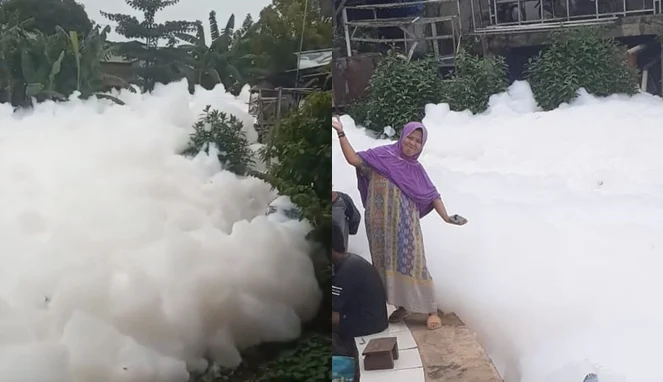
A viral video circulating on social media has brought to light a disturbing environmental incident in Depok, West Java, Indonesia, where the Kali Baru river in Tugu Village, Cimanggis District, has been completely obscured by a massive accumulation of white foam. The footage, which began spreading widely on Monday, November 27th, shows the river transformed into a landscape of dense, frothy foam, reaching heights that surpass the riverbanks and reportedly engulfing at least five nearby homes. The sheer volume of the foam has led to widespread concern and calls for immediate government intervention.
The video, captured by an individual identified only as being in Depok, features the stark visual of the Kali Baru river, a vital waterway in the region, being rendered unrecognizable by the thick, white suds. The foam is so substantial that the water beneath is completely hidden, creating an almost surreal and alarming spectacle. In the background of the video, the person recording can be heard lamenting the situation, identifying it as "limbah kali di depok" – meaning "river waste in Depok."
Initial reactions from netizens who viewed the footage were a mixture of disbelief and concern. Many viewers, unaware of the context, initially mistook the scene for something else entirely, with some commenting that it resembled clouds or even snowdrifts. This highlights the unprecedented and unnatural appearance of the pollution. However, this initial confusion quickly gave way to a shared sentiment of alarm and a strong demand for governmental authorities to investigate and address the source of this severe river contamination.
Chronology of the Incident and Emerging Details
While the viral video emerged on November 27th, residents in the affected area reported that the foam did not appear instantaneously in such vast quantities. According to local accounts, the phenomenon began subtly, with the foam gradually accumulating and thickening over time. This gradual onset suggests a continuous or intermittent discharge of polluting substances into the river. Crucially, residents also noted a pungent, unpleasant odor emanating from the foam, which they explicitly stated was not akin to the scent of detergents, despite its foamy appearance. This olfactory evidence further suggests the pollution is not simply a result of benign household cleaning products.
Remarkably, the extensive foam that blanketed the Kali Baru river reportedly dissipated by the evening of the same day it gained widespread attention. This rapid disappearance raises further questions about the nature of the polluting agent and the environmental conditions that led to its formation and subsequent breakdown. Understanding the dynamics of this foam’s appearance and disappearance is crucial for identifying the root cause and preventing future occurrences.
Official Response and Investigation
In response to the escalating public concern and the alarming visuals, the Department of Environment and Cleanliness (DLHK) of Depok City has initiated an investigation into the source of the pollution. Preliminary hypotheses suggest that the excessive foam is a consequence of domestic waste, specifically comprising substances like soap or detergent, accumulating in the river.
The DLHK’s initial assessment indicates that the increased volume and thickness of the foam were exacerbated by a rise in the river’s water levels. This increase is attributed to the current transitional period between the dry season and the rainy season, a common time for increased water flow and potential disturbance of accumulated pollutants. The department plans to conduct further inspections, examining businesses and residential areas situated along the riverbanks to pinpoint the exact origin of the waste responsible for this environmental crisis.
The Broader Implications of River Pollution
The incident in Depok serves as a stark reminder of the significant environmental and public health risks associated with river pollution. The accumulation of pollutants in waterways can have far-reaching and detrimental consequences:
-
Public Health Risks: Contaminated rivers can become breeding grounds for waterborne diseases. Bacteria, viruses, and parasites present in polluted water can lead to outbreaks of illnesses such as cholera, typhoid, and dysentery if the water is used for drinking, cooking, or recreational purposes without adequate treatment. The pungent odor reported by residents also suggests the presence of harmful chemicals that could pose respiratory risks.
-
Threats to Aquatic Ecosystems: The dense foam and the underlying pollutants can severely impact aquatic life. Oxygen levels in the water can be depleted, suffocating fish and other aquatic organisms. The chemical composition of the waste can also be toxic, leading to the death of fish, amphibians, and invertebrates, disrupting the delicate balance of the river’s ecosystem. This can have cascading effects on the food chain and biodiversity.
-
Scarcity of Clean Water Resources: Rivers are vital sources of freshwater for communities, agriculture, and industry. Pollution directly reduces the availability of clean water, forcing communities to seek more expensive or less accessible alternatives. This can lead to water scarcity issues, particularly in densely populated urban areas like Depok.
-
Economic Impact on Agriculture: Farmers who rely on river water for irrigation face significant challenges when rivers are polluted. Contaminated water can damage crops, reduce yields, and even render harvests unusable. This can have a substantial impact on the livelihoods of agricultural communities and the wider food supply chain.
-
Aesthetic and Recreational Degradation: The visual degradation of a river, as seen with the foam-covered Kali Baru, diminishes its aesthetic appeal and renders it unsuitable for recreational activities such as fishing, swimming, or boating. This loss impacts the quality of life for residents and can affect local tourism.
Supporting Data and Context
While specific data on the exact volume or chemical composition of the waste discharged into Kali Baru is not yet publicly available, the incident underscores a persistent issue in many urban environments, particularly in developing nations. Rapid urbanization and industrialization often outpace the development of adequate waste management infrastructure. In Indonesia, rivers frequently serve as conduits for both domestic and industrial wastewater, especially in areas with limited sewage treatment facilities.
The Java River Basin, which includes Depok, is one of the most densely populated regions in Indonesia. Rivers within this basin are under immense pressure from population growth, agricultural runoff, and industrial discharge. According to various environmental reports, many rivers in Java suffer from high levels of organic pollution, heavy metals, and plastic waste, impacting water quality and posing risks to human health and ecosystems. The Kali Baru river, as a tributary within this system, is susceptible to these broader environmental challenges.
The transition from dry to rainy season, as mentioned by the DLHK, is a critical period. During the dry season, pollutants can accumulate in riverbeds and along banks. When the rains arrive, these accumulated substances are flushed into the main river flow, potentially leading to more visible and concentrated pollution events, such as the foam observed in this case.
Looking Ahead: Prevention and Mitigation
The Depok river pollution incident highlights the urgent need for robust environmental protection measures. Addressing such issues requires a multi-pronged approach:
-
Enhanced Monitoring and Enforcement: Stricter regulations and more frequent environmental monitoring are essential to identify polluters and enforce compliance with environmental laws. This includes regular checks on industrial discharge and proper management of domestic wastewater.
-
Improved Waste Management Infrastructure: Investing in modern and efficient sewage treatment plants and solid waste management systems is crucial for preventing pollutants from entering waterways. This requires significant government and private sector investment.
-
Public Awareness and Education: Educating the public about the impacts of pollution and promoting responsible waste disposal practices can foster a sense of community ownership and encourage behavioral change. Campaigns that highlight the importance of clean rivers for public health and the environment are vital.
-
Inter-Agency Collaboration: Effective environmental management requires close cooperation between local government agencies, national environmental bodies, private sector entities, and community organizations.
The viral video from Depok has served as a powerful wake-up call, bringing an urgent environmental crisis to the forefront. As investigations continue, the focus will be on identifying the source of the pollution, holding responsible parties accountable, and implementing long-term strategies to protect the Kali Baru river and other vital water resources from further degradation. The health of Depok’s waterways, and indeed the well-being of its residents, depends on a swift and decisive response.