Iran and Saudi Arabia Lead Initiative for Endogenous Regional Security Framework in Tehran

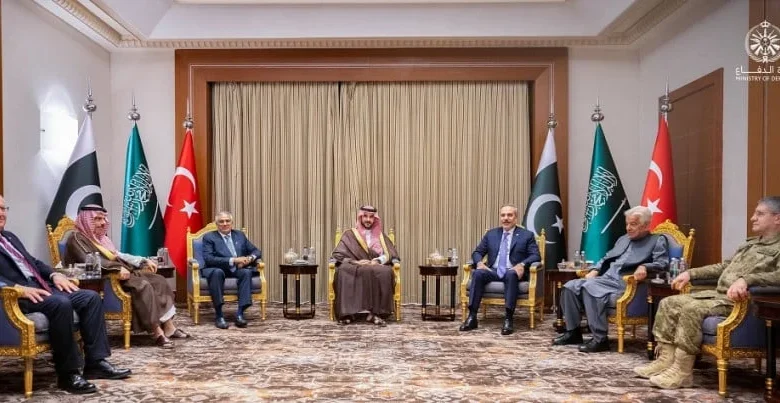
The Islamic Republic of Iran is spearheading a diplomatic and security initiative aimed at establishing an indigenous regional security architecture, marking a significant shift in the geopolitical landscape of the Middle East and Central Asia. Esmaeil Baghaei, the spokesperson for Iran’s Ministry of Foreign Affairs, confirmed during a weekly press conference on Monday that Tehran is hosting high-level delegations from Saudi Arabia, Pakistan, and Turkey. This collaborative effort is designed to foster a security framework that relies on regional stakeholders rather than external powers, reflecting a long-standing Iranian foreign policy objective to decentralize security management in the Persian Gulf and broader neighboring regions.
The discussions involve key figures, including the Saudi Arabian Minister of Defense, the Chief of Army Staff of Pakistan, and the head of Turkish intelligence. The initiative, which was formally proposed during a high-level visit to Tehran by Pakistan’s Army Chief, General Asim Munir, represents a pragmatic convergence of interests among nations that have historically navigated complex, and at times adversarial, diplomatic relations. By prioritizing internal consensus over foreign intervention, these nations are attempting to create a sustainable security model that addresses shared concerns ranging from maritime security and counter-terrorism to economic stability and border management.
Chronology of Diplomatic Realignment
The current momentum toward a regional security bloc did not emerge in a vacuum; it is the culmination of years of quiet diplomacy and a series of high-stakes negotiations. The timeline of this rapprochement can be traced back to several pivotal events:
- March 2023: Under the mediation of the People’s Republic of China, Iran and Saudi Arabia signed a historic agreement in Beijing to restore diplomatic ties, reopening embassies and resuming commercial flights after seven years of rupture. This marked the beginning of a cooling-off period in regional tensions.
- Late 2023: Diplomatic exchanges increased between Tehran and Riyadh, with high-ranking military and intelligence officials conducting rare visits to each other’s capitals to discuss regional stability and the containment of potential conflicts.
- Early 2024: General Asim Munir of Pakistan visited Tehran, where discussions regarding regional security were elevated. During this visit, the preliminary proposal for an "endogenous security framework" was formally introduced as a mechanism to minimize the influence of extra-regional military presence.
- Late 2024: The current coordination meetings in Tehran serve as the operational phase of these discussions, bringing together the defense and security apparatus of the four key nations to move beyond rhetoric toward actionable policy.
The Concept of Endogenous Security
At the heart of this initiative is the concept of "endogenous security." In the context of Iranian foreign policy, this term refers to the belief that the Middle East and its surrounding regions possess the necessary geopolitical, military, and economic resources to police their own borders and resolve internal disputes without the oversight of Western powers, specifically the United States.
Esmaeil Baghaei emphasized that the inclusion of Turkey, Saudi Arabia, and Pakistan—nations with distinct strategic alignments—is a deliberate choice to ensure the framework is representative of the regional power balance. "From our perspective, the fact that regional states are seeking to build, or at least consider, regional security mechanisms based on their own interests and concerns is an encouraging development," Baghaei stated. He further noted that the reliance on local "will and security considerations" is the only sustainable way to ensure long-term peace in a region that has been plagued by cycles of proxy warfare for decades.
Geopolitical Implications and Regional Power Dynamics
The involvement of Turkey, a NATO member, alongside Iran and Saudi Arabia, adds a layer of complexity to the proposed security architecture. Turkey has historically balanced its security needs through its Western alliances while maintaining a robust independent foreign policy in the Caucasus, the Levant, and Central Asia. The participation of Turkish intelligence indicates that Ankara is interested in a security framework that addresses cross-border threats, such as insurgencies and smuggling, which directly impact its domestic security.
For Saudi Arabia, the move represents a strategic pivot toward "strategic autonomy." By engaging with Iran, Riyadh is signaling a desire to decouple its regional security from the volatility of international political cycles, such as changes in U.S. presidential administrations. Saudi Arabia’s commitment to the Vision 2030 project requires a stable and predictable regional environment, making a security pact with Iran—long considered a primary rival—a rational, albeit difficult, economic necessity.
Pakistan’s role as a bridge-builder in this scenario is critical. As a nuclear-armed state with deep historical ties to both Saudi Arabia and Iran, Islamabad is uniquely positioned to act as a guarantor of such a framework. The Pakistani military’s involvement suggests that the proposed security structure will have a strong emphasis on intelligence sharing and coordinated border patrols, which are essential for combating extremist groups operating in the border regions between Pakistan, Iran, and Afghanistan.
Supporting Data: Security Expenditures and Regional Stability
The necessity for this framework is underscored by the high level of defense spending in the region. According to the Stockholm International Peace Research Institute (SIPRI), the Middle East remains one of the most heavily militarized regions in the world. Saudi Arabia consistently ranks among the top global spenders on defense, with a budget often exceeding $70 billion annually. Iran, despite international sanctions, has maintained a robust asymmetric warfare capability, investing heavily in domestic drone technology, missile systems, and naval deterrence.
By integrating these disparate military capabilities into a cohesive, non-aggressive security mechanism, the participating nations aim to reduce the "security dilemma"—a situation where one nation’s efforts to increase its own security are perceived as a threat by its neighbors, leading to an arms race. If successful, this framework could potentially lower the defense burden for these nations, allowing for greater reallocation of resources toward economic development and infrastructure projects—a key goal for all four participating states.
Challenges to Implementation
Despite the optimism expressed by the Iranian Foreign Ministry, significant hurdles remain. The region is currently facing heightened tensions due to the conflict in Gaza and the ongoing instability in Yemen and Lebanon. Furthermore, the varying political systems and ideological underpinnings of the four nations—ranging from Iran’s theocratic republic to Saudi Arabia’s absolute monarchy and Turkey’s parliamentary-presidential hybrid—pose a challenge to creating a unified command structure.
Analysts suggest that the most immediate outcome of these meetings will likely be limited to intelligence sharing and a "hotline" mechanism for de-escalation, rather than a full-fledged military alliance similar to NATO. The transition from a series of bilateral trust-building measures to a multilateral security architecture will require consistent political will and a willingness to compromise on long-standing territorial and ideological disputes.
Official Responses and International Observation
While official responses from Washington and Brussels have been muted, the international community is closely observing these developments. The U.S. has historically been the primary security guarantor in the Persian Gulf, and any move toward an endogenous security structure is viewed as a potential challenge to the status quo of American influence in the region.
However, some regional experts argue that the U.S. may actually benefit from a more stable Middle East that does not require constant American military intervention. If the Iran-Saudi-Turkey-Pakistan nexus can effectively manage regional threats, it could allow for a more balanced and less volatile regional environment, reducing the risk of global energy shocks.
Conclusion: A New Era for Regional Autonomy
The initiative to form an endogenous security framework marks a turning point in the history of the Middle East. By shifting the focus from external security guarantees to regional cooperation, Iran and its counterparts are attempting to define a new chapter of sovereignty. Whether this effort leads to a formal treaty or remains a loose consultative forum, the fact that these nations are sitting at the same table to discuss their collective future is, in itself, a significant geopolitical development.
The coming months will be critical as the working groups established in Tehran begin to draft the operational parameters of this security mechanism. If they can successfully navigate the complexities of their diverse geopolitical interests, the result could be a more resilient and self-reliant region, capable of managing its own stability in an increasingly multipolar world. As Esmaei Baghaei concluded, the emphasis on local "will and consideration" serves as the foundational principle for a future where regional security is no longer a commodity to be imported, but a capacity to be cultivated from within.