Chicken Farmers Urge Public and Government Not to Blame Producers Amid Surging Retail Poultry Prices

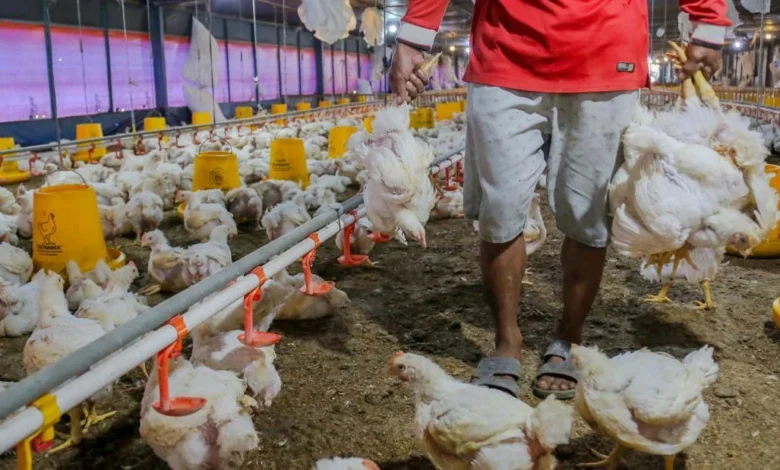
The rising cost of broiler chicken in traditional and modern markets across Indonesia has sparked widespread consumer concern and prompted immediate attention from economic monitors. However, as retail prices breach the threshold of Rp 40,000 per kilogram, representatives of independent poultry farmers have stepped forward to address the narrative surrounding the price hike. The Indonesian Independent People’s Poultry Farmers Association (Permindo) has issued a formal appeal to the public, market analysts, and regulatory bodies, urging stakeholders to avoid placing unilateral blame on primary producers for the escalating costs borne by everyday consumers.
According to industry representatives, the economic reality inside the nation’s poultry farms tells a starkly different story from the price tags displayed in urban marketplaces. While retail consumers face financial pressure at checkout counters, independent farmers operate within tight margins dictated by high operational costs that have persisted over long production cycles. This divergence between farmgate prices and retail values has reopened discussions regarding the transparency of the domestic poultry supply chain, highlighting structural inefficiencies and cost accumulations that occur long after livestock leaves the care of the breeders.
Dissecting the Gap: Farmgate Versus Retail Realities
To understand the mechanics of the current price surge, industry observers must examine the tangible financial figures governing poultry production at the farm level. Kusnan, General Chairperson of Permindo, clarified that the live bird (LB) price at the farm level currently hovers around Rp 25,000 per kilogram. In the context of contemporary production economics, this price point remains closely aligned with the actual cost of goods sold (COGS), or harga pokok produksi (HPP), which ranges between Rp 23,500 and Rp 24,000 per kilogram for independent breeders.
This narrow margin demonstrates that farmers are not enjoying runaway profits or exploiting the current market climate. Instead, a live bird priced at Rp 25,000 at the farm gate provides breeders with a minimal buffer to sustain their operations. Yet, by the time these same poultry products reach urban wet markets and supermarkets in the form of dressed carcasses, prices frequently exceed Rp 40,000 per kilogram. This creates a massive price disparity of roughly Rp 15,000 or more between the point of origin and the point of sale.
"We must ensure that the public does not look at a Rp 40,000 chicken price tag in the market and automatically point a finger at the farmer," Kusnan stated in an official release. "A live bird price of Rp 25,000 per kilogram does not automatically morph into Rp 40,000 per kilogram in the hands of the consumer. There is a complex, multi-tiered supply chain operating after the farm level that needs to be scrutinized and opened up with complete transparency."
Examining the Upstream Cost Burden on Breeders
The resilience of independent poultry farmers has been severely tested by sustained high costs across essential production inputs. Upstream economic pressures remain a heavy burden, largely independent of cyclical fluctuations in retail market demand. Foremost among these expenses are day-old chicks (DOC) and animal feed, which represent the primary operational outlays for any poultry enterprise.
Current market data indicates that DOC prices fluctuate between Rp 8,000 and Rp 8,500 per chick. Simultaneously, feed costs—driven heavily by global commodity pricing for key ingredients such as corn and soybean meal—remain elevated at approximately Rp 9,500 to Rp 10,000 per kilogram. Beyond these biological inputs, breeders must consistently allocate capital for essential operational necessities, including veterinary medicines, vaccines, labor, electricity, heating fuel, poultry bedding (such as rice husk), and logistics.
Crucially, these fixed and variable operational costs do not decrease simply because retail demand softens or market prices experience temporary downward pressure. Consequently, a farmgate price of Rp 25,000 per kilogram against an HPP of up to Rp 24,000 yields an extremely fragile profit margin. If live bird prices dip below the HPP threshold—a phenomenon that has occurred repeatedly during periods of national oversupply—farmers face immediate financial distress. Prolonged losses of this nature frequently force independent producers to depopulate their coops, scale down operations, or exit the industry entirely, creating long-term risks for national food security and stable supply chains.
The Multi-Tiered Supply Chain and Distribution Dynamics
The widening chasm between farmgate and retail prices underscores the necessity of a comprehensive, transparent investigation into the downstream distribution network. Permindo contends that government oversight and inflation-monitoring agencies must look past the immediate retail environment and audit every single link in the commercial chain.
The journey of broiler chicken from a rural farm to an urban kitchen table involves multiple intermediaries. This journey typically encompasses:
- Primary Production: Independent breeders managing day-to-day rearing and biosecurity.
- Collection and Trading: Middlemen, brokers, or collectors (trader/pengepul) who purchase live birds from farms.
- Processing: Poultry slaughterhouses (Rumah Potong Hewan Unggas or RPHU) responsible for processing live birds into carcasses.
- Logistics and Distribution: Secondary transport networks and cold chain operators moving goods from rural production centers to urban consumption hubs.
- Wholesale and Retail Trading: Traditional market merchants, supermarket vendors, and small-scale traders who complete the final sale to consumers.
At each of these sequential touchpoints, additional costs accumulate. Handling fees, transportation logistics, cold storage maintenance, waste management, municipal market levies, and middleman profit margins all contribute to the final retail price. Without comprehensive auditing, it remains difficult to determine precisely where the largest cost inflation occurs. However, evidence strongly suggests that structural inefficiencies and excessive markups within this chain are the primary drivers of high consumer prices, rather than farm-level profiteering.
Chronology and Policy Context of Price Volatility
The structural challenges facing Indonesia’s poultry sector are not entirely new; they represent a recurring cycle of price volatility that has challenged agricultural policymakers for years. Over the past decade, the poultry industry has transitioned through numerous regulatory interventions aimed at balancing the interests of large integrated corporations and independent smallholders.
Historically, periods of high retail prices often trigger knee-jerk administrative reactions. In previous market cycles, regional inflation control teams (TPID) and food task forces (Satgas Pangan) have occasionally pressured breeders to lower their live bird prices in an effort to cool down urban retail markets. Farmers argue that this approach fundamentally misunderstands market mechanics. Forcing down farmgate prices when production costs remain high inflicts severe damage on upstream producers while failing to address the underlying inefficiencies embedded within the distribution network.
Throughout recent years, fluctuations in imported feed ingredients, currency depreciation affecting raw material acquisition, and shifting consumer purchasing power following macroeconomic shocks have compounded the problem. The year 2026 has witnessed renewed inflationary pressures across the agricultural sector, bringing the long-standing debate over supply chain equity back to the forefront of national economic discourse.
Recommendations for Government Oversight and Reform
In response to the current market pressures, Permindo has outlined a series of concrete recommendations for regulatory authorities, including the Ministry of Trade, the Ministry of Agriculture, the Food Task Force, and regional inflation control teams. The association stresses that effective market governance requires holistic supervision that spans the entire economic spectrum—from upstream feed production to downstream retail distribution.
First, the association urges regulatory bodies to abandon policies that pressure farmers to lower farmgate prices as a primary tool for consumer price relief. Instead, authorities should focus on mapping out cost components, purchase prices, operational overheads, and profit margins at every specific tier of the supply chain. If high distribution costs or unnecessarily long supply chains are identified as the root cause of retail price inflation, the government should implement structural reforms to streamline logistics and eliminate predatory intermediary practices.
Second, transparency initiatives must be extended to the entire industrial ecosystem. This includes rigorous oversight of the upstream supply of raw materials—specifically corn and soybean meal—as well as the pricing structures of major feed mills and DOC breeding facilities. Monopolistic tendencies or unfair trade practices within these concentrated sectors can artificially inflate production costs for independent farmers, setting off a chain reaction that ultimately impacts consumers at the retail level.
"Do not immediately pressure prices at the farm level simply because prices in the market are high," Kusnan emphasized. "We need the government to trace purchasing prices, incurred costs, selling prices, and margins across every single tier. If distribution costs are too high, or if the chain is overly long with unfair margins, that is where the evaluation must take place."
Broader Economic Implications and Outlook
The ongoing debate over chicken prices carries significant implications for national inflation, consumer welfare, and the survival of independent agricultural enterprises in Indonesia. Poultry is the most widely consumed source of animal protein in the country, playing a vital role in national nutrition, food security, and the livelihoods of millions of rural households.
If regulatory bodies fail to address the root causes of distribution inefficiencies, the long-term viability of independent farming will remain under constant threat. Persistent cost-price squeezes could drive thousands of independent breeders out of business, leading to increased market consolidation where a handful of large corporate integrators dominate both production and distribution. Such a scenario could reduce market competitiveness and leave consumers even more vulnerable to price fluctuations in the future.
Ultimately, achieving a sustainable and equitable poultry market requires a balanced regulatory approach. By enforcing transparency across all distribution channels, protecting independent producers from unfair market pressures, and streamlining logistics from farm to market, policymakers can protect consumers from exorbitant prices while ensuring that the farmers who feed the nation can continue their vital work with dignity and economic security.