Ministry of Home Affairs and KPK Forge Strategic Alliance to Combat Regional Corruption through Targeted Education and Systemic Oversight

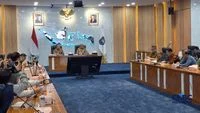
In a significant move to fortify the integrity of local governance across the Indonesian archipelago, the Ministry of Home Affairs (Kemendagri) has officially entered into a strategic collaboration with the Corruption Eradication Commission (KPK). This partnership is specifically designed to address and mitigate the long-standing challenges of graft and financial mismanagement at the regional level. Minister of Home Affairs Tito Karnavian, speaking at a joint press conference with the leadership of the KPK on Friday, July 24, 2026, outlined a comprehensive roadmap intended to close the systemic loopholes that have historically allowed corrupt practices to flourish within provincial and municipal administrations.
The initiative comes at a critical juncture for Indonesian regional autonomy. Since the implementation of decentralization, the power wielded by regional heads—governors, regents, and mayors—has increased exponentially, bringing with it a heightened risk of abuse of power. Minister Karnavian emphasized that the collaboration is not merely a reactive measure but a proactive strategy to instill a culture of transparency and accountability from the top down. By identifying specific "red zones" or high-risk areas, the Ministry and the KPK aim to create a robust defense mechanism against the misappropriation of public funds.
Identifying the Architecture of Corruption in Regional Governance
During the briefing, Minister Karnavian provided a granular breakdown of the specific areas where corruption most frequently occurs. These "vulnerability points" serve as the primary focus for the new joint oversight task force. According to the Minister, the planning and budgeting phase remains one of the most susceptible stages of the administrative process. He highlighted the prevalence of "inserted programs" and "pokir" (Pokok-Pokok Pikiran or legislative ideas) that are often misaligned with the actual needs of the community. In many instances, projects are conceptualized without a genuine underlying requirement, serving instead as vehicles for budget absorption or personal gain.
The procurement of goods and services was also identified as a perennial hotspot for illicit activity. The Minister detailed various methods used to circumvent legal requirements, such as the manipulation of the Owner’s Estimate (Harga Perkiraan Sendiri or HPS), the deliberate breaking up of large projects into smaller packages to avoid open bidding, and the pre-selection of "winning" contractors through collusive arrangements. Perhaps most egregious are the instances of fictitious work, where payments are made for services never rendered, or the reduction of project volumes, which compromises the quality of public infrastructure.
Furthermore, the Minister pointed toward the management of the State Civil Apparatus (ASN) as a significant area of concern. The "buying and selling" of government positions and promotions based on proximity or political loyalty rather than merit remains a persistent issue. This practice not only fosters corruption but also degrades the quality of public service delivery, as unqualified individuals are placed in positions of authority.
The Spectrum of Risks: From Licensing to Asset Management
The scope of the Kemendagri-KPK collaboration extends beyond budgeting and procurement. The Minister identified the licensing sector as a major source of "leakage," where bribery is often used to accelerate permits or bypass official regulations. Unofficial levies and the illegal intervention in spatial planning (tata ruang) were cited as specific examples of how the licensing process can be subverted.
In the realm of regional revenue, the manipulation of tax databases and the "leaking" of local levies (retribusi) represent a direct drain on the local treasury. This is compounded by issues in the management of Regional Government Assets (Barang Milik Daerah or BMD). In many regions, state-owned assets are illicitly controlled by third parties or utilized without any contribution to the regional budget. The Minister also raised alarms regarding Regional Government-Owned Enterprises (BUMD) and Regional Public Service Agencies (BLUD), where affiliate transactions and the intervention of political interests often override sound corporate governance.
Social assistance (Bansos) and grants (Hibah) were also flagged as high-risk sectors. The Minister noted that these funds are frequently diverted to "invalid recipients" or used to further political agendas, often supported by fictitious accountability reports. To address these multifaceted risks, the government has identified eight priority areas for immediate reform: planning and budgeting, procurement, public services, licensing, internal oversight (APIP), governance, ASN management, and asset/revenue management.
A Systematic Approach: The 10-Cluster Regional Education Program
To translate these findings into action, Kemendagri and the KPK have devised a large-scale educational initiative targeting the key stakeholders of regional government. This program will involve governors, deputy governors, heads of Regional Legislative Councils (DPRD), regional secretaries (Sekda), and various regional apparatus heads. The education will be conducted across 10 regional clusters to ensure comprehensive coverage of the nation.
Minister Karnavian explained that the program is scheduled to commence as early as August 2026, with the first sessions hosted in East Java and Bali. "These activities will be focused on the areas previously identified as being prone to corruption," the Minister stated. The choice of hosting the sessions in governor’s offices or provincial department buildings is intended to create a sense of local ownership and direct responsibility.
The curriculum for these sessions is being co-developed by experts from both the Ministry of Home Affairs and the KPK. It will involve mapping the specific risks inherent to each unique region, providing case studies of past failures, and formulating concrete steps for improvement. By bringing together the executive and legislative branches of regional government, the program aims to harmonize the understanding of anti-corruption standards and ensure that both sides of the regional administration are aligned in their commitment to integrity.
Strengthening the Role of Internal Oversight (APIP)
A cornerstone of the new strategy is the empowerment of the Government Internal Oversight Apparatus (Aparat Pengawas Internal Pemerintah or APIP). Historically, internal auditors at the regional level have faced challenges regarding their independence and resource allocation. Often reporting directly to the regional heads they are tasked with overseeing, APIP officials have sometimes found themselves in a compromised position.
The collaboration seeks to revitalize APIP by providing them with better training, clearer mandates, and a direct line of communication with national oversight bodies like the KPK and the Ministry of Home Affairs. By strengthening the "first line of defense," the government hopes to detect and rectify irregularities before they escalate into criminal cases. Minister Karnavian reiterated that the goal is not just to punish, but to build a system where corruption is difficult to initiate and easy to detect.
Background and Context: The Fight Against Regional Graft
This intensified focus on regional corruption is a response to the significant number of local leaders who have faced legal action by the KPK over the last decade. Since the era of direct local elections began, hundreds of regents, mayors, and governors have been implicated in various corruption scandals. The high cost of political campaigning in Indonesia is often cited by analysts as a primary driver of this trend, as elected officials seek to "recover" their investments through kickbacks and the manipulation of government contracts.
Data from the KPK indicates that procurement and budgeting are consistently the most common types of cases handled by the commission. By partnering with Kemendagri—the ministry that holds the administrative mandate to supervise regional governments—the KPK gains a powerful ally in its efforts to institutionalize preventive measures. This partnership represents a shift in strategy from purely enforcement-based actions to a more holistic approach that combines surveillance with systemic reform.
Implications for Public Trust and Economic Stability
The implications of this collaboration are far-reaching. For the general public, a reduction in regional corruption directly translates to better infrastructure, improved healthcare, and more efficient public services. When funds intended for the community are no longer siphoned off by corrupt officials, the "development gap" between regions can begin to close.
From an economic perspective, increased transparency in licensing and procurement makes regional markets more attractive to both domestic and foreign investors. A predictable and clean regulatory environment is essential for long-term economic growth. By cleaning up the BUMDs and improving tax collection, regional governments can also become more fiscally self-sufficient, reducing their reliance on central government transfers.
Furthermore, the initiative is expected to bolster Indonesia’s standing in international indices, such as the Corruption Perceptions Index (CPI) published by Transparency International. Improvements at the regional level are crucial for the national average, as the vast majority of government-citizen interactions occur at the local level.
Conclusion and Future Outlook
As the Ministry of Home Affairs and the KPK prepare to launch their first cluster of educational sessions in East Java and Bali next month, the eyes of the nation will be on the participating regional leaders. The success of this initiative will depend largely on the political will of local officials to implement the reforms suggested by the central government.
Minister Tito Karnavian concluded the press conference with a firm reminder that the era of "business as usual" in regional administration must come to an end. "Kemendagri and the KPK will continue to monitor, map risks, and provide the necessary tools for improvement. However, the ultimate responsibility for clean governance lies with the leaders on the ground," he said. With a clear roadmap and a collaborative spirit, this new alliance seeks to transform the landscape of Indonesian local government into one defined by integrity, accountability, and a steadfast commitment to the public interest.