Minister of Public Works and Head of BKN Strategize to Combat Civil Servant Misconduct and Strengthen Institutional Integrity

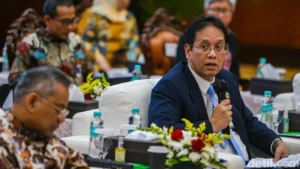
Minister of Public Works (PU) Dody Hanggodo officially convened with the Head of the National Civil Service Agency (BKN), Zudan Arif Fakrulloh, on Wednesday, July 22, 2026, to initiate a comprehensive overhaul of the human resources framework within the Ministry. The high-level meeting, held at the Ministry of Public Works headquarters in Jakarta, centered on the urgent need to fortify the quality, discipline, and ethical standing of the State Civil Apparatus (ASN) serving the nation’s infrastructure sector. This strategic coordination comes at a critical juncture as the administration under President Prabowo Subianto emphasizes the role of the bureaucracy as a fundamental pillar of national stability and progress.
During the press briefing following the meeting, Minister Dody Hanggodo underscored that the ASN is not merely a workforce but a vital component of the President’s broader "statecraft" vision. He articulated that the strength of the Indonesian state rests upon four essential pillars: the National Police (Polri), the Indonesian National Armed Forces (TNI), the Intelligence services, and the Civil Service (ASN). According to the Minister, for the government to effectively execute its developmental mandates, the civil service must operate with the same level of discipline and strategic alignment as the security and defense sectors.
The Strategic Importance of ASN in National Statecraft
The concept of "statecraft" mentioned by Minister Dody reflects a shift in how the Indonesian government views its administrative body. Historically, the bureaucracy has often been viewed through the lens of clerical and procedural functions. However, under the current leadership, there is a concerted effort to transform the ASN into a high-performance engine of national development. The Ministry of Public Works, which manages the lion’s share of the national infrastructure budget, is at the forefront of this transformation.
"We spoke with the Head of BKN about how to strengthen our ASN, particularly within the Ministry of Public Works, for the years ahead," Minister Dody stated. "Statecraft requires a professional and resilient apparatus. If the ASN, which is the backbone of our administrative state, is compromised by lack of discipline or integrity, the entire structure of governance faces significant risks."
This focus on the ASN as a pillar of the state is particularly relevant given the Ministry’s massive responsibilities. In the 2026 fiscal year, the Ministry of Public Works continues to oversee multi-trillion rupiah projects, including the ongoing development of the New Capital City (IKN), the expansion of the Trans-Sumatra Toll Road, and the construction of strategic dams to ensure national food and water security. The human capital managing these projects must, therefore, be beyond reproach.
Addressing the Crisis of Discipline: Gambling and Absenteeism
A primary driver for this urgent coordination with BKN is a series of internal disciplinary issues that have plagued the Ministry of Public Works in recent months. Minister Dody was remarkably candid about the challenges facing his department, citing specific instances of misconduct that have hampered productivity and tarnished the Ministry’s reputation. Among the most pressing issues are the rise of online gambling (judol) among staff, systematic manipulation of attendance records, and the submission of fraudulent leave requests.
The issue of online gambling has become a national concern in Indonesia, prompting the government to establish a dedicated task force. Within the Ministry of Public Works, the impact of this "digital epidemic" has been felt through decreased focus, financial instability among employees, and a general erosion of workplace ethics. "We have identified several problems, ranging from attendance issues to the prevalence of online gambling," Dody explained. "These are not just personal failings; they are institutional risks that we must resolve to ensure this Ministry and its ASN can advance and improve over time."
Furthermore, the manipulation of attendance through "absenteeism hacks" and "fake leave letters" (surat cuti bodong) has highlighted vulnerabilities in the Ministry’s current oversight mechanisms. Such practices not only result in financial losses for the state due to unearned salaries and allowances but also cause significant delays in project supervision and administrative workflows. The collaboration with BKN is intended to close these loopholes through better technological integration and more rigorous auditing of personnel data.
The Role of BKN in Institutional Reform
As the central authority for civil service management in Indonesia, the BKN plays a pivotal role in providing the tools and regulatory frameworks necessary for reform. During the meeting, Head of BKN Zudan Arif Fakrulloh presented a series of strategic recommendations designed to enhance the integrity and quality of the Ministry’s workforce. These proposals were summarized in a two-page memorandum that outlines immediate actions and long-term structural changes.
One of the key initiatives discussed was the "Bakti ASN-PU" program. While the Minister noted that the specific acronym’s full definition is being finalized, the core philosophy revolves around "Devotion" (Bakti) and a renewed commitment to public service. The program is expected to include:
- Enhanced Digital Monitoring: Integrating the Ministry’s internal attendance systems with BKN’s national database to prevent data manipulation and ensure real-time tracking of staff presence.
- Psychological and Ethical Screenings: Implementing more rigorous periodic evaluations to detect signs of gambling addiction or other behavioral issues that could compromise an employee’s professional duties.
- Incentive and Sanction Synchronization: Aligning performance-based allowances (Tukin) more strictly with actual output and ethical conduct, ensuring that those who engage in misconduct face immediate and meaningful financial consequences.
- Leadership Training: Developing a middle-management tier that is better equipped to mentor subordinates and identify early warning signs of disciplinary breakdown.
Chronology of Civil Service Reform in the Infrastructure Sector
The drive for reform within the Ministry of Public Works is part of a broader timeline of bureaucratic evolution in Indonesia. Since the passage of Law No. 20 of 2023 on State Civil Apparatus, there has been a legal mandate to shift toward a "meritocratic" system.
- Late 2023 – 2024: The government began the "Digital Transformation" phase, introducing various e-government platforms to streamline ASN management.
- 2025: A nationwide crackdown on online gambling was initiated, revealing that several government sectors, including infrastructure and transport, were particularly vulnerable.
- Early 2026: Reports of project delays in several regional infrastructure sites were linked to "administrative negligence" and "absenteeism" within the Ministry of Public Works, prompting Minister Dody to seek a direct partnership with BKN.
- July 22, 2026: The meeting between Minister Dody and Zudan Arif Fakrulloh marks the official commencement of a targeted "cleansing and strengthening" operation within the Ministry.
Implications for National Development and Public Trust
The success of these reforms has implications that extend far beyond the internal hallways of the Ministry. The Ministry of Public Works is the primary engine for Indonesia’s physical transformation. If the integrity of the ASN in this sector is questioned, it can lead to a cascade of negative effects, including a decrease in construction quality, an increase in the likelihood of corruption in the procurement process, and a loss of confidence among international investors.
Industry analysts suggest that by tackling "petty" misconduct like attendance fraud and gambling, the Minister is also sending a signal that larger-scale corruption will not be tolerated. "Integrity is indivisible," noted an analyst from a Jakarta-based think tank. "If an official is willing to lie about their attendance or engage in illegal gambling, they are significantly more likely to be susceptible to bribery in multi-billion rupiah tender processes."
Furthermore, the focus on "statecraft" suggests that the Ministry of Public Works is being groomed to be a more disciplined, almost paramilitary-style administrative unit. This aligns with President Prabowo’s preference for high-discipline environments. By strengthening the ASN, the government aims to ensure that the massive investments in infrastructure yield the highest possible return for the public.
Future Outlook: A Roadmap for Excellence
Following the meeting, the Ministry of Public Works and BKN are expected to form a joint task force to monitor the implementation of the "Bakti ASN-PU" proposals. The Ministry will also likely conduct a series of internal town halls to communicate the new standards of discipline to its thousands of employees across Indonesia’s 38 provinces.
Minister Dody Hanggodo’s proactive approach in involving the BKN reflects a recognition that internal reform cannot happen in a vacuum. By leveraging the BKN’s expertise in personnel management and digital systems, the Ministry of Public Works is positioning itself to overcome its current disciplinary hurdles.
"We want this Ministry to be a model of integrity," Dody concluded. "The ideas presented by the Head of BKN provide a clear roadmap. Now, it is our responsibility to take these two pages of proposals and turn them into a reality that improves the lives of our staff and, ultimately, the quality of the infrastructure we provide for the Indonesian people."
As the government moves forward, the "Bakti ASN-PU" initiative will serve as a litmus test for the administration’s ability to reform the bureaucracy from within. For a nation with aspirations of becoming a top-five global economy by 2045, the discipline and integrity of its civil service—particularly those building its physical foundation—remain a non-negotiable requirement.
Related posts: