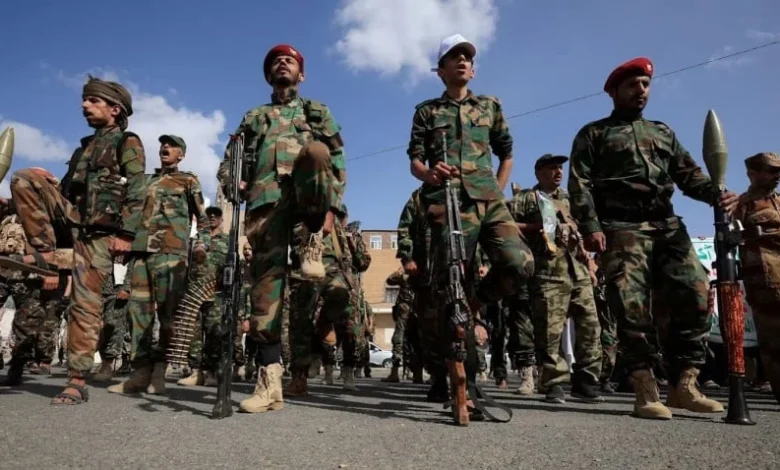
The escalating influence of the Houthi movement in Yemen, marked by strategic territorial gains and the seizure of critical islands in the Red Sea, has placed the geopolitical stability of the Middle East under unprecedented strain. As the group, which maintains deep ties to Iran, continues its offensive, a complex power vacuum has emerged. Despite the mounting threat to international shipping lanes and regional security, both the United States and Saudi Arabia appear locked in a state of strategic paralysis, lacking a cohesive, unified plan to mitigate the Houthi advance. This reluctance, particularly from Washington, has sent shockwaves through the Gulf Cooperation Council (GCC) states, raising fundamental questions about the future of American security commitments in the region.
The Strategic Shift: Red Sea Vulnerability and Maritime Security
At the heart of the crisis lies the control of the Bab al-Mandab Strait, a narrow maritime chokepoint through which a significant portion of the world’s energy supplies and commercial goods must pass. Recent intelligence reports indicate that the Houthis have prioritized this area to maximize their leverage over global commerce. The group’s ability to operate with increasing sophistication—demonstrated by their reported use of advanced surveillance and tactical maneuvering—suggests that they are no longer merely a localized insurgent force but a regional actor with the capacity to disrupt the global economy.
The failure of the Saudi-led coalition to effectively push back against these gains has become a focal point of diplomatic tension. While the United States has provided substantial support in the form of intelligence, logistical coordination, and target-acquisition data, the Saudi military has struggled to translate this assistance into tangible territorial control. Analysts suggest that the reliance on air power, without a robust and motivated ground presence, has left a vacuum that the Houthis have been quick to exploit.
Chronology of the Conflict: From Civil War to Regional Proxy Battle
The conflict in Yemen, which began in earnest in 2014, has evolved through several distinct phases.
- 2014-2015: The Houthis, a Zaydi Shia group, successfully seized the Yemeni capital, Sana’a, forcing the internationally recognized government into exile. Saudi Arabia, fearing Iranian expansion on its southern border, launched Operation Decisive Storm in March 2015.
- 2018-2020: The conflict stagnated into a brutal war of attrition. International pressure began to mount due to the severe humanitarian crisis, with the United Nations labeling the situation in Yemen as one of the world’s worst man-made disasters.
- 2022: A breakthrough occurred when the UN brokered a nationwide truce. This ceasefire, though fragile, provided a rare period of relative calm, allowing for the reopening of key infrastructure.
- Late 2023 to Present: The truce effectively collapsed as tensions flared. The Houthis accelerated their maritime operations, targeting commercial vessels and asserting control over islands of strategic value. Saudi Arabia reported intensified drone and missile activity, including alleged attempts to target holy sites, while the Houthis claimed to have downed advanced coalition aircraft, specifically citing the F-15.
The Doctrine of Restraint: The American Stance
The current administration in Washington has adopted a policy of “strategic restraint.” President Donald Trump has made his skepticism regarding military intervention in the Middle East a cornerstone of his foreign policy. By explicitly stating that the U.S. will not engage in kinetic or offensive operations against the Houthis, the White House has effectively drawn a red line that prioritizes the avoidance of direct conflict over the active defense of its regional partners.
This stance, however, has been interpreted by many in the region as a signal of American disengagement. Officials within the Gulf states argue that the absence of a credible U.S. threat has emboldened Tehran and its proxies. When the President remarked that the Houthis have expressed a lack of desire for conflict with the U.S., it sent a message of ambiguity that has left allies feeling exposed. The implication that Washington prefers to see the Saudi-led coalition handle the threat independently, despite evidence of their limited effectiveness, has fostered a sense of betrayal among traditional security partners.
The Intelligence Gap and Operational Limitations
A critical aspect of the current frustration is the perception of intelligence sharing. The U.S. has provided the Saudi military with satellite data and actionable intelligence to refine their targeting capabilities. However, military analysts point out that intelligence is only as effective as the ground-based forces utilizing it.
The Yemeni government forces, which have been trained by the Saudi military for nearly a decade, have suffered from internal fragmentation, logistical bottlenecks, and a lack of clear strategic direction. Consequently, the reliance on U.S. data has not resulted in a decisive military shift. The Houthi ability to adapt—utilizing decentralized cells and asymmetrical warfare tactics—has largely neutralized the technical advantages provided by the American-supported coalition.
Broader Implications for Global Energy and Security
The impact of this stalemate extends far beyond the borders of Yemen. The uncertainty surrounding the safety of the Bab al-Mandab Strait has already influenced maritime insurance premiums and shipping routes. If the Houthis continue to consolidate their control, the risk of a sustained increase in global oil prices becomes a reality.
Furthermore, the regional perception that the U.S. is "looking the other way" has triggered a re-evaluation of security architectures across the Middle East. Some nations are beginning to explore independent diplomatic channels with Iran, seeking to mitigate risk through engagement rather than relying solely on the American security umbrella. This shifting landscape suggests that the influence of the U.S. in the region is being tested not just by its enemies, but by the eroding confidence of its friends.
Expert Perspectives: A Diplomatic Crisis
Barbara Leaf, a former diplomat and Middle East expert, has publicly criticized the current rhetorical approach from the U.S. leadership. The framing of the Houthi conflict as a local nuisance that does not concern American interests overlooks the reality of the regional security fabric. Critics argue that by minimizing the threat, the U.S. is inadvertently inviting further aggression.
If the Houthis believe that the U.S. will not intervene, they have little incentive to negotiate in good faith or adhere to previous ceasefires. The lack of a "stick" to complement the "carrot" of diplomatic engagement has left the international community with few levers of influence.
Looking Forward: The Path of Uncertainty
As the situation develops, three potential scenarios emerge:
- Status Quo Persistence: The U.S. continues its limited intelligence support while Saudi Arabia remains unable to achieve a breakthrough, resulting in a prolonged, low-intensity conflict that slowly degrades regional stability.
- Regional Realignment: Gulf states, feeling abandoned, may move toward a more accommodationist policy with Iran, effectively weakening the traditional anti-Houthi coalition and shifting the regional balance of power.
- Escalation: The Houthis, sensing total impunity, may overreach, potentially attacking a high-value asset that forces a reluctant U.S. hand, leading to a direct conflict that Washington is currently trying to avoid.
The current trajectory is one of deep instability. While the desire to avoid another "forever war" in the Middle East is a clear driver of U.S. policy, the cost of inaction may ultimately be higher. The coming months will likely test the limits of this policy of restraint, as the situation in the Red Sea remains the most volatile variable in an already fragile international order. Whether through renewed diplomatic pressure or a reassessment of security commitments, the need for a clear, proactive strategy has never been more urgent.