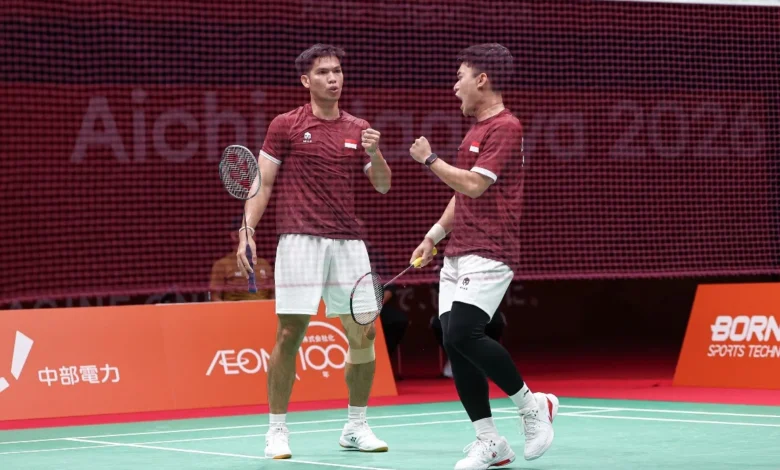
The anticipation surrounding the badminton individual event finals at the 2026 Asian Games in Ichinomiya has reached a fever pitch as Indonesia prepares for a historic showdown on Tuesday, September 29, 2026. The Ichinomiya City Municipal Gymnasium will host the culmination of a grueling week of competition, where two Indonesian pairs—Amri Syahnawi/Nita Violina Marwah in the mixed doubles and Leo Rolly Carnando/Daniel Marthin in the men’s doubles—stand on the precipice of continental glory. As the nation watches, the burning question remains whether these athletes can deliver the elusive gold medals that have remained out of reach for decades.
A Landmark Performance in Ichinomiya
The journey to the final stage has been nothing short of spectacular. The badminton tournament at the 2026 Asian Games, hosted in Japan, has proven to be a testament to the shifting landscape of global badminton. Indonesia, a country with a storied tradition in the sport, has faced intense pressure to perform, particularly given the recent dominance of Chinese and Japanese shuttlers on the international circuit.
Amri Syahnawi and Nita Violina Marwah have emerged as the surprise package of the tournament. Their semifinal victory over the world’s number one-ranked pair, Feng Yan Zhe and Huang Dongping of China, was a masterclass in tactical discipline and composure. Winning in straight sets, 21-12 and 21-14, the Indonesian pair dismantled the Chinese favorites, showcasing a level of synchronization that many analysts previously deemed impossible for a relatively newer partnership. This victory not only secured their spot in the final but also signaled a potential resurgence for Indonesian mixed doubles.
The Quest for History: Breaking a 44-Year Drought
The significance of Amri and Nita reaching the final cannot be overstated. Should they secure the gold medal against their next opponents, Jiang Zhen Bang and Wei Yaxin of China, they would be ending a drought that has spanned over four decades. The last time an Indonesian mixed doubles pair stood atop the podium at the Asian Games was in 1982, when the legendary duo of Christian Hadinata and Ivana Lie captured the title.
This 44-year wait reflects the immense difficulty of the discipline, which has historically been dominated by China, South Korea, and more recently, Japan and Thailand. The pressure on Amri and Nita is immense, not just from the sporting public, but from the weight of history itself. Their final match, scheduled for 09:00 WIB, will be the opening act of the day, setting the tone for what Indonesia hopes will be a golden Tuesday.
Leo/Daniel: The Torchbearers of Men’s Doubles
While the mixed doubles narrative focuses on historical reclamation, the men’s doubles final featuring Leo Rolly Carnando and Daniel Marthin represents the continuation of a proud Indonesian tradition. Known affectionately as "The Babies" during their rise through the junior ranks, Leo and Daniel have matured into a formidable force on the senior tour.
Their path to the final was characterized by grit and physical endurance. Facing top-tier opposition throughout the week, the duo displayed the signature Indonesian aggressive style—fast-paced net play, powerful smashes, and an uncanny ability to turn defense into attack in the blink of an eye. Their presence in the final ensures that regardless of the outcome, Indonesia will remain a central pillar in the global badminton power structure.
Technical Analysis and Tactical Considerations
The shift in momentum for Indonesian badminton can be attributed to several factors. Coaches have emphasized a transition toward a more data-driven approach, utilizing motion-tracking software to refine service returns and defensive rotations. The performance of Amri/Nita against the world number ones serves as a case study in effective counter-tactics. By neutralizing the aggressive baseline play of the Chinese pair and forcing them into uncharacteristic errors, Amri and Nita demonstrated that modern badminton is as much a psychological game as it is a physical one.

For the upcoming finals, the Indonesian camp has reportedly been focusing on recovery and mental conditioning. Playing at the Ichinomiya City Municipal Gymnasium requires adjustments to drift and lighting, factors that have historically influenced the outcome of high-stakes matches. The coaching staff has maintained a strict schedule, emphasizing the importance of staying "in the bubble" to avoid the distractions of the multi-sport event environment.
Official Responses and Internal Expectations
While official statements from the PBSI (Badminton Association of Indonesia) have been measured, there is an palpable sense of optimism within the team. High-performance directors have highlighted the team’s resilience, noting that the depth of the current squad has allowed for more specialized training regimes.
"We are proud of what the athletes have achieved so far," noted a team spokesperson. "However, we are cognizant that a silver medal is merely a milestone, not the destination. The focus remains entirely on the execution of the game plan against high-caliber opponents."
For the athletes themselves, the focus is singular. Amri Syahnawi, in a brief exchange with media, stated, "We respect our opponents, but we are not here to participate. We are here to compete for the highest honor. The history of 1982 is in the back of our minds, but our priority is the court in front of us."
Broader Implications for Indonesian Sport
Success at the 2026 Asian Games holds implications that reach far beyond the badminton court. For a nation where badminton is not merely a sport but a cultural touchstone, victory at this level provides a significant boost to national morale. It serves as a validation of the current developmental pipeline and provides the necessary momentum heading into the qualification cycle for the next Olympic Games.
Furthermore, the economic impact of such a victory cannot be ignored. Increased visibility for the sport drives corporate sponsorship, which in turn fuels better training facilities, sports science support, and grassroots development programs. A gold medal in Ichinomiya would effectively secure funding and public interest for the next four years, ensuring that the legacy of Indonesian badminton continues to thrive.
Looking Ahead: The Final Day
As the sun rises over Ichinomiya on Tuesday, the eyes of the badminton world will be fixed on the center court. The schedule is tight, and the margin for error is razor-thin. For Amri/Nita, the task is to maintain the high-intensity, error-free play that led to their upset of the world number ones. For Leo/Daniel, the objective is to leverage their raw speed and explosive power to dictate the rhythm of the game against their opponents.
The 2026 Asian Games have already proven to be a tournament of surprises and shifting tides. Whether the final day results in a historic double-gold haul for Indonesia or a fierce battle that ends in hard-fought silver, the performance of these athletes has already solidified their place in the annals of Indonesian sports history.
In conclusion, the events scheduled for September 29 represent more than just a series of matches. They represent the culmination of years of rigorous training, tactical evolution, and the enduring spirit of Indonesian badminton. As the shuttles fly across the net in Ichinomiya, the nation waits with bated breath, hopeful that this Tuesday will be remembered as the day the golden era of Indonesian doubles was emphatically reaffirmed. The stage is set, the players are ready, and the world is watching to see if history will indeed repeat itself, or if a new chapter of greatness is about to be written.