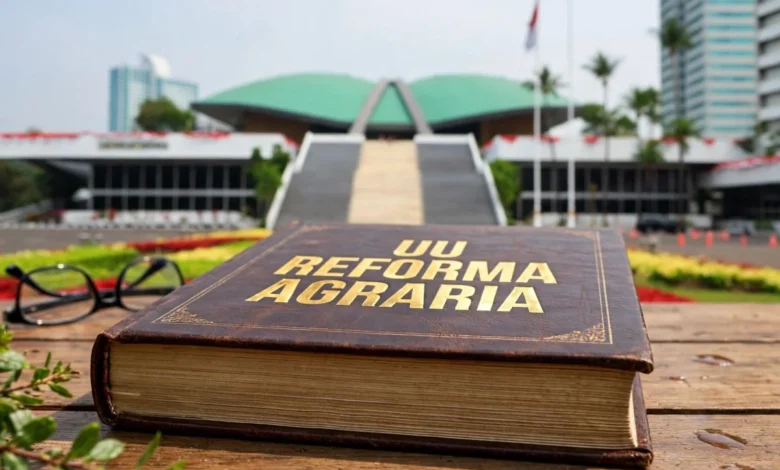
The Indonesian House of Representatives (DPR RI) officially enacted the Law on Agrarian Reform Regulation (UU PRA) on September 22, 2026, marking a pivotal shift in the country’s approach to land management and conflict resolution. While the legislative milestone has been met with cautious optimism, the National Commission on Human Rights (Komnas HAM) has issued a stern call for the government to ensure that all implementing regulations—the secondary legislation required to operationalize the law—are drafted through inclusive, participatory processes that prioritize the protection of indigenous communities and vulnerable agrarian groups.
A Legislative Turning Point
The enactment of the UU PRA comes after years of advocacy by civil society organizations, legal experts, and human rights defenders. For decades, Indonesia has grappled with systemic land disputes, often characterized by the overlapping of corporate concessions, state-claimed forest areas, and ancestral lands occupied by indigenous peoples for generations.
Komnas HAM’s formal response to the enactment highlights that the new legislation aligns with their long-standing recommendations, specifically those outlined in the "Roadmap for Human Rights-Based Agrarian Conflict Resolution" and the commission’s comprehensive study on police involvement in land disputes. By integrating these human rights-based perspectives into the legal framework, the government has signaled an intent to move away from the traditional, often aggressive, enforcement-heavy approach to land governance.
The Problem of Criminalization
A core concern driving this legislative change is the recurring pattern of "premature criminalization." Uli Parulian Sihombing, the Commissioner for Research and Assessment at Komnas HAM, noted on September 27, 2026, that the status quo has historically favored a punitive approach.
"Based on the results of our research, the handling of agrarian conflicts has frequently shifted prematurely from the realm of civil land disputes into the realm of criminal law," said Sihombing.
This phenomenon occurs when parties with stronger legal or financial backing utilize the police force to evict occupants, citing property trespassing or obstruction of business operations. Consequently, the Indonesian National Police are often placed in the difficult position of being the primary enforcement arm in disputes that are fundamentally socio-economic in nature. This dynamic has resulted in a documented rise in complaints regarding the intimidation of farmers, the detention of activists, and the disproportionate use of force by security personnel.
Contextualizing the Agrarian Conflict Landscape
To understand the significance of the UU PRA, one must examine the scale of the crisis. Data from various non-governmental organizations, including the Consortium for Agrarian Reform (KPA), has historically shown that hundreds of agrarian conflicts occur annually across the Indonesian archipelago. These conflicts span from the palm oil industry in Sumatra and Kalimantan to infrastructure projects in Java and mining concessions in eastern Indonesia.
Historically, the lack of a unified legal instrument meant that land rights were subject to a patchwork of ministerial regulations, state-owned enterprise mandates, and local bylaws, which often conflicted with each other. This "legal pluralism" created an environment where ambiguity was the norm, leaving rural communities vulnerable to displacement without due process or adequate compensation.
Chronology of the Legislative Process
The journey to the 2026 Law on Agrarian Reform was far from swift. The chronology of the law’s development reflects the intense pressure and complex negotiations involved:
- 2023–2024: The urgency for reform intensified as the National Police reported a 15% increase in land-related criminal complaints, highlighting the need for a non-judicial conflict resolution mechanism.
- Early 2025: The DPR RI legislative committee began drafting the white paper for the agrarian reform bill, incorporating inputs from the Ministry of Agrarian Affairs and Spatial Planning and various human rights NGOs.
- Late 2025: The draft underwent several rounds of public consultation, though critics argued at the time that the voices of indigenous communities were still being sidelined in favor of industrial interests.
- March 2026: Komnas HAM submitted its final policy brief, urging legislators to include specific clauses on the recognition of customary land rights (ulayat) and the protection of agrarian defenders.
- September 22, 2026: The DPR RI officially passed the UU PRA, establishing a new legal foundation for land distribution and conflict management.
The Demand for Participatory Implementation
While the law itself is a breakthrough, the effectiveness of the UU PRA hinges entirely on its derivative regulations—the technical guidelines that determine how the law is applied on the ground. Komnas HAM’s primary demand is for transparency and participation in this drafting phase.
"The government must ensure that the secondary legislation is not merely a top-down administrative process," analysts suggest. "Without meaningful involvement from those who have suffered from land dispossession, the risk remains that the new law will be co-opted by entities seeking to legalize historical land grabs."
The Commission has specifically requested that the implementing regulations include:
- Clear mechanisms for the recognition of Adat (customary) territories: Moving beyond mere recognition on paper to formal land titling that protects indigenous communities from external encroachment.
- Institutionalized mediation: Establishing a non-judicial body tasked with resolving conflicts before they reach the court system, thereby preventing the cycle of criminalization.
- Protection for Human Rights Defenders: Ensuring that farmers, indigenous leaders, and lawyers involved in land rights advocacy are shielded from strategic lawsuits against public participation (SLAPP) and physical intimidation.
Implications for the National Police and Justice Sector
The shift mandated by the UU PRA will have profound implications for the Indonesian National Police. If the law successfully mandates the resolution of land disputes through mediation and administrative review, the police force will need to undergo a significant shift in training and operational protocol.
The integration of a "human rights approach" into police standard operating procedures (SOPs) is expected to reduce the friction between security forces and the agrarian populace. However, this transition will require substantial coordination between the Ministry of Law and Human Rights, the National Police, and local government authorities.
Economic and Social Impact
Economically, the resolution of agrarian conflicts is expected to create a more stable environment for investment. Long-standing disputes have often resulted in operational halts for companies and loss of livelihoods for smallholders. By providing a clear, rights-based pathway to land tenure, the government hopes to stimulate rural productivity and ensure that land is utilized in a way that provides social justice—a core pillar of the Indonesian state philosophy, Pancasila.
However, the social impact remains the most critical metric for success. For the farmers and indigenous peoples who have lived in the shadow of potential eviction, the success of the UU PRA will be measured not by the legislative text, but by their ability to remain on their land with legally protected titles and the security of knowing their rights are guaranteed by the state.
Future Outlook
As the government moves forward with the implementation of the UU PRA, the eyes of the international community and domestic human rights groups will remain fixed on the legislative drafting process. The balance between economic development and human rights is precarious; the failure to get the implementing regulations right could lead to a continuation of the status quo, albeit under a new legal banner.
Komnas HAM’s proactive stance serves as a reminder that the law is merely a tool. Its ultimate efficacy depends on the political will to uphold the rights of the marginalized over the interests of the powerful. As the country enters this new phase of agrarian reform, the inclusion of vulnerable groups in the drafting process is not just a procedural formality—it is a fundamental requirement for social peace and national progress in Indonesia.