Gunung Pickaxe Alleged as Iran’s Secret Nuclear Weapons Storage Site, Drawing US Threats and Regional Tensions

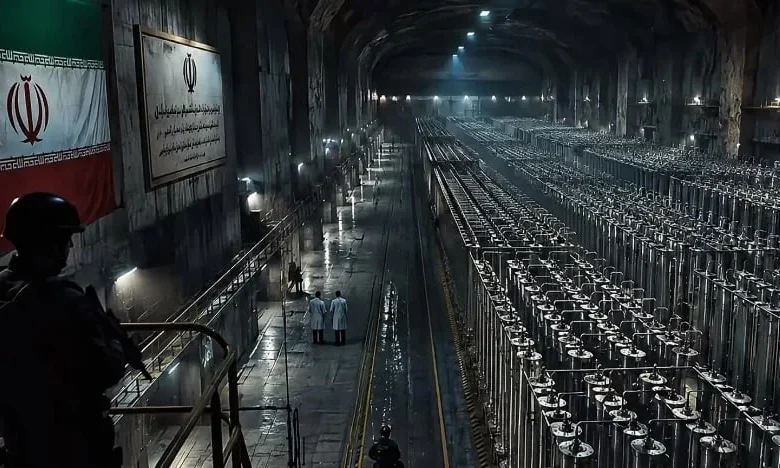
TEHRAN – In a significant escalation of rhetoric surrounding Iran’s controversial nuclear program, former United States President Donald Trump has repeatedly claimed that the U.S. would likely strike a clandestine Iranian nuclear facility, widely referred to as Mount Pickaxe. This subterranean complex, officially known as Kuh-e Kolang Gaz La, has become a focal point of international concern, with U.S. and Israeli intelligence agencies suspecting it harbors a portion of Iran’s enriched uranium stockpiles and advanced enrichment centrifuges—critical components for a potential nuclear weapons capability. Trump’s assertive declarations, such as, "We will likely strike that area soon. And there’s nothing they can do," underscored the volatile geopolitical climate. In immediate response, Tehran issued a stern warning through state media, asserting that any American military action against its nuclear installations would be unequivocally interpreted as a profound expansion of conflict in the Middle East.
Background Context: Iran’s Nuclear Ambitions and Global Scrutiny
Iran’s nuclear program has been a source of profound international concern for decades, particularly since the early 2000s when clandestine enrichment facilities at Natanz and a heavy water reactor at Arak were revealed. While Iran consistently maintains its program is for peaceful energy and medical purposes, its pursuit of uranium enrichment capabilities and advanced centrifuge technology has fueled suspicions, especially given its history of opacity and non-compliance with international safeguards.
The international community’s efforts to curb Iran’s nuclear ambitions culminated in the 2015 Joint Comprehensive Plan of Action (JCPOA), a landmark agreement between Iran and the P5+1 nations (China, France, Germany, Russia, the United Kingdom, and the United States). Under the JCPOA, Iran agreed to significantly curtail its nuclear activities, including enrichment levels and centrifuge numbers, in exchange for the lifting of international sanctions. This agreement was hailed as a diplomatic triumph aimed at preventing Iran from developing nuclear weapons.
However, the delicate balance established by the JCPOA was shattered in May 2018 when then-President Donald Trump unilaterally withdrew the United States from the agreement, reimposing crippling sanctions on Iran as part of a "maximum pressure" campaign. Trump argued that the JCPOA was flawed and did not adequately address Iran’s ballistic missile program or its regional destabilizing activities. In retaliation for the renewed sanctions and the perceived failure of European signatories to mitigate their impact, Iran progressively began to breach its commitments under the JCPOA starting in 2019. These breaches included increasing uranium enrichment levels beyond the agreed 3.67%, accumulating larger stockpiles of enriched uranium, and deploying more advanced centrifuges. This period of escalating tensions and reduced international oversight set the stage for the emergence of facilities like Mount Pickaxe.
Mount Pickaxe: A Deep Dive into Iran’s Secret Nuclear Facility
The facility known as Mount Pickaxe, or Kuh-e Kolang Gaz La (with "Kolang" meaning Pickaxe in Farsi), represents a new frontier in Iran’s nuclear infrastructure – one characterized by extreme depth and fortification. Located deep underground in the central part of Iran, approximately one mile south of the Natanz uranium enrichment complex, Mount Pickaxe is strategically positioned for maximum protection.
According to detailed analyses by organizations such as the Institute for Science and International Security (ISIS), based on satellite imagery and intelligence assessments, the facility is buried at least 100 meters (328 feet) beneath a massive mountain. This immense depth makes it an exceptionally challenging target for conventional military strikes and poses significant hurdles for any potential ground operations. The construction of this facility reportedly commenced in 2020. At the time, Iran officially informed the United Nations’ International Atomic Energy Agency (IAEA) that the site would serve as a future facility for assembling centrifuges—the highly specialized machines crucial for enriching uranium.
However, Western intelligence agencies, particularly those of the U.S. and Israel, harbor deep suspicions that its true purpose extends beyond mere assembly. They believe the facility could be designed for the storage of highly enriched uranium, the production of advanced centrifuges, or even the secretive development of components directly related to a nuclear weapons program. The extreme fortification and secrecy surrounding the site only intensify these concerns.
Architectural Features and Strategic Defenses
Much about Mount Pickaxe remains shrouded in mystery, with no publicly available schematics. Experts primarily glean insights from sophisticated satellite imagery analysis. Through these images, ISIS and other analysts have determined that the facility boasts several complex tunnel systems, suggesting a sprawling underground network designed for various functions. A large security perimeter encircles the site, indicating robust defensive measures against external threats. Crucially, the entrances to the facility have been heavily reinforced with thick concrete, a clear indication of preparations to withstand potential aerial bombardments or missile attacks.
While construction at Mount Pickaxe is believed to be ongoing and the facility not yet fully operational, there are indications that the pace of work intensified in recent years. This acceleration is often linked to a series of incidents targeting Iran’s other nuclear facilities, including sabotage and cyberattacks attributed to Israel and, at times, implicitly supported by the U.S. For instance, the Natanz enrichment complex, located just miles from Mount Pickaxe, has been subjected to multiple attacks and explosions in recent years, leading Iran to seek more secure, subterranean locations for its critical nuclear infrastructure. The move to deep underground facilities like Mount Pickaxe is a direct response to these vulnerabilities, aimed at creating an "impenetrable" stronghold for its most sensitive nuclear activities.
Chronology of Escalation and Discovery
The timeline of events leading to the current tensions surrounding Mount Pickaxe is a complex tapestry of diplomatic efforts, technological advancements, and covert operations:
- Early 2000s: International alarm grows as Iran’s undeclared nuclear activities are revealed, including the Natanz enrichment plant and the Arak heavy water reactor.
- 2006-2010: UN Security Council imposes multiple rounds of sanctions on Iran for its refusal to halt uranium enrichment.
- 2010: The Stuxnet computer worm, widely believed to be a joint U.S.-Israeli operation, targets and damages centrifuges at Natanz, setting back Iran’s enrichment program.
- 2013-2015: Intensive negotiations lead to the interim Joint Plan of Action and ultimately the JCPOA.
- July 2015: The JCPOA is signed, bringing temporary relief and international monitoring to Iran’s nuclear program.
- May 2018: U.S. President Donald Trump withdraws the U.S. from the JCPOA and reimposes sanctions.
- 2019-Present: Iran begins to progressively breach JCPOA limits in response to U.S. sanctions, increasing enrichment levels and stockpiles.
- Early 2020: Construction at Kuh-e Kolang Gaz La (Mount Pickaxe) reportedly begins. Iran informs the IAEA that the site will be a new centrifuge assembly plant.
- Mid-2020: A major explosion and fire severely damage an advanced centrifuge assembly plant at Natanz. Iran vows to rebuild and move production underground.
- 2020-Present: Satellite imagery and intelligence reports indicate significant progress in the construction of Mount Pickaxe, with enhanced fortifications.
- Late 2020 / Early 2021 (during final months of Trump presidency or post-presidency comments): Former President Trump’s statements regarding a potential strike on Mount Pickaxe become public, signaling heightened U.S. concern.
- Immediate aftermath of Trump’s statements: Iran issues strong warnings of retaliation, emphasizing the risk of regional war.
Statements and Reactions from Related Parties
The threats against Mount Pickaxe have elicited a predictable but deeply concerning range of reactions from key players:
- Donald Trump (United States): Trump’s direct and unequivocal threats, such as "We will likely strike that area soon. And there’s nothing they can do," are indicative of an aggressive stance, reflecting a belief that Iran is actively pursuing nuclear weapons and that military action might be necessary to prevent it. His statements serve as a clear warning to Tehran, but also raise alarms among allies about potential unilateral action.
- Iran (Tehran): Iran’s official response has been resolute and defiant. State media reported strong warnings that "any US attack on Iranian nuclear facilities would be considered an expansion of war in the region." Senior Iranian military officials, including commanders of the Islamic Revolutionary Guard Corps (IRGC), have consistently reiterated Iran’s readiness to defend its territory and interests, warning of severe and widespread retaliation against any aggressor. These statements aim to deter potential attacks by emphasizing the prohibitive costs of military confrontation.
- Israel: Israel views Iran’s nuclear program as an existential threat and has been at the forefront of efforts to prevent Tehran from acquiring nuclear weapons. Israeli intelligence assessments are believed to be a primary source of information regarding Iran’s alleged clandestine activities, including at Mount Pickaxe. Israel has a documented history of covert operations, cyberattacks, and targeted assassinations against Iranian nuclear scientists and facilities (e.g., Stuxnet, sabotage at Natanz), underscoring its commitment to pre-emptive action if it perceives Iran nearing a nuclear weapons capability.
- International Atomic Energy Agency (IAEA): The IAEA’s role is to verify that nuclear material is not diverted to weapons programs. While Iran officially declared Mount Pickaxe as a centrifuge assembly plant, the IAEA faces increasing challenges in monitoring Iran’s full nuclear activities due to reduced access and transparency following the U.S. withdrawal from the JCPOA. The agency expresses continuous concern over undeclared sites or activities and urges Iran to fully cooperate with its inspectors, but its ability to provide definitive assurances about the peaceful nature of Iran’s entire program is constrained.
- Other P5+1 Nations: The European signatories to the JCPOA (France, Germany, UK), along with China and Russia, have consistently advocated for de-escalation and a return to diplomatic solutions. They express deep concern over both Iran’s breaches of the JCPOA and the heightened tensions generated by U.S. threats. These nations typically call for the preservation of the JCPOA or a new diplomatic framework, emphasizing that military conflict would destabilize the entire region and potentially trigger a wider war.
Analysis of Implications and Potential Scenarios
The controversy surrounding Mount Pickaxe carries profound implications across military, political, economic, and nuclear proliferation spheres.
- Military Implications: A military strike on Mount Pickaxe would be extraordinarily complex and risky. Its depth and fortification would require specialized "bunker-buster" munitions, such as the GBU-57 Massive Ordnance Penetrator (MOP), and potentially multiple strikes. The success of such an operation is not guaranteed, and failure could embolden Iran. More critically, an attack would almost certainly trigger a severe retaliatory response from Iran, potentially involving missile attacks on U.S. assets and allies in the region (including Israel and Gulf states), disruption of global oil supplies through the Strait of Hormuz, and the activation of Iran’s regional proxies like Hezbollah in Lebanon or Houthi rebels in Yemen. This could quickly spiral into a full-scale regional conflict, drawing in multiple actors and causing immense human and economic costs.
- Political Implications: Any U.S. military action would have significant international ramifications. It could further isolate the U.S. on the global stage, especially if undertaken unilaterally. It would likely galvanize domestic support for the Iranian regime, potentially strengthening hardliners. Diplomacy, already fraught with challenges, would become virtually impossible. Furthermore, it would set a dangerous precedent for pre-emptive strikes on suspected nuclear facilities, undermining international law and the non-proliferation regime.
- Economic Implications: The mere threat of conflict sends ripples through global markets. An actual attack and subsequent escalation would cause oil prices to skyrocket, disrupt international trade, and inflict severe damage on regional economies already struggling with instability. The cost of any military intervention and potential reconstruction efforts would be astronomical.
- Nuclear Proliferation Implications: Paradoxically, a military strike aimed at preventing Iran from acquiring nuclear weapons could accelerate its pursuit of them. If its facilities are attacked, Iran might feel justified in openly withdrawing from the Nuclear Non-Proliferation Treaty (NPT) and vigorously pursuing a full nuclear weapons program, arguing that its only defense against future aggression is a deterrent capability. This could trigger a dangerous nuclear arms race in the Middle East, with other regional powers potentially seeking their own nuclear deterrents.
Conclusion
Mount Pickaxe stands as a stark symbol of the ongoing standoff between Iran and the international community over its nuclear program. The allegations surrounding its purpose, coupled with the explicit threats of military action from a former U.S. president and Iran’s unwavering warnings of retaliation, underscore the extremely high stakes involved. The facility represents not just a technical challenge for military planners but a profound political and diplomatic dilemma for global leaders. Navigating this precarious balance between deterrence and de-escalation, between diplomatic engagement and the specter of military confrontation, remains one of the most critical and unresolved foreign policy challenges of our time, with the potential to reshape the geopolitical landscape of the Middle East and beyond. The mystery of what truly lies beneath Kuh-e Kolang Gaz La continues to fuel global anxiety, demanding careful consideration and a concerted international effort to prevent a catastrophic escalation.