When Depok Once Had a President: The Fascinating and Forgotten History of Indonesia’s "Private State"

Long before it officially became an autonomous municipality within West Java on April 27, 1999—and years prior to functioning merely as a densely populated satellite city for the Indonesian capital of Jakarta—Depok held a status that sounds entirely fictitious to the modern observer: it was once structured as an independent, self-governing private republic led by its own democratically elected president. While modern residents recognize Depok for its bustling university campuses, massive commuter rail systems, and rapid urbanization, the city’s origins stretch deep into the colonial era of the late 17th century, rooted in a sprawling private land grant, the benevolence of a wealthy Dutch merchant, and a unique socio-political experiment that predated the proclamation of the Republic of Indonesia.
Main Facts: The Rise of a Private Land and Autonomous Administration
To understand how Depok functioned as a quasi-independent entity, historians must look back to the final decades of the 17th century. In an era dominated by the Dutch East India Company (VOC)—which wielded immense commercial and political monopolies across the Indonesian archipelago—a wealthy Dutch merchant and high-ranking official named Cornelis Chastelein charted a distinct path. In 1696, Chastelein purchased a massive tract of land totaling approximately 12.44 square kilometers in the southern hinterlands of Batavia (modern-day Jakarta) for the hefty sum of 2.4 million guilders.
Crucially, this land was acquired as particuliere landerijen, or private land, meaning it existed outside the direct territorial jurisdiction and administration of the colonial government of the Dutch East Indies. Within the boundaries of this expansive estate—which stretched from modern-day Depok all the way northward to Pasar Minggu in South Jakarta and Gambir in Central Jakarta—Chastelein held absolute authority.
At the time of purchase, the territory was largely an untamed jungle, home to dense tropical rainforests and wildlife. To develop the land into productive agricultural plantations, Chastelein brought in a large labor force consisting of enslaved people and indentured laborers whom he had purchased from various regions across the archipelago, including Bali, Sulawesi, Timor, and Maluku, as well as parts of mainland Southeast Asia and India.
Chronology: From Colonial Estate to a Democratically Governed Republic
The transformation of Depok from a private plantation into a self-governing administration unfolded across three distinct historical phases: the foundational era under Chastelein, the post-mortem liberation of the enslaved population, and the formal institutionalization of the "Republic of Depok" in the early 20th century.

-
Late 17th Century (Establishment): Cornelis Chastelein acquired the land in 1696 and systematically cleared the pristine jungle with the labor of his enslaved workforce. Cultivating crops such as coffee, indigo, and fruit orchards, Chastelein established a thriving agrarian settlement.
-
June 28, 1714 (The Historic Testament): As a devout Roman Catholic with progressive views on humanity that clashed sharply with the brutal realities of the VOC’s colonial slave trade, Chastelein made a revolutionary decision before his death. In his final will and testament dated June 28, 1714, he manumitted all his enslaved laborers. Furthermore, he bequeathed the entirety of his vast Depok estate—including homes, agricultural tools, livestock, and the land itself—to these newly freed individuals, making them collective landowners. To prevent chaos and ensure administrative continuity, he appointed a trusted leader named Jarong van Bali to oversee the community.
-
Early 20th Century (Institutionalization and the Presidency): As generations passed, the community of freed landowners—often referred to historically as the Hollandsche Depokkers or the "Dutch Depokians" due to their adoption of Dutch culture, surnames, and Protestant Christianity—recognized the need for a formalized governance structure to protect their land titles and manage local affairs. With the assistance of a prominent Batavia-based attorney, the community established Het Gemeente Bestuur van Het Particuliere Land Depok (The Municipal Administration of the Private Land of Depok), which officially commenced operations in 1913.
-
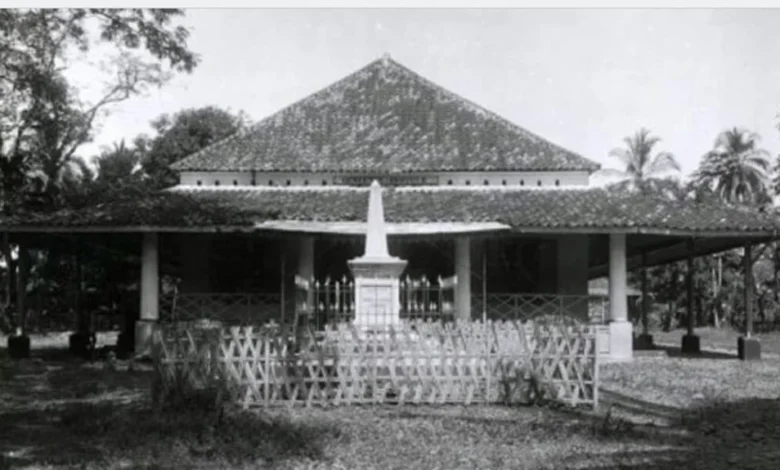
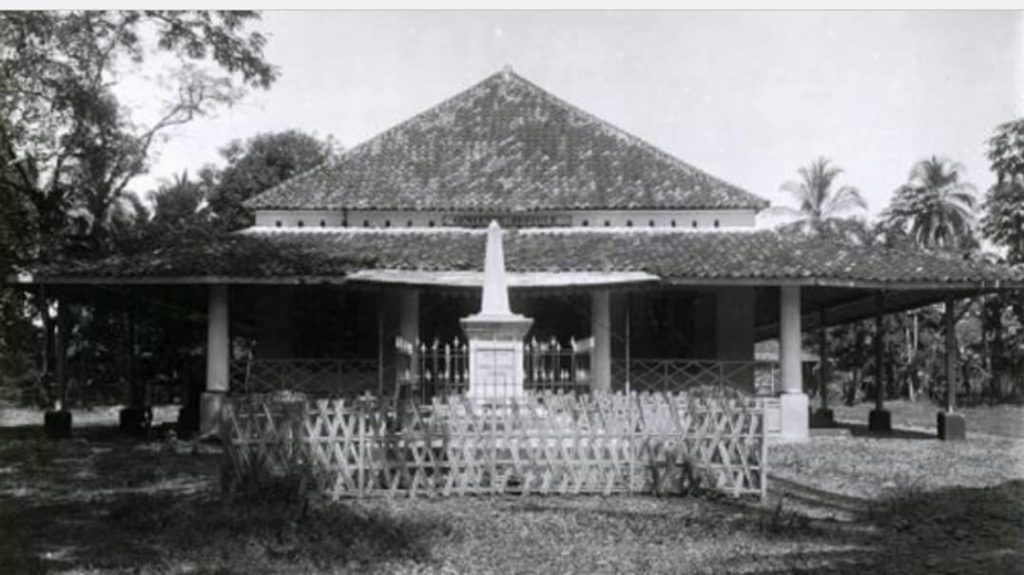
1913–1952 (The Presidential Era): Abandoning monarchy and fearing internal power struggles, the community instituted a democratic electoral system. Every three years, the citizens of Depok elected a head of state who officially held the title of "President." There was no vice president; instead, the president was assisted by a secretary who managed administrative affairs. The government operated out of a central administrative building located near the Kilometer 0 marker of Depok, a site marked by the historic Depok Monument (now closely associated with the area where Harapan Hospital stands today).
Supporting Data and the Lineage of Depok’s Presidents
Though records from the colonial era are fragmented and detailed archives regarding the daily policy decisions of Depok’s administrations remain scarce, historians have successfully documented the lineage of the men who held the highest office in the territory.
The presidency lasted for nearly four decades across various administrations, characterized by democratic triennial elections:
- Gerrit Jonathans: Elected as the very first President of Depok, taking office in 1913 and establishing the foundational bureaucratic framework of the municipality.
- Martinus Laurens: Assumed the presidency in 1921, guiding the community through the complex socio-political shifts of the interwar period.
- Leonardus Leander: Elected in 1930, serving during the height of the global economic depression which severely impacted private estates in the Dutch East Indies.
- Johannes Matjis Jonathans: The fourth and final president, who assumed office in 1952 amid the dramatic geopolitical transformation following Indonesia’s hard-won independence.
During this period, the community operated with a high degree of autonomy. They maintained their own social hierarchy, distinct cultural identity, community laws, and local infrastructure, effectively functioning as an enclave operating under a unique legal status within the broader framework of the Dutch East Indies.
Official Responses and the Integration into the Republic of Indonesia
Following the Second World War and the subsequent Indonesian National Revolution, the geopolitical landscape of the archipelago shifted irrevocably. The newly born Republic of Indonesia moved swiftly to dismantle the remnants of the colonial-era particuliere landerijen system, which granted excessive feudal or autonomous privileges to private landowners at the expense of national land reform.
The status of Depok as a private, self-governing entity could no longer be sustained within a unified, centralized Indonesian republic. Recognizing the historical inevitability of integration and complying with the agrarian reforms enacted by the central government, the final President of Depok, Johannes Matjis Jonathans, made the historic decision to officially surrender the private land administration to the Indonesian government in 1952. This transfer was formalized through an official deed of surrender, effectively dissolving Het Gemeente Bestuur van Het Particuliere Land Depok and integrating the territory into the administrative structures of West Java.
Broader Impact and Historical Implications
The forgotten history of Depok’s presidency offers a compelling lens through which historians analyze the complexities of the colonial era. It challenges monolithic narratives of colonial subjugation by highlighting a rare instance where enslaved individuals were not only liberated by a colonial landowner but were endowed with significant property rights and permitted to establish a democratic governance model decades before the birth of modern Indonesia.
While the physical markers of the "Depok Republic" have largely faded beneath the concrete and asphalt of modern urban development—replaced by bustling commuter hubs, university complexes, and shopping malls—the legacy of Cornelis Chastelein’s radical 1714 testament and the brief era of the Depok presidency remains a fascinating chapter in Indonesian history. Today, historians and local preservationists continue to advocate for the preservation of remaining colonial-era structures and archives, ensuring that the memory of Indonesia’s unexpected "private state" is not entirely lost to time.