Minister of Communication and Digital Affairs Vows to Eradicate Online Gambling Amidst Escalating Financial and Social Crises

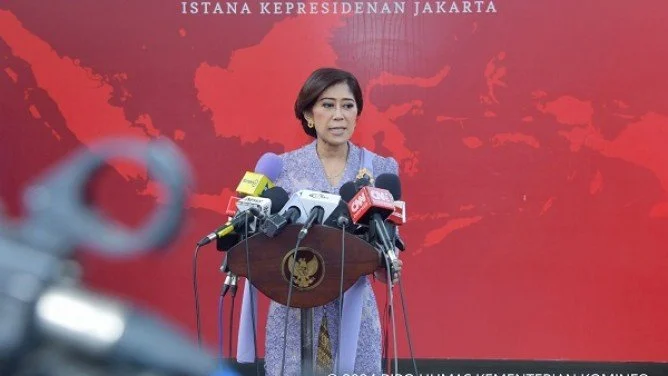
Upon her inauguration as the Minister of Communication and Digital Affairs (Menkomdigi) in October 2024, Meutya Hafid outlined a series of critical commitments and strategic priorities for her tenure. Foremost among these is a resolute pledge to dismantle the pervasive menace of online gambling. This initiative stands as a cornerstone of her agenda, alongside other crucial programs such as the regulation of cellular SIM card usage, the expansion of internet accessibility, the robust protection of personal data, and the cultivation of a secure digital environment, with a particular emphasis on safeguarding children.
In a significant move to underscore the gravity of this mission, Minister Hafid, a prominent figure from the Golkar Party, mandated officials within the Ministry of Communication and Digital Affairs to sign integrity pacts, publicly affirming their dedication to the nationwide campaign against online gambling. This act signifies a top-down commitment to tackle a problem that has transcended mere social nuisance to become a potent catalyst for a cascade of societal ills.
The insidious nature of online gambling is deeply rooted in its capacity to precipitate widespread financial ruin. Beyond personal bankruptcies, it fuels a dangerous cycle of criminal activity, including theft and fraud, as individuals desperately seek funds to satisfy their addiction. The fabric of family life is torn asunder, leading to severe mental health repercussions and casting a long shadow over the future of young generations, ensnared by crippling debt and the relentless grip of addiction. The escalating prevalence of online gambling in Indonesia is a cause for profound concern, exhibiting an alarming and sustained upward trajectory.
Escalating Financial Footprint of Online Gambling
Data released by the Financial Transaction Reports and Analysis Center (PPATK) paints a stark picture of the financial magnitude of this illicit industry. From 2017 to the third quarter of 2025, the total value of transactions associated with online gambling activities has soared to an astronomical Rp1,032 trillion, involving over 259 million individual transactions. This staggering figure underscores the sheer scale of financial leakage and illicit capital flow within the Indonesian economy, driven by this pervasive online activity.
Further corroborating this alarming trend, reports from the Financial Services Authority (OJK) indicate a dramatic surge in suspicious financial transactions linked to online gambling. In 2025 alone, these transactions witnessed an unprecedented increase of 260.03%. This upward momentum has continued unabated into the early months of 2026, demonstrating the persistent dominance of online gambling-related financial activities within the reports received by the OJK.
This dramatic escalation is particularly ironic, given the government’s sustained and multi-pronged efforts to combat online gambling over recent years. In a significant development in June 2024, the government established a dedicated Task Force for the Eradication of Online Gambling, operating under the auspices of the Coordinating Minister for Political, Legal, and Security Affairs.
Government’s Multi-Faceted Approach to Combat Online Gambling
The Task Force has been instrumental in implementing a series of legal operations aimed at curbing online gambling activities within the populace. These operations have primarily focused on three key areas: the freezing of bank accounts associated with illicit gambling, the crackdown on the illicit buying and selling of bank accounts, and the stringent regulation of transactions for online games, particularly those involving top-ups conducted at minimarkets.
In alignment with the Task Force’s endeavors, the OJK, in September 2024, issued directives to banks, urging them to expedite the resolution of customer complaints related to the blocking of accounts implicated in online gambling activities.
Simultaneously, the Ministry of Communication and Digital Affairs has been actively engaged in digital containment efforts. From October 20, 2024, to July 12, 2026, the ministry successfully blocked approximately 3.7 million websites and online content deemed to be promoting or facilitating online gambling. In collaboration with the OJK, the Ministry of Communication and Digital Affairs also reported approximately 38,000 bank accounts suspected of involvement in online gambling activities. Of these, a significant portion, around 32,500 accounts, were successfully closed following a thorough cleansing process.
Despite the considerable efforts marshaled by the government, the eradication of online gambling remains an exceptionally challenging undertaking. Several fundamental factors contribute to this persistent difficulty, creating an environment where the problem seems to regenerate almost as quickly as it is addressed.
The Six Pillars of Online Gambling’s Resilience
The enduring nature of online gambling in Indonesia can be attributed to a confluence of six principal factors:
- A Continuously Expanding Market: Indonesia represents a vast and growing market for online gambling, with a burgeoning population increasingly connected to the digital world.
- Loyal User Base: A significant segment of the population has become deeply entrenched in online gambling, exhibiting a high degree of loyalty to these platforms.
- Cost-Effective Traffic: The operational costs for online gambling platforms, particularly concerning user acquisition and engagement, remain relatively low, making it an attractive venture.
- Aggressive Social Media Promotion: The widespread and often covert promotion of online gambling through social media channels effectively reaches and recruits new users.
- The Allure of Winnings: The promise of quick financial gains and the thrill of potential winnings act as powerful motivators for individuals to engage in online gambling.
- Offshore Operations: A critical challenge lies in the fact that the primary operational hubs and servers for many online gambling platforms are located outside of Indonesia, in jurisdictions where these activities are legal or less stringently regulated.
"Kill One, a Thousand More Emerge": The Transnational Challenge
Among these contributing factors, the transnational nature of online gambling operations presents the most formidable obstacle to effective eradication. The core management and operational centers of many online gambling websites are situated in countries where such practices are legally sanctioned. This geographical dispersion makes it exceedingly difficult for Indonesian authorities to dismantle these operations at their source.
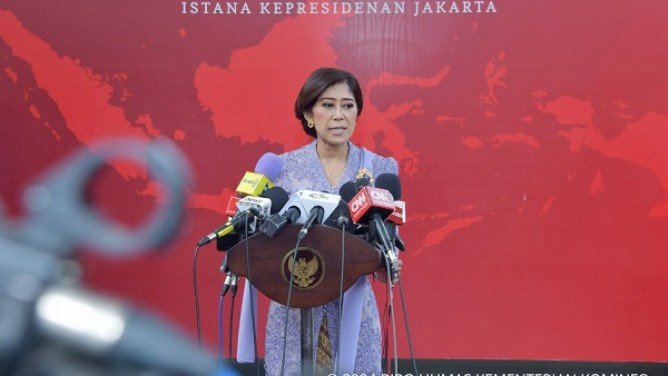
While the target audience and operational execution may be within Indonesia, involving Indonesian speakers and catering to local preferences, the ultimate control and infrastructure often reside in nations like the Philippines, Cambodia, and Vietnam, which have legalized gambling. Furthermore, the physical location of online gambling servers outside of Indonesian jurisdiction denies the government direct access for intervention.
Consequently, even when authorities, including the police and the Ministry of Communication and Digital Affairs, diligently block or take down suspected online gambling sites, new platforms invariably emerge to fill the void. Efforts to circumvent these blocks, such as the use of free Virtual Private Networks (VPNs), prove largely ineffective because the fundamental issue remains the offshore location of the servers, beyond the immediate reach of national regulations. This creates a perpetual cycle, often described as "mati satu, tumbuh seribu" (kill one, a thousand more grow), rendering the arduous efforts of law enforcement seemingly futile.
The Crypto Conundrum: A New Frontier for Illicit Funds
Adding another layer of complexity to the government’s anti-gambling crusade is the increasing sophistication of operators in concealing their illicit proceeds. The Ministry of Communication and Digital Affairs has acknowledged the growing difficulty in tracking financial flows within online gambling activities. This challenge stems from a discernible shift in transaction patterns, with perpetrators increasingly utilizing cryptocurrency assets to facilitate the movement of funds across international borders.
Teguh Arifiyadi, Director of Certification and Electronic Transaction Supervision at the Ministry of Communication and Digital Affairs, revealed that operators are now increasingly employing crypto addresses to obscure the trail of their financial transactions. Previously, funds were commonly deposited into local bank accounts. However, operators are now opting to convert these funds into cryptocurrency before transferring them abroad.
"The process of tracing cryptocurrency transactions requires more sophisticated instruments and takes longer than conventional banking transactions," Arifiyadi stated on Friday, July 4, 2025. This reliance on cryptocurrencies presents a significant hurdle, demanding new technological capabilities and international cooperation to effectively monitor and intercept these flows.
A Call for Reinforcements: Minister Hafid Seeks Alliance with OJK and Banks
The persistent struggle to achieve comprehensive eradication of online gambling has prompted the Ministry of Communication and Digital Affairs to intensify its appeals for assistance from the Financial Services Authority (OJK) and the banking sector. Minister Meutya Hafid has indicated a strategic pivot in the government’s approach, moving away from an exclusive focus on website blocking towards a more holistic strategy targeting the entire ecosystem that underpins these illicit digital operations.
Hafid emphasized that the campaign against online gambling is now entering a new phase, one that endeavors to dismantle the entire digital crime syndicate, encompassing not only the websites themselves but also the intricate financial networks and the individuals orchestrating these operations. "The eradication of online gambling must be comprehensive; it is insufficient and unacceptable to stop solely at severing website access, but rather the entire ecosystem must be addressed," she declared.
These remarks were made during the OJK Banking Forum 2026, held under the theme "Strengthening Banking Information Technology Governance and Enhancing Efforts to Eradicate Financial Crimes and Online Gambling in the Digital Era," at the Bank Indonesia office in Central Jakarta, on Tuesday, July 14, 2026.
This synergistic approach is further fortified by Law Number 4 of 2026 on the Development and Strengthening of the Financial Sector (P2SK). This legislation mandates the formation of inter-ministerial and inter-agency task forces specifically designed to combat online gambling comprehensively.
"Law Number 4 of 2026 strengthens inter-agency synergy in eradicating online gambling. It provides a legal foundation for a coordinated approach, ensuring that efforts are not conducted in isolation but are integrated, encompassing access disruption, fund flow disruption, and law enforcement," Minister Hafid explained. She underscored the government’s commitment to severing the financial lifelines that sustain the operational capacity of online gambling networks through the blocking of accounts that serve as conduits for these funds.
"The disruption of website access must be accompanied by the amputation of the ‘neck’ of the online gambling ecosystem, which are the intermediary accounts. Therefore, the collaboration between the Ministry of Communication and Digital Affairs, OJK, the banking industry, and law enforcement agencies is key to breaking this chain of crime," she asserted.
An Uncertain Future: Evaluating the Efficacy of New Strategies
The crucial question remains: will Minister Hafid’s strategic shift, seeking enhanced collaboration with the OJK and the banking sector, prove more effective in dismantling the operations of online gambling? Only time will tell. However, the reality on the ground is that the promises made by Meutya Hafid to eradicate online gambling appear to have stagnated. Despite numerous initiatives, the tangible benefits for the public remain elusive.
Has Minister Hafid failed to deliver on her pledge to eradicate online gambling, a commitment made upon her assumption of office as Menkomdigi? As engaged citizens of Indonesia, the public is left to form their own judgments. The path forward demands sustained vigilance, innovative strategies, and unwavering inter-agency cooperation to confront this pervasive digital threat and protect the nation from its corrosive influence. The scale of the problem, coupled with the evolving tactics of perpetrators, necessitates a dynamic and adaptive response from all stakeholders involved. The true measure of success will lie in the long-term impact on societal well-being and the restoration of a safer, more secure digital landscape for all Indonesians.