ASUS Announces Googlebook 14: A Flagship Ultraportable Powered by Intel Panther Lake and Googlebook OS

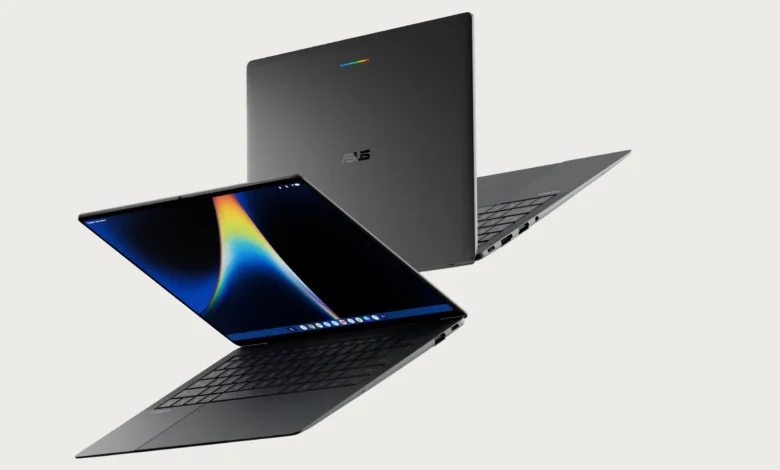
ASUS has officially announced the launch of the Googlebook 14 (CX9406CAA), a groundbreaking ultraportable laptop that marks a significant milestone in mobile computing by combining premium hardware engineering with Google’s newly unified operating ecosystem. Weighing a mere 0.99 kilograms, the device defies expectations for ultra-thin laptops by packing high-tier specifications typically reserved for heavier, performance-focused workstations. Featuring Intel’s latest Panther Lake processors, a stunning 3K OLED touchscreen, and integration with the newly minted Googlebook OS—a hybrid operating system merging the best elements of ChromeOS and Android—the Googlebook 14 positions itself as a formidable competitor in the global premium laptop market. Scheduled for a commercial release in October with a starting price of $1,299 for the flagship Core Ultra 7 configuration, the laptop is already generating substantial interest among enterprise users, digital nomads, and technology enthusiasts alike.
Main Facts and Technical Specifications
The engineering achievement of the ASUS Googlebook 14 lies in its ability to balance extreme portability with uncompromising hardware capabilities. Encased in a durable magnesium-aluminium chassis finished in a sophisticated Dusk Ash colorway, the laptop maintains an ultra-light footprint of just 0.99 kg without sacrificing structural integrity. ASUS has incorporated advanced Nano Ceramic Technology into the exterior coating, providing enhanced resistance against everyday scratches, fingerprints, and smudges. Furthermore, the chassis has successfully passed rigorous MIL-STD 810H military-grade durability tests, ensuring it can withstand the physical rigors of frequent travel.
At the heart of the device’s visual experience is a 14-inch OLED display featuring a 16:10 aspect ratio and a crisp 3K resolution. This vibrant panel supports touch input, a smooth 120Hz refresh rate for fluid navigation, and high dynamic range (HDR) capabilities with a peak brightness reaching 1,000 nits. To protect this high-end display while minimizing environmental glare, ASUS applied Corning Gorilla Glass Victus treated with a specialized Gorilla Matte coating.
Beneath the exterior, the performance architecture is driven by Intel’s next-generation Panther Lake processors. Consumers can choose between configurations featuring the Core Ultra 7 355 or the Core Ultra 5 325, both utilizing an 8-core architecture designed to optimize both intensive computational tasks and power efficiency. This processing power is complemented by rapid LPDDR5X memory options scaling up to a massive 64GB, alongside high-speed PCIe 4.0 solid-state storage configurations up to 1TB. Energy management is anchored by a robust 70Wh internal battery, engineered to deliver all-day productivity on a single charge despite the power demands of the high-refresh-rate OLED panel.

Chronology and Background Context
The unveiling of the Googlebook 14 represents the culmination of a multi-year strategic alignment between ASUS and Google to redefine the boundaries of lightweight productivity hardware. For years, the market for thin-and-light computers was sharply divided between Windows-powered ultraportables and lightweight Chromebooks targeted primarily at educational and budget-conscious sectors. However, shifting consumer habits toward cloud-centric workflows, artificial intelligence integration, and mobile application compatibility created a distinct demand for a premium device that could bridge these disparate ecosystems.
The development timeline accelerated following Google’s announcement of Googlebook OS, a unified operating platform designed to merge the security, speed, and web-first architecture of ChromeOS with the vast application library and interface familiarity of Android. Recognizing an opportunity to lead this new hardware category, ASUS began collaborating closely with Google to design a flagship reference device capable of showcasing the full potential of the new operating system. The Googlebook 14 (CX9406CAA) emerged as the flagship fruit of this partnership, developed secretly over the past year and optimized specifically to leverage Google’s advanced artificial intelligence software suite.
Software Ecosystem and Artificial Intelligence Integration
One of the most defining characteristics of the ASUS Googlebook 14 is its deep integration with Google’s cutting-edge software and artificial intelligence tools. Operating on the newly established Googlebook OS, the laptop provides users with native compatibility for both advanced web applications and the millions of mobile apps available through the Android ecosystem, all managed within a desktop-optimized windowing environment.
To further elevate the user experience, every purchase of the Googlebook 14 includes a complimentary 12-month subscription to Google AI Pro. This subscription unlocks advanced productivity tools directly within the operating system, including seamless access to Gemini for contextual assistance, content generation, and workflow automation. Users also benefit from specialized productivity enhancements such as Gemini Notebook and an expansive cloud storage allocation of up to 5TB, ensuring that large multimedia files, documents, and system backups can be synchronized effortlessly across multiple devices.

Official Responses and Industry Perspectives
While formal statements from executive leadership at both ASUS and Google emphasize the collaborative nature of the launch, industry analysts have been quick to interpret the strategic weight of the Googlebook 14. In pre-briefing statements shared with tech industry media, representatives from ASUS highlighted the company’s ongoing commitment to pushing the envelope of materials science and internal architecture design. The successful integration of high-performance Intel Panther Lake processors and heavy memory configurations into a sub-1-kg chassis was cited as a major engineering triumph for the brand.
Meanwhile, software representatives from Google have pointed to the Googlebook 14 as the definitive hardware standard for the new Googlebook OS era. By pairing uncompromising enterprise-grade components with a fluid, AI-driven operating system, the hardware-software coalition aims to attract professionals who have historically found traditional Chromebooks too restrictive for demanding professional workloads.
Broader Market Impact and Implications
The introduction of the ASUS Googlebook 14 carries significant implications for the broader laptop industry, potentially disrupting the traditional duopoly held by Windows and macOS in the premium productivity segment. By offering high-end specifications—such as 64GB of RAM, PCIe 4.0 storage, and a 120Hz 3K OLED display—within a non-Windows ecosystem, ASUS and Google are actively targeting power users, enterprise professionals, and creative workers who prioritize cloud workflows and mobile integration.
Priced competitively at $1,299 for the top-tier Core Ultra 7 variant when it hits retail shelves in October, the Googlebook 14 undercuts several traditional Windows flagship ultraportables while offering superior display technology and lighter physical dimensions. Market observers will be monitoring consumer adoption rates closely to determine whether the market is ready to embrace a premium, AI-centric operating system in professional environments. As anticipation builds for its eventual rollout into international markets, including Southeast Asia, the Googlebook 14 stands as a bold indicator of where ultraportable computing is heading next.