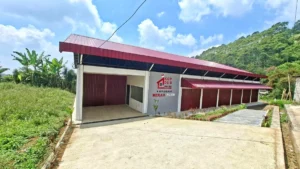
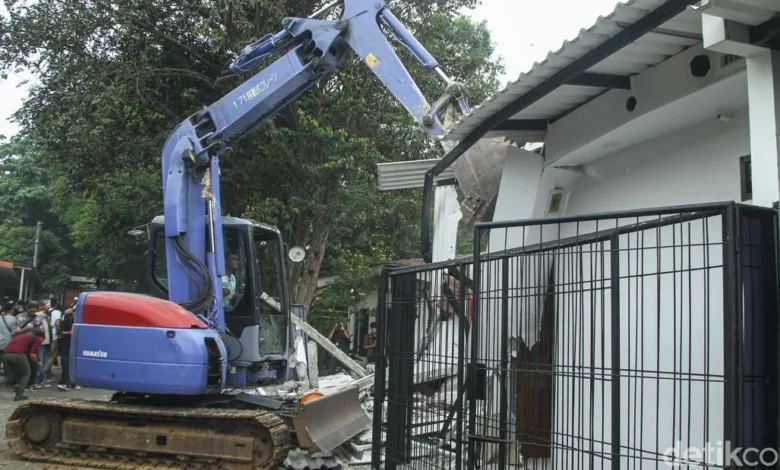
The controversial luxury housing cluster located within the Class IIA Penitentiary complex in Cibinong, Bogor, West Java, has been completely demolished following widespread public outcry, investigative findings by the Ombudsman, and a decisive mandate from House of Representatives (DPR) Commission XIII. The dismantling of the unauthorized compound highlights deep-seated institutional vulnerabilities, regulatory non-compliance, and severe administrative misconduct within Indonesia’s correctional facilities. The operation to level the cluster underscores a rigorous push by legislative and oversight bodies to eliminate discriminatory practices and ensure equitable treatment for all inmates across the nation’s correctional institutions.
Chronology of the Sidak and Demolition
The decisive action taken against the Cibinong facility originated from a series of oversight visits and unannounced inspections, commonly known as sidak, conducted by government watchdogs and legislative committees. Complaints regarding preferential treatment and exclusive residential zones inside the correctional facility prompted the Ombudsman and DPR Commission XIII to launch a formal inquiry.
Following their on-site inspection, Commission XIII convened an emergency briefing on Wednesday, September 30, where leadership publicly announced the urgent mandate. The commission demanded the immediate demolition of the unauthorized structures located on prison grounds, as well as a comprehensive review of asset governance across all Indonesian correctional facilities.
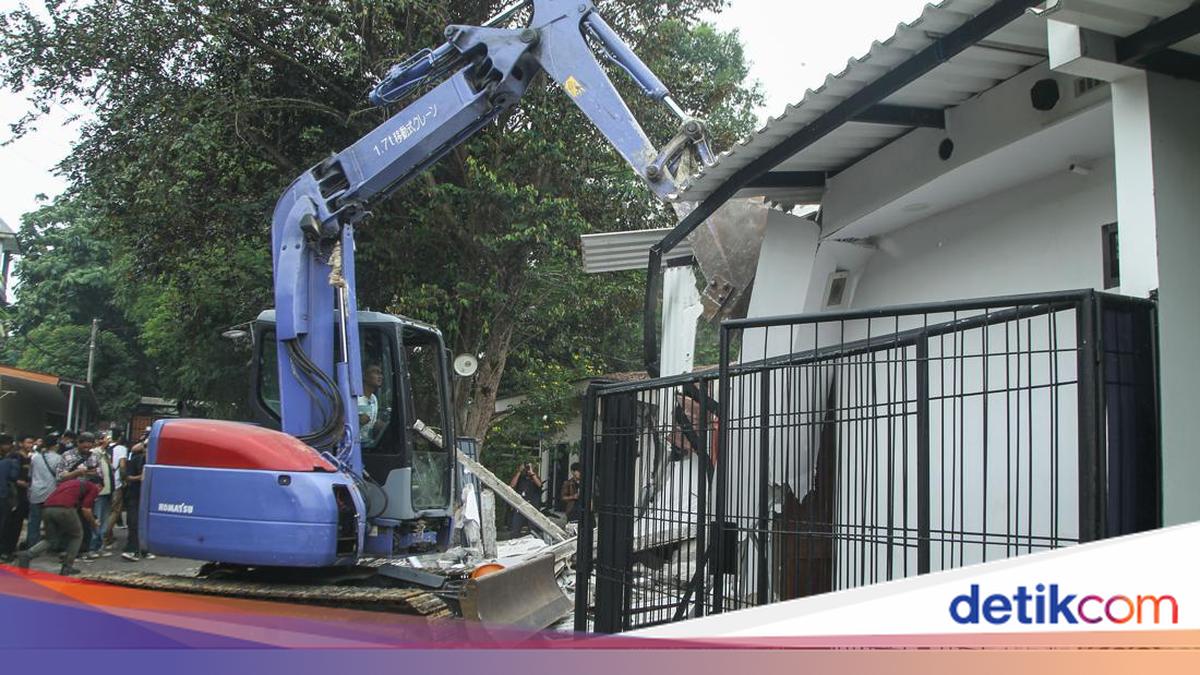
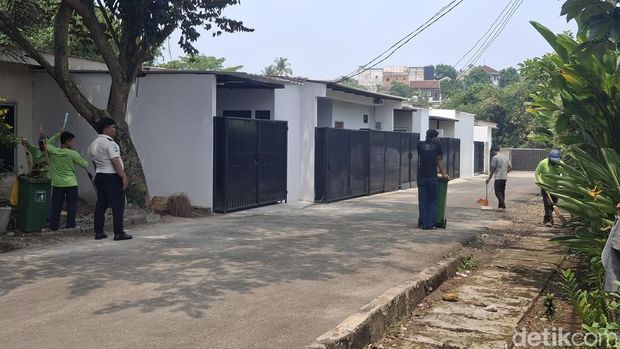
By Wednesday afternoon, heavy machinery moved into the Cibinong prison grounds. Excavators systematically reduced the upscale residences—complete with apartment-style amenities—to rubble. Concurrently, prison staff were observed clearing personal belongings from the doomed structures, collecting items such as televisions, mattresses, fitness equipment, and kitchen appliances, and consolidating them at a designated checkpoint within the facility.
Regulatory Violations and Environmental Infractions
Subsequent investigations by the Inspectorate General of the Ministry of Immigration and Corrections (Itjen Imipas) revealed multiple layers of legal and administrative violations committed during the establishment of the luxury cluster. Inspector General Commissioner Rudi Setiawan disclosed preliminary findings detailing the extent of the infractions.
Out of the 13 structures identified on the perimeter, 10 were found to be situated completely outside the official asset inventory of the Ministry of Immigration and Corrections. Crucially, these buildings were constructed directly along riverbanks, violating basic spatial planning laws and environmental regulations that strictly prohibit construction in water catchment and riparian zones.
Furthermore, the buildings lacked basic legal documentation, including valid Building Approval Permits (PBG). Because the enclave was built illegally on prohibited municipal land without formal authorization, it stood as a blatant violation of national infrastructure and zoning codes.
Financial Origin and Unauthorized Construction
A central question arising from the scandal involved the funding sources used to erect the upscale enclave. Preliminary audits conducted by the joint investigative team confirmed that the construction was not financed through the state budget via the State Revenue and Expenditure Budget (APBN).
Instead, the luxurious quarters were built through independent, unrecorded self-funding initiatives. Because the project bypassed official channels, the structures were entirely omitted from the State Property (BMN) registry, operating in a regulatory gray area that shielded them from standard bureaucratic oversight and financial auditing.
Before their destruction, these structures featured high-end amenities that starkly contrasted with the standard, often overcrowded conditions experienced by the general prison population. In addition to residential homes equipped with modern conveniences, investigators uncovered unfinished facilities including dedicated fitness centers, golf simulators, and specialized spaces disguised as assimilation areas that had allegedly been repurposed for extended periods as private training grounds. The discovery of specific inmates utilizing these restricted zones further intensified scrutiny regarding security protocols and potential collusion between inmates and facility personnel.
Official Responses and Disciplinary Proceedings
The revelation of the unauthorized luxury enclave has triggered immediate punitive and administrative responses from supervisory bodies. Deputy Chairman of DPR Commission XIII, Sugiat Santoso, emphasized during the press conference that the presence of such exclusive enclaves fosters systemic discrimination. The commission’s hardline stance serves as a warning that similar unauthorized facilities in other correctional institutions will face the same fate.
At the ministerial level, Inspector General Rudi Setiawan confirmed that the preliminary findings point unequivocally to severe administrative violations and abuse of power. The oversight body evaluated the conduct of involved personnel against Government Regulation (PP) Number 94 of 2021 concerning Civil Servant (PNS) Discipline.
According to the inspectorate’s initial conclusions, the actions of the supervising officials fall under the definitions of abuse of power outlined in Article 5 of the regulation, with corresponding penalties dictated by Article 8. Because the infractions are classified as severe disciplinary violations, the implicated personnel face three primary administrative sanctions: demotion, relief from duties, and dishonorable discharge.
The Inspectorate General has already identified and interrogated the primary figures involved, including the former Head of the Cibinong Penitentiary (Kalapas). Investigators are currently cross-referencing testimonies, reconciling conflicting statements gathered during previous interrogations, and analyzing physical evidence to build a comprehensive case before issuing a final disciplinary ruling.
Broader Implications and Systemic Reform
The Cibinong prison scandal serves as a critical stress test for Indonesia’s newly formed Ministry of Immigration and Corrections. The incident exposes persistent vulnerabilities in asset management, institutional oversight, and internal discipline that have historically allowed rogue officials to carve out private privileges within public correctional facilities.
The swift destruction of the cluster and the aggressive pursuit of administrative penalties signal a shifting political and administrative landscape. By enforcing strict accountability, oversight bodies aim to restore public trust in the penal system, ensuring that correctional facilities adhere to their mandate of rehabilitation and fair treatment without yielding to systemic corruption or socioeconomic stratification among inmates. As the Ministry of Immigration and Corrections continues its comprehensive internal audit, the fallout from the Cibinong case is expected to catalyze broader regulatory reforms across correctional institutions nationwide.