ASUS Officially Announces Price and Release Date for the Premium ROG Xbox Ally X20 OLED Handheld

ASUS has officially revealed the pricing and release schedule for its much-anticipated portable gaming system, the ROG Xbox Ally X20 OLED. Aimed squarely at the luxury and enthusiast segments of the portable gaming market, this new flagship device elevates the hardware standards established by its predecessors. With pre-orders now officially open across official ASUS webstores and major retailers like Best Buy, the handheld carries a hefty price tag of $1,299 USD—representing a substantial $300 price increase over the standard ROG Xbox Ally X. Official shipments to consumers are scheduled to commence on October 15, 2026.
The launch of the ROG Xbox Ally X20 OLED serves a dual purpose for the Taiwanese hardware giant. Beyond merely introducing a specification refresh, the device functions as a centerpiece for the 20th-anniversary celebration of ASUS’s Republic of Gamers (ROG) brand. Established two decades ago as a premier hardware line for hardcore PC enthusiasts, ROG has steadily expanded its footprint from high-end motherboards and graphics cards into laptops, peripherals, and, more recently, the highly competitive handheld gaming PC market. The X20 OLED stands as a physical manifestation of this two-decade milestone, adopting a striking aesthetic design that features a semi-transparent black chassis accented by premium gold highlights, including custom-colored internal components and cooling fans visible through the casing.
A Quantum Leap in Visual Technology
The most transformative upgrade on the ROG Xbox Ally X20 OLED centers entirely around its display technology. Transitioning away from traditional LCD panels found in earlier iterations, ASUS has integrated a state-of-the-art 7.4-inch OLED panel. The screen boasts a sharp 1080p resolution coupled with a fluid 120Hz refresh rate, ensuring that fast-paced titles exhibit minimal motion blur.
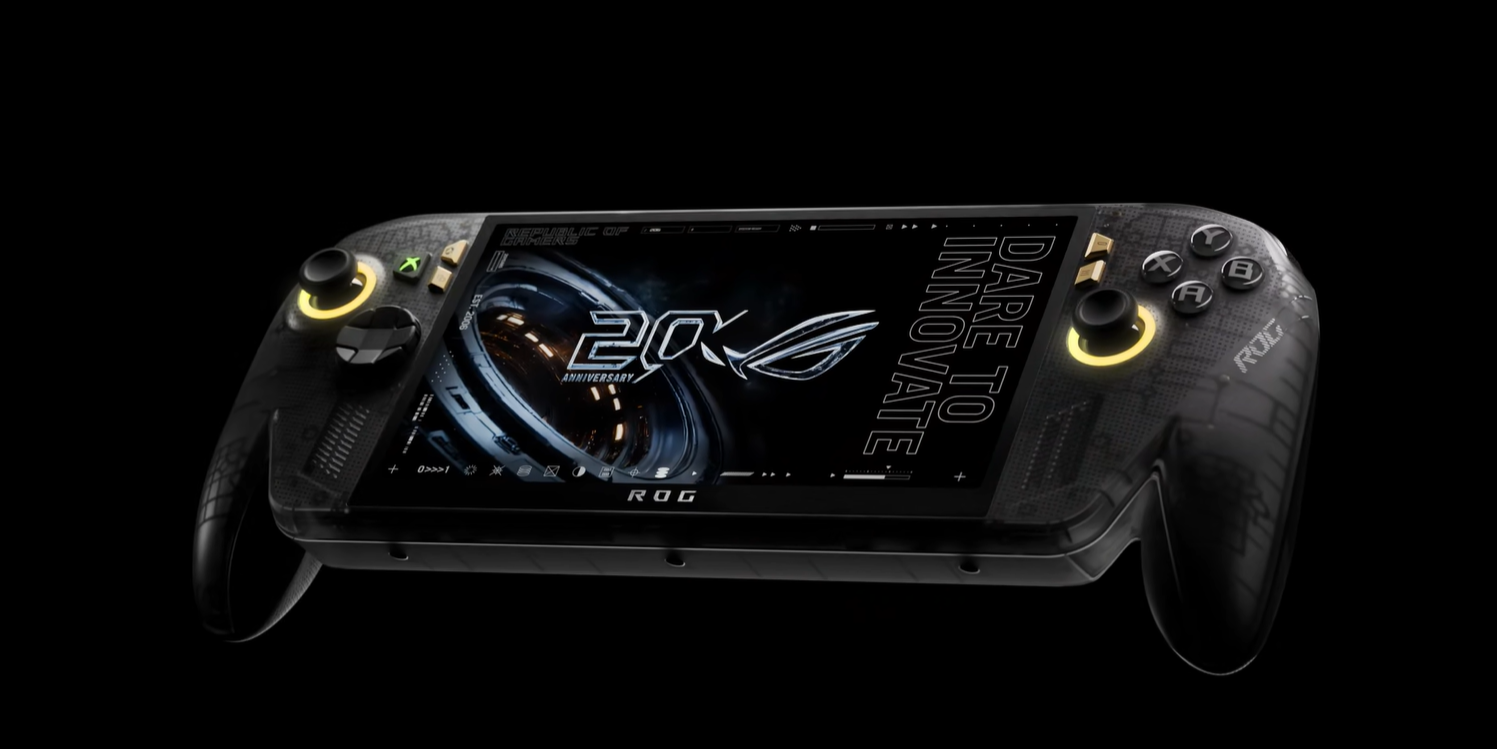
Furthermore, the display supports high dynamic range (HDR) capabilities and AMD FreeSync Premium Pro, mitigating screen tearing and stuttering during intensive gaming sessions. Brightness metrics are similarly impressive, peaking at 1,400 nits under HDR conditions, which allows for comfortable outdoor visibility—a historical pain point for portable gaming devices. Combined with a remarkably swift response time of 0.2 milliseconds and 100 percent DCI-P3 color gamut coverage, the display delivers deep blacks, vivid color reproduction, and exceptional contrast ratios that fundamentally alter the handheld visual experience.
Under the Hood: Familiar Performance and Upgraded Ergonomics
While the display represents a generational leap forward, the internal computing architecture remains largely consistent with the immediate predecessor. ASUS has opted to retain the capable AMD Ryzen AI Z2 Extreme processor, featuring 8 cores and 16 threads. This silicon is paired with 24GB of high-speed LPDDR5X RAM and a 1TB PCIe 4.0 NVMe solid-state drive for ample storage and rapid asset loading times.
Industry analysts note that ASUS chose stability over radical silicon redesigns for core performance, focusing instead on user experience, ergonomics, and tactile feedback. Despite the inclusion of a dense component layout and a massive 80 Wh battery—retained from previous models to ensure competitive unplugged runtimes—the device weighs in at 756 grams.
To enhance control precision, ASUS incorporated cutting-edge TMR (Tunnel Magnetoresistance) joysticks, which significantly reduce stick drift and improve longevity compared to traditional potentiometers. The hardware also features a transforming D-pad, revised shoulder buttons and triggers, dual programmable rear grip buttons, and advanced HD haptics for immersive tactile feedback. Connectivity options remain robust, featuring USB 4, a USB-C port with DisplayPort functionality, a microSD Express card reader, Wi-Fi 6E, and Bluetooth 5.4.

The 20th Anniversary Collector’s Bundle
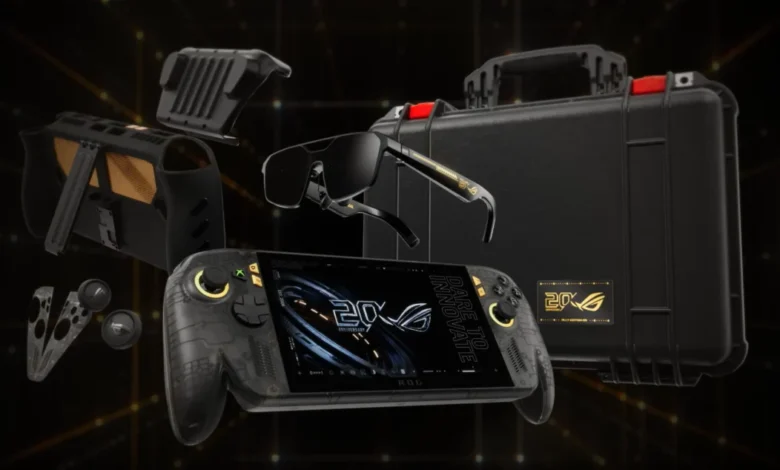
For extreme enthusiasts and collectors willing to stretch their budgets even further, ASUS has curated an ultra-premium package dubbed the ROG 20th Anniversary Bundle. Priced at an eye-watering $2,499 USD, this comprehensive kit goes far beyond the standalone console.
The bundle includes the ROG Xbox Ally X20 OLED alongside specialized accessories designed to elevate the mobile ecosystem. Most notably, the package features the ROG XREAL R1 Edition 20 augmented reality gaming glasses, offering users an alternative private virtual screen experience. Additionally, the bundle includes a custom-molded Pelican protective case, a dbrand Killswitch protective cover system, and various commemorative branding elements. Industry observers interpret this bundle as a deliberate collector’s item rather than a mainstream consumer product, designed to reward lifelong brand loyalists and affluent early adopters.
Chronology and Market Timeline
The pathway to the release of the ROG Xbox Ally X20 OLED reflects ASUS’s calculated iterative strategy within the handheld gaming sector:
- May 2023: ASUS introduces the original ROG Ally, establishing its presence in the Windows-based handheld market dominated by the Steam Deck.
- Mid-2025: The release of the ROG Xbox Ally X introduces significant battery and memory improvements, pushing prices closer to the $1,000 threshold.
- Mid-2026: ASUS officially unveils the ROG Xbox Ally X20 OLED during global branding events celebrating two decades of ROG innovation.
- Early October 2026: Official pricing is finalized, and global pre-orders open across ASUS web stores and retail partners like Best Buy.
- October 15, 2026: Official shipping and retail availability date for pre-order fulfillment.
Industry Implications and Market Analysis
The introduction of a $1,299 handheld gaming PC marks a critical inflection point for the industry. When Valve popularized modern portable PC gaming with the Steam Deck, affordability and accessibility were foundational pillars, with base models priced around $399. ASUS, alongside competitors like Lenovo and MSI, has progressively shifted the paradigm upward by offering PC-grade performance in a mobile form factor.
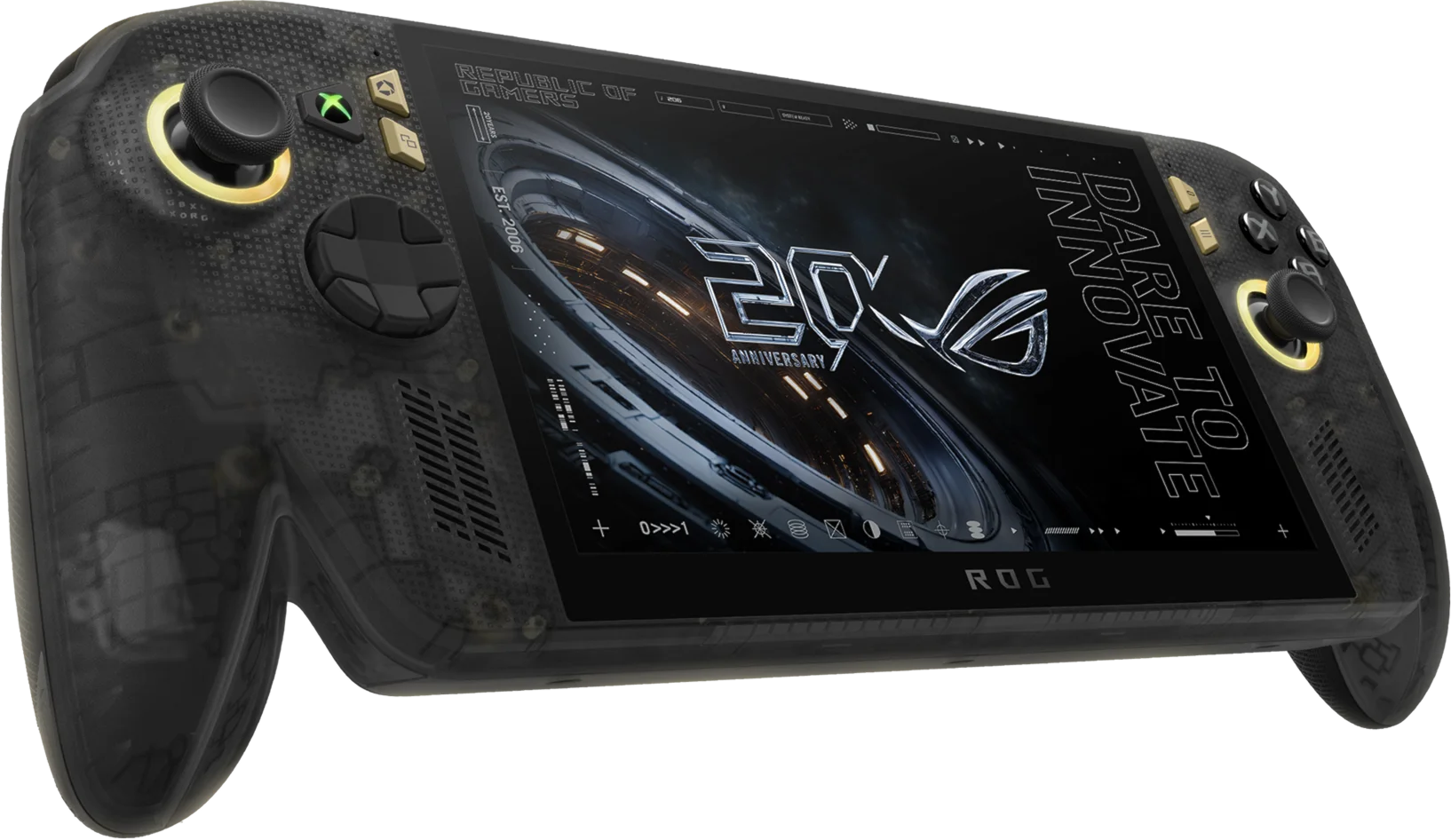
By pushing pricing past the $1,200 mark, ASUS is effectively testing the upper limits of consumer willingness to pay for mobile luxury hardware. Analysts suggest that while the high price point will alienate casual gamers, the inclusion of a high-end OLED display, TMR joysticks, and elite build quality justifies the investment for tech enthusiasts and power users who view handhelds as primary gaming platforms rather than supplementary devices. Furthermore, positioning the X20 OLED as an anniversary flagship allows ASUS to command premium margins while haloing the broader ROG ecosystem.
As pre-orders progress toward the October 15 launch date, market watchers will closely monitor initial consumer adoption rates to determine whether the market is genuinely ready to embrace ultra-premium portable gaming hardware at smartphone-tier pricing.
Related posts: