Exploring the Hallyu Wave: Top Metropolitan and Cultural Destinations to Visit in South Korea

South Korea has firmly established itself as one of the premier global tourism hotspots, drawing millions of international visitors annually, with a particularly strong influx of travelers from Southeast Asia, including Indonesia. This remarkable surge in tourism is heavily influenced by the global phenomenon known as the Hallyu wave—or the Korean Wave—driven by the widespread popularity of South Korean dramas, films, and music. Beyond the traditional historical palaces and scenic natural landscapes, travelers increasingly seek out contemporary urban locations that mirror the iconic cinematic backdrops seen on television. By blending vibrant metropolitan energy, rich artistic communities, and awe-inspiring modern architecture, South Korea offers a diverse itinerary for both first-time visitors and seasoned globetrotters.
The Rise of Hallyu Tourism: Background and Context
To understand the current boom in South Korean tourism, one must examine the deliberate cultural export strategy initiated by the South Korean government in the late 1990s and early 2000s, commonly referred to as Hallyu. What began as a regional increase in the popularity of Korean television dramas and pop music in East Asia has evolved into a worldwide cultural movement. According to data from the Korea Tourism Organization (KTO), inbound tourism grew exponentially over the past two decades, pivoting not only around historical heritage sites in cities like Gyeongju and Seoul but also around modern lifestyle hubs popularized by media productions.
Media productions often utilize specific urban districts, cafes, libraries, and streets to establish the mood of a narrative. Consequently, fans of these shows frequently travel to South Korea with the specific intention of walking the same streets and visiting the exact venues featured in their favorite episodes. This trend has transformed ordinary commercial districts and public spaces into major economic drivers for the local hospitality and retail sectors. Industry analysts note that media-induced tourism yields high economic returns, as travelers spend significantly on dining, fashion, local transportation, and merchandise inspired by popular culture.
Immersing in Urban Energy: Geonbae and the Modern Nightlife Scene
For travelers looking to experience the pulsating heartbeat of South Korea’s contemporary urban culture, metropolitan districts offer an unmatched sensory experience. Among the notable areas capturing this dynamic lifestyle is Geonbae, a bustling thoroughfare defined by its dense concentration of modern bars, cafes, and entertainment venues.
Geonbae exemplifies the fast-paced, neon-lit aesthetic often associated with Seoul’s nightlife. The streetscape is characterized by striking architectural designs, illuminated signage, and a vibrant social atmosphere that remains active well into the evening hours. Local tourism boards highlight districts like Geonbae as essential stops for visitors interested in contemporary South Korean social customs. It serves as a meeting point where both local residents and international tourists converge to experience the country’s renowned dining and drinking culture.

From an economic and sociological perspective, these nightlife and entertainment districts reflect South Korea’s transition into a 24-hour metropolitan society. Urban planners and municipal authorities in Seoul have continuously invested in upgrading pedestrian infrastructure, safety lighting, and public transit connectivity around major commercial zones to accommodate the steady influx of foot traffic. For international travelers, navigating these districts provides a direct glimpse into the modern lifestyle of urban South Koreans, moving far beyond the scripted confines of television dramas.
Daehakro: The Artistic Heart and Broadway of Seoul
Shifting from commercial nightlife to cultural enrichment, Daehakro stands out as a cornerstone of South Korea’s performing arts scene. Translating literally to "University Street," Daehakro spans approximately 1.6 kilometers in the Jongno-gu district of Seoul. Historically, the area served as the main campus of Seoul National University before the institution relocated in the late 1970s. Following the relocation, the district naturally evolved into a creative enclave, earning its reputation as the South Korean equivalent of New York’s Broadway or London’s West End.
Today, Daehakro is home to over a hundred small-to-medium-sized theaters, independent art spaces, live music venues, and outdoor performance plazas. The street is constantly animated by actors, musicians, and artists promoting upcoming theatrical productions, musicals, and indie concerts. Unlike the commercialized entertainment found in other parts of the capital, Daehakro retains an authentic, grassroots artistic atmosphere.
Cultural economists and tourism officials frequently cite Daehakro as a prime example of successful urban repurposing. Transforming a former academic zone into a thriving cultural hub has not only preserved the intellectual heritage of the neighborhood but has also fostered a robust local creative economy. Visitors walking down Daehakro can experience cutting-edge contemporary Korean theater, improvisational comedy, and traditional artistic fusions, making it an indispensable destination for those seeking a deeper intellectual and cultural engagement with the country.
Architectural Marvels: The Cultural Impact of Starfield Library
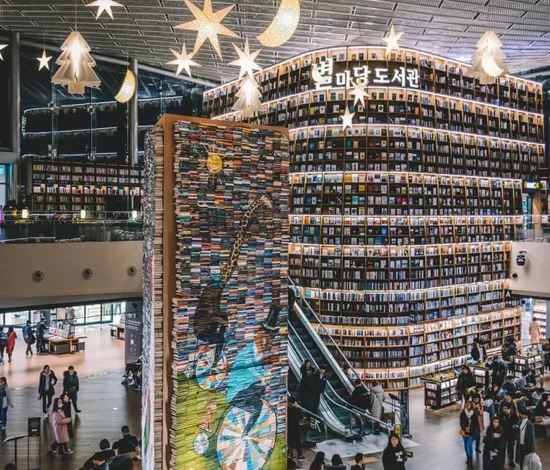
In addition to streets and entertainment districts, South Korea has increasingly integrated striking modern architecture into its public and commercial spaces, creating destinations that function simultaneously as civic amenities and major tourist attractions. A prominent example of this architectural trend is the Starfield Library, located in the heart of the Gangnam district inside the COEX Mall.
Opened to the public in May 2017, the Starfield Library spans 2,800 square meters and features massive, towering bookshelves that reach a height of 13 meters. Housing a vast collection of over 50,000 books, magazines, and digital catalogs, the open-space library was designed not merely as a quiet reading room, but as a public cultural living room. It regularly hosts book discussions, poetry readings, lectures, and musical performances, democratizing access to literature and art within a bustling commercial environment.

The establishment of the Starfield Library marked a shift in urban retail design, proving that large-scale commercial developments could successfully incorporate educational and cultural elements. From an analytical standpoint, the library quickly became a viral sensation on global social media platforms, demonstrating the power of photogenic, human-centric design in modern tourism marketing. Visitors from across the globe visit the site to capture its symmetrical grandeur, thereby generating organic digital promotion for Seoul as a forward-thinking, design-conscious metropolis.
Economic Implications and the Future of South Korean Tourism
The steady growth of media-driven and urban tourism carries significant economic and structural implications for South Korea. According to official reports from the Ministry of Culture, Sports and Tourism, the tourism sector remains a vital pillar of national economic diversification, contributing substantially to employment in the service, hospitality, and retail industries.
To sustain this momentum, municipal governments and tourism agencies have implemented various initiatives aimed at improving the visitor experience. These measures include expanding multilingual signage, enhancing public transportation networks, introducing digital concierge services, and promoting sustainable tourism practices to prevent overcrowding in residential neighborhoods. Furthermore, policymakers are actively encouraging the decentralization of tourism, guiding travelers beyond the borders of Seoul to explore regional cultural hubs in cities like Busan, Incheon, and Gyeongju.
Industry experts project that as international mobility continues to normalize globally, South Korea’s strategic blend of traditional heritage and modern popular culture will maintain its strong competitive edge. By continuously innovating its urban landscapes—ranging from energetic commercial streets like Geonbae and artistic corridors like Daehakro to architectural landmarks like the Starfield Library—the country ensures that its tourism offerings remain fresh, engaging, and reflective of its evolving national identity.
Conclusion
Traveling through South Korea offers far more than a simple vacation; it provides an immersive journey through a society that successfully bridges its historical roots with cutting-edge modernity. Whether walking down the neon-lit avenues of Geonbae, exploring the theatrical depths of Daehakro, or marveling at the towering shelves of the Starfield Library, visitors are invited to step directly into the vibrant realities that inspire contemporary global culture. As infrastructure development and cultural diplomacy continue to evolve, South Korea remains a dynamic and welcoming destination for travelers seeking inspiration, education, and unforgettable urban adventures.
Related posts: