Menteri Dalam Negeri Muhammad Tito Karnavian Menetapkan Pertumbuhan Ekonomi sebagai Indikator Utama Kinerja Kepala Daerah

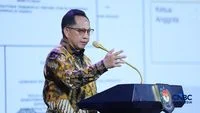
The effectiveness of regional leadership in Indonesia is no longer measured solely by administrative compliance or bureaucratic output but has shifted toward tangible macroeconomic performance. Minister of Home Affairs Muhammad Tito Karnavian recently underscored that the growth rate of a region’s economy serves as the definitive benchmark for evaluating the success of governors, regents, and mayors. This shift in performance assessment marks a strategic pivot in the central government’s approach to regional autonomy, aiming to foster a more competitive and productive sub-national economy.
The remarks were delivered during the "Appreciation for High-Performing Regional Governments Batch III," covering the Nusa Tenggara and Maluku regions, held on Friday, November 20, 2026. This event, which serves as a platform to honor regional administrations that have demonstrated fiscal discipline and economic innovation, highlighted the critical necessity for local leaders to move beyond routine governance and actively participate in the orchestration of local economic activity.
The Four Pillars of Regional Economic Growth
Minister Tito Karnavian outlined four primary components that serve as the engine for regional economic development. These pillars provide a comprehensive framework for local administrations to navigate the complexities of their respective jurisdictions.
The first component is household consumption, which is directly tied to the purchasing power of the local population. As the Minister noted, the ability of citizens to spend is the fundamental driver of market demand. When households have stable incomes and confidence in the local economy, the multiplier effect on local businesses—ranging from small-scale retailers to service providers—becomes more pronounced.
The second pillar involves the management of the Regional Budget (APBD). The synergy between regional revenue and strategic government spending is essential. Tito emphasized that when local governments effectively execute their budgets, particularly in infrastructure and public services, they stimulate the velocity of money within the region. Delays in budget execution or inefficient allocation are seen as primary obstacles to economic acceleration.
The third pillar is investment climate. The ability of a regional head to attract private sector capital is viewed as a hallmark of successful leadership. In this context, the Minister pointed out that if investment inflows are stagnant, it serves as a red flag for the regional administration. It often suggests that the region suffers from bureaucratic hurdles, poor regulatory transparency, or infrastructure deficits that deter potential investors.
Finally, the fourth pillar is net exports, defined as total exports minus imports. This requires local governments to transition from passive governance to proactive economic facilitation. Regional leaders are now expected to support local Small and Medium Enterprises (SMEs) in reaching international markets. Tito highlighted a sobering reality: Indonesia’s handicraft sector currently struggles to compete with regional rivals such as Vietnam and Thailand, and faces stiff competition from manufacturing giants like China and India. Strengthening the export capacity of regional industries is, therefore, a strategic imperative.
Contextualizing Regional Performance: A Historical Overview
The evaluation of regional heads based on macroeconomic indicators is part of a broader evolution in Indonesia’s governance. Following the decentralization reforms initiated in the late 1990s, regional governments were granted significant autonomy over their financial and administrative affairs. However, this autonomy occasionally led to fragmented policy-making and uneven development across the archipelago.
Over the past decade, the Ministry of Home Affairs has implemented more rigorous monitoring systems. The "Apresiasi Pemerintah Daerah Berprestasi" program is the culmination of years of efforts to harmonize regional development with the central government’s national agenda. By 2026, the criteria for this recognition have become more data-driven, utilizing metrics such as the Human Development Index (HDI), inflation control, and poverty reduction rates—all of which are inextricably linked to regional economic growth.
The Nusa Tenggara and Maluku regions, which were the focus of the recent appreciation event, present unique challenges. These regions often grapple with geographic isolation, logistical costs, and a reliance on natural resources. The Minister’s focus on these specific regions underscores the national intent to bridge the "economic gap" between the western and eastern parts of Indonesia.
Economic Analysis: The Multiplier Effect of Local Policy
Economists generally agree that the decentralized model in Indonesia necessitates a strong link between regional leadership and local economic output. Regional heads possess the authority to streamline licensing (perizinan) through the Online Single Submission (OSS) system, improve public services, and offer fiscal incentives that can attract foreign and domestic direct investment.
Data from the Central Statistics Agency (BPS) frequently shows that regions with high growth rates are those where local governments have successfully integrated their development plans with national priorities. For instance, in areas where regional leaders have prioritized digital infrastructure and streamlined business licensing, the entry of new firms has significantly boosted local tax revenues and employment rates.
Conversely, the "low investment" trap mentioned by Minister Tito is a well-documented phenomenon. Regions that maintain high levels of red tape or inconsistent local regulations often see capital flight or the migration of businesses to neighboring, more business-friendly districts. The Minister’s emphasis on "systemic obstacles" reflects a recognition that policy stability is a prerequisite for long-term economic prosperity.
The Role of SMEs in Global Value Chains
A significant portion of the Minister’s address focused on the competitiveness of SMEs. As global trade becomes increasingly interconnected, the ability of local artisans and small-scale manufacturers to participate in the global value chain is a key indicator of economic sophistication.
Vietnam, for example, has successfully integrated its SMEs into the global electronics and apparel supply chains through aggressive export promotion and industrial upgrading. For Indonesia to mirror this success, regional governments must play a more active role in technical training, quality control certification, and logistics support for local businesses. The Minister’s challenge to regional leaders is to stop viewing SMEs merely as local welfare recipients and start viewing them as the primary drivers of export-led growth.
Implications for Future Governance
The insistence that regional heads take responsibility for economic growth has several far-reaching implications:
- Increased Professionalization: Future candidates for regional leadership will likely be judged more on their economic track records and management skills than on traditional political patronage.
- Data-Driven Policy: Regional administrations will need to invest more heavily in economic research and data collection to monitor their performance against the four pillars identified by the Ministry.
- Enhanced Accountability: The Ministry of Home Affairs is positioning itself to use economic performance data as a tool for oversight. This could lead to more targeted interventions by the central government in regions that consistently underperform.
- Inter-Regional Competition: By highlighting high-performing regions, the Ministry is encouraging a competitive spirit among local governments, which could lead to an "innovation race" in policy-making to attract investment and stimulate growth.
Official Responses and Future Outlook
While the Ministry of Home Affairs sets the agenda, the successful implementation of this vision requires collaboration with other agencies, such as the Ministry of Investment (BKPM) and the Ministry of Finance. Stakeholders in the regional government sector have expressed general support for this mandate, though many have pointed out the need for greater clarity regarding central-to-regional fiscal transfers to ensure that local governments have the resources to implement these economic strategies.
As Indonesia navigates the global economic uncertainties of 2026, the directive from the Minister of Home Affairs serves as a clear signal that the era of "business as usual" for regional heads is coming to an end. The integration of economic performance metrics into the core evaluation of regional leadership is expected to strengthen the national economy from the ground up, ensuring that the benefits of growth are more evenly distributed across the vast archipelago.
Moving forward, the Ministry is expected to continue its series of appreciation events for other regions, further institutionalizing this performance-based approach. By aligning local governance with national economic targets, the government aims to solidify Indonesia’s position as a robust, resilient economy in the Southeast Asian landscape. The emphasis remains on the fact that while the central government provides the regulatory framework, the true architects of Indonesia’s prosperity are the leaders operating at the regional level, whose decisions directly impact the daily lives and economic opportunities of millions of citizens.
Related posts: