Former Jampidsus Febrie Adriansyah Detained by Attorney General Office Over Corruption and Money Laundering Allegations

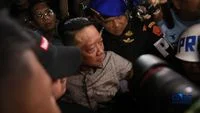
The Attorney General’s Office (Kejagung) has officially detained the former Junior Attorney General for Special Crimes (Jampidsus), Febrie Adriansyah, following an intensive interrogation regarding his alleged involvement in corruption and money laundering (TPPU). The detention, which took place late Friday night on July 24, 2026, marks a significant and dramatic turn in the Indonesian legal landscape, as one of the country’s most prominent former prosecutors now finds himself on the opposite side of the interrogation table.
Febrie Adriansyah was seen being escorted by officials from the Main Building of the Attorney General’s Office in South Jakarta at approximately 11:05 PM WIB. Clad in the typical orange detention vest, he was led directly to a waiting transport vehicle. Authorities confirmed that Febrie is being held at the Corruption Eradication Commission (KPK) detention facility in South Jakarta, a move intended to maintain the integrity of the investigation and prevent any potential conflict of interest within the Attorney General’s Office’s own detention units.
Speaking briefly to the press before being whisked away, Febrie expressed his disappointment with the proceedings, suggesting that the evidence against him was insufficient and that the process lacked the typical rigor he was accustomed to during his tenure at the "Gedung Bundar" (the Circular Building, which houses the Special Crimes division).
"Today I have been examined as a suspect and subsequently detained," Febrie stated. "I discussed with the investigative team that the evidence presented still needs to be explored or confirmed further. In my view, this is not yet sufficient to warrant detention. At the Gedung Bundar, it was never like this. Things were never done this way."
Procedural Disputes and Claims of Criminalization
The former Jampidsus, who once oversaw some of the largest corruption cases in Indonesia’s history, criticized the speed and methodology of the current investigation. According to Febrie, standard operating procedures for high-level corruption cases usually involve multiple rounds of "ekspose" (case presentations) and a thorough cross-examination of evidence before a suspect is named or detained.
"The evidence should have been confirmed and deepened first," Febrie argued. "There should be repeated case exposures before designating someone as a suspect and proceeding with detention. However, this has become the decision of the leadership. I am ready to face it, though I truly feel this is a form of criminalization."
Despite these protestations, the Attorney General’s Office maintains that all legal protocols have been strictly followed. The detention was authorized based on the investigators’ belief that there is sufficient preliminary evidence and a flight risk or potential for the destruction of evidence, which are the standard legal grounds for pre-trial detention in major financial crimes.
The Investigation: 74 Kilograms of Gold and Hundreds of Billions in Cash
The case against Febrie Adriansyah gained significant momentum following a series of strategic moves by a specialized investigative unit known as "Tim 9" (Team 9). This team was formed specifically to handle high-profile internal cases to ensure a higher degree of objectivity and transparency.
The pivot toward Money Laundering (TPPU) charges was triggered by substantial findings handed over by the National Police’s Corruption Eradication Task Force (Kortas Tipidkor). According to the Head of the Legal Information Center (Kapuspenkum) of the Attorney General’s Office, Anang Supriatna, the evidence is both physical and monumental in scale.
"The Attorney General’s Office has carefully studied the case, leading to the issuance of a new Special Investigation Order (Sprindik) specifically for Money Laundering, numbered Print-03/F.2/Fd.2/07/2026, dated July 20, 2026," Anang explained in a written statement.
The evidence submitted by the police task force includes:
- 74 kilograms of gold: The origin and ownership of this bullion are currently under scrutiny, with investigators looking for links to previous major corruption cases handled by the Special Crimes division.
- Foreign Currency: Cash in various foreign denominations totaling hundreds of billions of Indonesian Rupiah.
- Digital and Document Evidence: Ledgers and digital records that allegedly trace the flow of these assets through various proxy accounts.
Chronology of the Arrest and Investigation
The timeline leading to Febrie Adriansyah’s detention reveals a fast-paced and highly coordinated effort between multiple law enforcement agencies:
- July 20, 2026: The Attorney General’s Office officially issues the Sprindik for Money Laundering (TPPU), marking the formal start of the focused investigation into Febrie’s financial assets.
- July 22, 2026: Tim 9 summons three key witnesses for questioning. They are identified by their initials: Don Ritto, NH, and TS. These individuals are believed to have intimate knowledge of the financial transactions and asset management related to the suspect.
- July 24, 2026 (1:00 PM WIB): Febrie Adriansyah arrives at the Attorney General’s Office. His arrival was notably discreet, managing to bypass the heavy media presence stationed at the main gates. He was initially summoned as a witness.
- July 24, 2026 (Afternoon – Night): The status of Febrie is upgraded from witness to suspect during the course of the interrogation as investigators presented the findings from the previous days’ witness testimonies and the physical evidence provided by the police.
- July 24, 2026 (11:05 PM WIB): Febrie is officially detained and moved to the KPK detention center.
Inter-Agency Synergy and Transparency
In an effort to avoid accusations of internal bias or a "cover-up," the Attorney General’s Office has taken the unusual step of involving multiple external oversight bodies. During the interrogation and the case building process, the Kejagung invited representatives from:
- The Corruption Eradication Commission (KPK): Specifically the Coordination and Supervision Team.
- The Prosecution Commission (Komisi Kejaksaan): To ensure ethical standards were met.
- The National Police’s Kortas Tipidkor: Who provided the initial evidence.
- The Witness and Victim Protection Agency (LPSK): To ensure that any whistleblowers or cooperating witnesses are handled according to the law.
Anang Supriatna emphasized that this collaborative approach is a "manifestation of transparency and synergy" in handling a case of such high public and institutional importance. By involving the KPK and the Police, the Attorney General’s Office aims to demonstrate that it is capable of policing its own ranks without favoritism.
Background: The Rise and Fall of a High-Profile Prosecutor
Febrie Adriansyah’s career was previously defined by his aggressive pursuit of "mega-corruption" cases. As the Jampidsus, he was the face of several high-stakes investigations, including the Jiwasraya and Asabri scandals, which involved losses to the state amounting to tens of trillions of rupiah. His reputation was that of a "tough on crime" prosecutor who was not afraid to go after powerful conglomerates and high-ranking officials.
However, rumors of internal friction and potential irregularities had been circulating in legal circles for months prior to the July 2026 Sprindik. The current allegations suggest that the very mechanisms Febrie used to dismantle corruption networks may have been compromised. The investigation into TPPU suggests that the authorities suspect some of the assets recovered or managed during his tenure may have been diverted or used for personal gain through complex laundering schemes.
Legal and Institutional Implications
The detention of a former Jampidsus is a watershed moment for the Indonesian judiciary. Analysts suggest that this case could have several far-reaching implications:
1. Institutional Reform: This case may lead to a total overhaul of how the Special Crimes division (Gedung Bundar) operates. If a former head of the division can be implicated in such massive money laundering, it suggests that the internal oversight mechanisms (Waskat) may be insufficient.
2. Public Trust: While the arrest shows that "no one is above the law," it also risks damaging public confidence in the prosecution service. If the person tasked with fighting corruption is himself accused of it, the public may question the legitimacy of previous cases handled under his leadership.
3. Precedent for Accountability: This sets a strong precedent for the "Clean Indonesia" initiative. It sends a message to all high-ranking officials that their actions are being monitored, even after they leave their posts.
4. Legal Precedent for TPPU: The use of 74 kg of gold as primary evidence in a money laundering case against a legal official will likely lead to complex legal battles regarding the "reverse burden of proof," where the suspect may be required to prove the legitimate origin of his wealth.
As the investigation continues, Tim 9 is expected to summon more witnesses from the financial sector and the legal community. The Attorney General’s Office has signaled that this is only the beginning of a broader effort to sanitize the institution from within. Meanwhile, Febrie Adriansyah’s legal team is expected to file a pre-trial motion (praperadilan) to challenge the legality of his suspect status and detention, setting the stage for a protracted legal battle that will undoubtedly capture the nation’s attention for months to come.