Joint Law Enforcement Operation Uncovers Racetrack of Illicit Drugs and Clandestine Armory in East Jakarta’s Pasar Obor


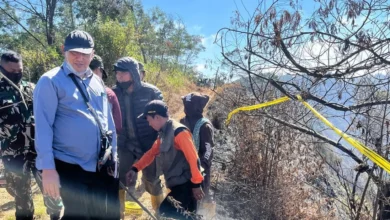
Law enforcement agencies and municipal authorities in the Indonesian capital launched a massive, coordinated raid targeting a notorious narcotics distribution and consumption hub in Pasar Obor, located within the Pasar Rebo sub-district of East Jakarta. The large-scale operation, conducted on Thursday, November 19, 2026, brought together a formidable contingent of 120 personnel representing multiple branches of the security apparatus, including the Indonesian National Police (Polri), the Indonesian National Armed Forces (TNI), the East Jakarta City National Narcotics Agency (BNNK), and the municipal administration of East Jakarta. What began as an intelligence-led sweep to clamp down on localized drug trafficking quickly escalated into a major security discovery. Authorities not only seized hundreds of neatly packaged doses of illicit substances ready for street distribution but also uncovered a dangerous cache of firearms, homemade weaponry, and an extensive assortment of lethal edged weapons.
The raid underscores ongoing, intensive efforts by Indonesian authorities to dismantle localized narcotics rings that often integrate violent crime and illicit arms possession within densely populated urban environments. As metropolitan areas continue to grapple with the multifaceted challenges of organized crime, operations of this scale reflect a tactical shift toward multi-agency interventions designed to neutralize threats comprehensively, addressing both the supply of narcotics and the tools of violence that protect these illicit networks.
Chronology of the Operation and Tactical Execution
Planning for the intervention at Pasar Obor had been underway for weeks, driven by persistent community grievances, surveillance reports, and intelligence gathered by local informants regarding suspicious activities in the commercial and residential mixed-use zone. The area, characterized by rows of shophouses (ruko) and residential dwellings, had increasingly become a sanctuary for illicit transactions, drawing transient populations and suspected drug users.
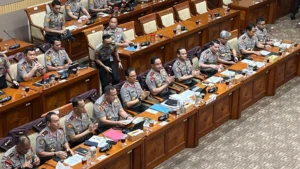
In the early hours of Thursday, November 19, 2026, the joint task force encircled the target zone to prevent any potential escape routes. The operation involved specialized elements from the Metro Jakarta Timur Police, the military district command Kodim 0505, the Cijantung Military Police Detachment (Denpom), and units from the Jakarta Metropolitan Police (Polda Metro Jaya), including the Directorate of Narcotics Investigation, the Mobile Brigade (Brimob), and the Crowd Dispersion Unit (Raimas).
Upon breaching the premises, law enforcement officers encountered numerous commercial shophouses that appeared outwardly abandoned or deliberately shuttered to evade suspicion. However, forced entry revealed interiors outfitted specifically for the consumption, packaging, and distribution of narcotics. Suspects had utilized the concealed spaces to process drugs away from public view. As teams secured the perimeter and conducted systematic floor-by-floor searches, the scope of the illicit enterprise became apparent. Instead of finding merely paraphernalia, officers stumbled upon a hidden arsenal capable of sustaining violent resistance or territorial conflicts.
Scope of Seizures: Narcotics, Firearms, and Edged Weapons
The haul recovered from the Pasar Obor location surpassed initial expectations, shifting the classification of the raid from a routine drug bust to a high-priority national security intervention. According to official reports detailed by local command, the evidentiary inventory cataloged a chilling collection of weaponry alongside commercial quantities of illegal drugs.
Forensic teams and investigators documented the seizure of 159 small, individually wrapped plastic packages containing crystal methamphetamine, commonly known locally as sabu. To facilitate the distribution process, the operators of the den utilized precision equipment; officers recovered between seven and eight digital weighing scales scattered across the various searched rooms. Furthermore, the presence of six to seven improvised water pipes, locally referred to as bong, confirmed that the location functioned simultaneously as a distribution depot and an active consumption lounge.
Perhaps more alarming than the volume of narcotics was the firepower uncovered during the sweep. East Jakarta Metro Police Chief Senior Commissioner Hendri Umar confirmed to the press that officers retrieved a homemade firearm, colloquially known as a senpi rakitan, alongside two operational soft guns and a quantity of live ammunition. The presence of a functional homemade firearm indicates a dangerous intersection between the local drug trade and underground weapons manufacturing, posing a direct threat to the safety of law enforcement personnel and the surrounding community.
In addition to the firearms, the task force confiscated roughly 15 lethal edged weapons of diverse designs, sizes, and origins. The confiscated armory included traditional and modern close-quarters combat tools such as sickle-shaped celurit sickles, traditional badik daggers, Japanese-style samurai swords, and an array of heavy-duty hunting and utility knives. All recovered items were meticulously logged, tagged, and transported under heavy security to the Jakarta Timur Police Headquarters for ballistic analysis, fingerprinting, and inclusion in the ongoing criminal dossier.
Institutional Collaboration and Official Statements
The success of the Pasar Obor operation highlights the efficacy of inter-agency synergy in combating organized crime within the capital region. By pooling the specialized capabilities of the TNI, Polri, BNN, and municipal government, authorities were able to execute a seamless operation that minimized risk to civilians while maximizing operational thoroughness.
Speaking to reporters at the scene, East Jakarta Metro Police Chief Hendri Umar emphasized the clandestine nature of the raided properties and the deliberate efforts made by perpetrators to mask their activities.
"All of our teams moved into the Pasar Obor area in large numbers. Many of the shophouses we targeted appeared to be intentionally closed from the outside, but once we forced entry, it became evident that these were spaces actively utilized by drug users to consume narcotics," stated Commissioner Hendri Umar. He further elaborated on the gravity of finding unauthorized firearms in close proximity to illicit substances, noting that the presence of weaponry elevates the legal and physical risks inherent in narcotics enforcement.
Representatives from the East Jakarta Municipal Government and BNNK Jakarta Timur echoed these sentiments, pointing out that community vigilance played an instrumental role in prompting the raid. Local officials reiterated that urban renewal and public safety initiatives depend heavily on eradicating localized crime hubs that depress property values, foster criminality, and endanger the social fabric of neighborhoods.
Broader Implications and Socio-Security Context
The raid at Pasar Obor serves as a microcasm of broader security challenges confronting major urban centers in Indonesia. The proliferation of crystal methamphetamine remains a primary driver of criminality, straining public health systems, correctional facilities, and law enforcement resources. According to national narcotics statistics, synthetic drugs like sabu continue to dominate the illicit market due to high profit margins and relative ease of concealment compared to plant-based narcotics.
The discovery of firearms in drug dens points toward a troubling trend of criminal professionalization. As law enforcement pressure intensifies, drug syndicates increasingly rely on armed protection, surveillance networks, and fortified safehouses to safeguard their supply chains. This dynamic transforms routine drug enforcement into high-risk tactical engagements, necessitating the deployment of specialized paramilitary units such as Brimob and military police elements.
From a socio-legal perspective, the seizure of 159 packages of narcotics along with distribution paraphernalia indicates that Pasar Obor operated as a localized node within a wider regional or national distribution network. Subsequent investigations by the Directorate of Narcotics Investigation of Polda Metro Jaya will focus on tracing the supply chain upward to identify key financiers, manufacturers, and higher-tier distributors responsible for provisioning the Pasar Obor location. Investigators will also subject the seized homemade firearm and edged weapons to forensic ballistic testing to determine whether they have been utilized in prior violent crimes, robberies, or territorial turf wars within the Greater Jakarta area.
As the legal proceedings advance, the multi-agency task force has signaled that similar targeted operations will continue across identified vulnerability zones in East Jakarta and neighboring municipalities. Municipal authorities have likewise announced plans to increase oversight of commercial rental properties, reminding property owners of their legal liabilities should their premises be exploited for illicit activities. Through a combination of rigorous enforcement, community intelligence, and inter-institutional cooperation, law enforcement agencies aim to systematically dismantle the operational infrastructure supporting the drug trade within the capital.