Expert Analysis Challenges Proposed Translocation of Javan Rhinoceros from Ujung Kulon to Alas Purwo

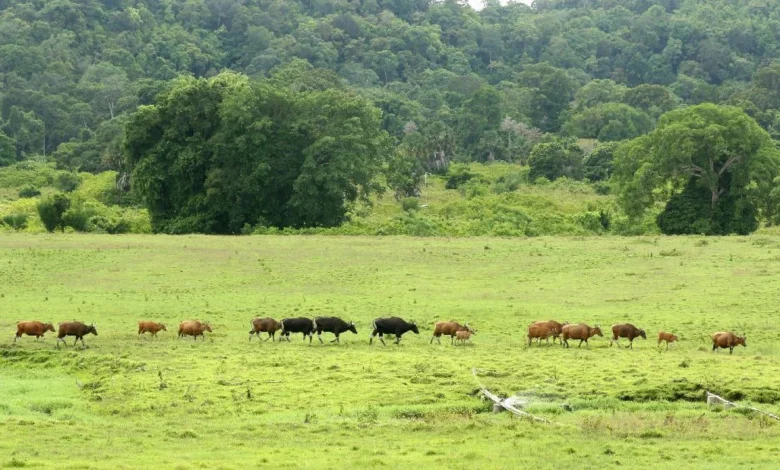
The proposal to establish a secondary population of the critically endangered Javan rhinoceros (Rhinoceros sondaicus) by relocating individuals from Ujung Kulon National Park to Alas Purwo National Park has sparked a rigorous debate among conservationists, ecologists, and wildlife experts. While the initiative is primarily driven by the urgent need to mitigate the catastrophic risks posed by volcanic activity from Anak Krakatau, seismic shifts, and potential tsunamis, the scientific community remains deeply divided over the ecological feasibility of such a move.
At the heart of the controversy is the assumption that geographic proximity and a shared tropical climate imply habitat compatibility. Nur Hidayatullah Romadhon, a lecturer in Biology at the Universitas Muhammadiyah Surabaya (UMSURA), has emerged as a vocal critic of the current approach, arguing that the biological complexities of the Javan rhino are being overlooked in favor of logistical convenience. As the global population of this species hovers at approximately 76 individuals—all concentrated within the Ujung Kulon peninsula—the stakes for any intervention could not be higher.
The Ecological Context: Why Habitat Matters
The Javan rhinoceros is one of the most endangered large mammals on Earth. Historically, the species ranged across much of Southeast Asia, from the islands of Java and Sumatra to parts of India and China. Today, Ujung Kulon, located at the western tip of Java, serves as the species’ final refuge. The suggestion to move a portion of this population to Alas Purwo, located at the eastern tip of the island, is based on the "metapopulation" theory: by spreading the risk across two distinct geographic locations, the likelihood of a single disaster wiping out the entire species is theoretically reduced.
However, Dr. Romadhon emphasizes the concept of the "ecological niche." In ecological terms, a species does not simply exist in a location; it interacts with a highly specific set of environmental variables—soil composition, water mineral content, forage species density, and even the internal micro-climate of the forest structure.
"Species require a precise alignment of environmental factors to satisfy their biological imperatives," Dr. Romadhon noted. "It is a reductionist fallacy to assume that because two regions are both tropical, they are ecologically interchangeable. Conservation is not merely about finding an empty forest and transferring animals. We must understand the intricate relationship between the animal’s evolutionary history and its habitat."
Historical Context and the Threat of Extinction
The urgency surrounding the Javan rhino is not without merit. The species has faced the brink of extinction for decades. Following the total loss of the population in Vietnam’s Cat Tien National Park in 2010—where the last individual was poached—Ujung Kulon became the world’s only home for the species.
The threat of a natural disaster is a tangible, recurring concern. The 1883 eruption of Krakatoa, which sits in the Sunda Strait near Ujung Kulon, fundamentally reshaped the region’s geography and biology. A major eruption or subsequent tsunami would threaten the very existence of the rhinoceros population. Throughout the early 21st century, various conservation groups and government agencies have evaluated potential translocation sites, with Alas Purwo frequently appearing on the shortlist due to its size and protected status.
The Complexity of Translocation
Translocation is widely regarded in conservation biology as a high-risk, high-reward strategy. It involves capturing, sedating, transporting, and acclimating a large, solitary animal to a completely new environment. For a species as sensitive as the Javan rhinoceros, the risks include:
- Capture-Induced Stress: The physical toll of sedation and transport on a massive mammal can lead to acute health issues or even mortality.
- Foraging Adaptation: Rhinos are selective browsers. If the nutrient profile of the vegetation in Alas Purwo differs significantly from the specific mix of plants available in Ujung Kulon, the animals may struggle to maintain nutritional health.
- Behavioral Disruption: Rhinos develop complex internal maps of their environment, including water sources, wallows, and breeding trails. Stripping an individual of these markers can lead to disorientation and failure to reproduce.
- Social Dynamics: The Javan rhino is inherently solitary. Introducing individuals into a new territory requires careful management to ensure that territorial disputes do not turn lethal.
Scientific Skepticism and Alternative Mitigation
Dr. Romadhon argues that instead of focusing on translocation, authorities should invest in a more granular understanding of the rhino’s own resilience. He suggests that we often underestimate the ability of wildlife to respond to environmental stressors through behavioral adaptation.
"We are treating these animals as if they are passive victims of their environment," he stated. "We have not fully explored their capacity to detect and react to environmental shifts, nor have we maximized the potential of the existing habitat in Ujung Kulon to provide refuge."
The proposed alternatives to mass translocation include:
- Habitat Connectivity: Enhancing the current habitat to ensure the rhinos have corridors to retreat to higher ground in the event of a tsunami or flood.
- Intensive Monitoring: Using advanced telemetry and bio-logging to track how rhinos move within Ujung Kulon during periods of volcanic activity or seismic unrest.
- Dynamic Risk Management: Establishing permanent, small-scale protected shelters within the existing ecosystem that are fortified against geological disasters.
Official Perspectives and Future Implications
While the government and major conservation NGOs have not yet issued a final verdict on the Alas Purwo proposal, the discourse is shifting. The consensus is no longer simply "where" to move the rhinos, but "whether" to move them at all.
Critics of the translocation point to the failures of similar projects in other regions, where animals released into new environments failed to establish viable, self-sustaining populations. Conversely, proponents argue that doing nothing is a passive acceptance of extinction should a major disaster strike.
The path forward, according to environmental scientists, requires a multi-year, multi-disciplinary study. This would include:
- Soil and Flora Analysis: A comprehensive comparison of the nutritional value of browse in Alas Purwo versus Ujung Kulon.
- Genomic Assessment: Ensuring that any translocation does not negatively impact the genetic diversity of the small, bottlenecked population.
- Public and Local Engagement: Working with local communities around Alas Purwo to ensure the security of any introduced rhinos, as poaching remains a historical threat to the species.
Conclusion: A Call for Caution
The fate of the Javan rhinoceros serves as a litmus test for modern conservation ethics. Are we to act decisively and risk failure through human intervention, or do we prioritize the "wildness" of the species and trust in their adaptive capacity?
As the debate continues, the scientific community remains unified on one point: the Javan rhino cannot afford a mistake. If translocation is to proceed, it must be supported by an exhaustive body of evidence that accounts for the species’ ecological, behavioral, and biological requirements. Until such evidence is provided, the scientific consensus cautions against rushing into a decision that may carry the weight of a species’ extinction.
For now, the focus remains on the dense, humid forests of Ujung Kulon, where these prehistoric giants continue to navigate a changing world, largely on their own terms. The decision to intervene, if it comes, will be one of the most significant conservation actions of the 21st century—one that will either secure the future of the species or accelerate its tragic decline.