Global Oil Prices Breach USD100, Prompting Indonesia’s Fiscal Safeguards to Shield Pertalite Subsidies

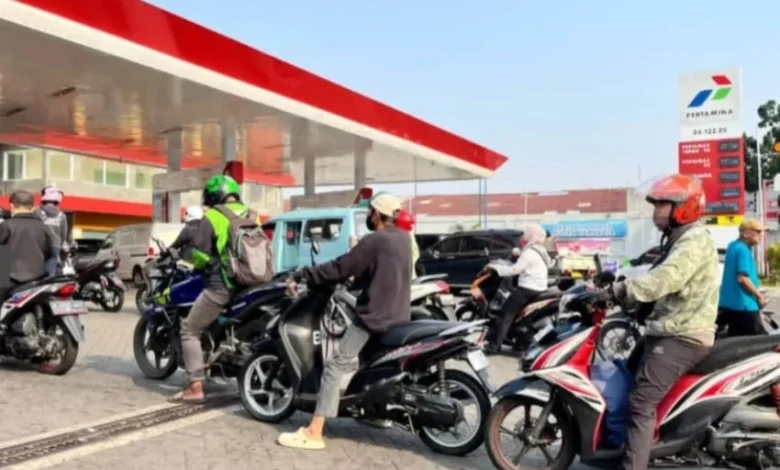
JAKARTA – The Indonesian government is actively developing a series of Anggaran Pendapatan dan Belanja Negara (APBN), or State Budget, scenarios to mitigate the profound impacts of global crude oil prices once again surging past the critical USD100 per barrel mark. Amidst this escalating global energy volatility, the administration has emphatically reassured the public that its energy subsidy allocation will be staunchly maintained, thereby preventing any immediate increase in the price of subsidized fuel, specifically Pertalite. This commitment underscores a delicate balancing act between fiscal prudence and safeguarding public purchasing power against external economic shocks.
The announcement came from Finance Minister Purbaya Yudhi Sadewa, who elaborated on the government’s proactive stance from the Ministry of Finance offices in Jakarta on Friday, July 24, 2026. "Our energy subsidies will continue to be safeguarded. During a recent cabinet meeting, President Prabowo tasked us with conducting simulations for various oil price scenarios—whether it’s one specific scenario or multiple—to determine the optimal budgetary response. We are currently undertaking these calculations," Minister Sadewa stated, highlighting the urgency and comprehensive nature of the government’s fiscal preparedness. The move reflects a broader strategy to shield Indonesian households, particularly the vulnerable, from the immediate brunt of international commodity price fluctuations, a recurring challenge for an energy-importing nation.
Escalating Global Tensions Fueling Price Surge
The recent breach of the USD100 per barrel threshold for benchmark crude oil prices, notably Brent crude, is not an isolated market anomaly but a direct consequence of intensifying geopolitical risks, particularly in critical maritime chokepoints. A significant factor contributing to this spike has been a series of attacks on oil tankers in the Red Sea, an essential transit route for global energy shipments. These incidents have injected a substantial risk premium into oil prices, as traders factor in potential disruptions to supply chains, increased shipping costs due to rerouting around the Cape of Good Hope, and heightened insurance premiums. The Red Sea, a narrow waterway connecting the Indian Ocean to the Mediterranean via the Suez Canal, is pivotal for approximately 12% of global trade and a significant portion of the world’s oil and liquefied natural gas (LNG) shipments. Disruptions here have immediate and far-reaching consequences for global energy markets.
Beyond the immediate Red Sea crisis, a confluence of other factors contributes to the sustained upward pressure on oil prices. Persistent production discipline from OPEC+ (Organization of the Petroleum Exporting Countries and its allies), led by Saudi Arabia and Russia, has kept supply relatively tight. This strategic management of output aims to stabilize prices at levels deemed favorable to producers, often creating a supply-demand imbalance when global consumption remains robust. Furthermore, the lingering effects of the conflict in Eastern Europe continue to reshape global energy flows, with sanctions and retaliatory measures impacting Russian oil exports and prompting a scramble for alternative supplies, particularly in Europe. Simultaneously, a resilient global economic outlook, particularly in emerging markets and parts of Asia, continues to underpin strong demand for energy, further tightening the market. The interplay of these geopolitical and economic forces creates a volatile environment, making it challenging for governments worldwide to predict and plan for energy costs.
Indonesia’s Energy Subsidy Framework: A Historical Perspective
Indonesia has a long-standing history of implementing energy subsidies as a critical component of its social protection policy. These subsidies, primarily for fuels like Pertalite and liquefied petroleum gas (LPG), as well as electricity, are designed to make essential energy accessible and affordable for its vast population, thereby mitigating inflationary pressures and supporting economic stability. The rationale behind these subsidies is deeply rooted in social equity, ensuring that lower-income segments of society are not disproportionately affected by international price volatility.
However, maintaining these subsidies comes at a substantial fiscal cost. In past periods of high global oil prices, such as in 2008 and again in 2022, the government’s subsidy budget swelled dramatically, sometimes consuming a significant portion of the APBN. For instance, during the 2022 energy crisis, the government allocated an unprecedented IDR 502.4 trillion (approximately USD34 billion at the time) for energy subsidies and compensation, a figure that far exceeded initial budget projections. This massive expenditure underscored the immense fiscal burden when global prices skyrocket and the domestic subsidized prices are kept artificially low. The current situation, with oil prices again breaching USD100, evokes similar concerns regarding the potential strain on the state budget.
The political sensitivity surrounding fuel price adjustments in Indonesia is also a critical factor. Past attempts to reduce or remove subsidies have often been met with widespread public protests, highlighting the deep public reliance on affordable energy. This political reality significantly constrains the government’s options when faced with rising international oil prices, often compelling them to absorb the cost through subsidies rather than passing it on directly to consumers. The commitment to protect Pertalite prices, therefore, reflects both an economic imperative to control inflation and a political necessity to maintain social stability.
Fiscal Scenarios and Budgetary Implications
Minister Sadewa’s emphasis on developing "simulations for various oil price scenarios" points to a comprehensive and multi-pronged approach to fiscal management. These scenarios likely involve modeling the impact of sustained high oil prices (e.g., USD100, USD105, USD110 per barrel) on various components of the APBN. Key areas of focus for these simulations would include:
- Subsidy and Compensation Expenditure: The most immediate and direct impact. Higher oil prices translate directly into increased government outlays for fuel and electricity subsidies. The simulations would project the additional billions of dollars required to maintain current subsidized prices.
- State Revenue: While Indonesia is a net oil importer, it still generates revenue from oil and gas production through taxes and non-tax revenues (PNBP). Higher oil prices can boost this revenue stream, offering some natural hedge. However, the increase in revenue is typically outweighed by the surge in subsidy costs.
- Inflation Targeting: Bank Indonesia (BI) and the government have a shared objective of maintaining price stability. Sustained high energy prices, even with subsidies, can still seep into the economy through non-subsidized fuels, transportation costs, and industrial inputs, potentially pushing headline inflation beyond the target range (typically 2-4%). The simulations would assess this inflationary risk.
- Economic Growth Projections: Elevated energy costs can dampen consumer spending and increase operational costs for businesses, potentially slowing down economic growth. The government’s growth targets (e.g., 5.2% for 2026) would be re-evaluated under different oil price assumptions.
- Fiscal Deficit and Debt Sustainability: The primary concern for the Ministry of Finance is to manage the fiscal deficit within legal limits (typically 3% of GDP) and ensure the sustainability of government debt. Uncontrolled subsidy spending can widen the deficit, potentially impacting sovereign credit ratings and increasing borrowing costs.
The government’s response could involve a combination of measures. Firstly, reallocating existing budget funds from less critical programs to bolster the energy subsidy budget. Secondly, exploring additional revenue-generating measures, though these are typically more complex and time-consuming to implement. Thirdly, the simulations would also likely consider the potential for more targeted subsidy mechanisms in the long run, moving away from blanket subsidies to those that exclusively benefit the truly needy, thereby improving fiscal efficiency. This shift, however, would require significant administrative overhaul and public acceptance.
Broader Economic and Social Implications
The reverberations of sustained high global oil prices extend far beyond the state budget, impacting various facets of Indonesia’s economy and society.
- Inflationary Pressures: Even with Pertalite prices fixed, the ripple effect of higher energy costs is inevitable. Non-subsidized fuels (e.g., Pertamax series), industrial diesel, and aviation fuel will see price increases, directly impacting logistics, manufacturing, and transportation sectors. This translates into higher prices for goods and services across the board, eroding consumer purchasing power and potentially stoking general inflation. Small and medium-sized enterprises (SMEs), which often operate on thin margins, are particularly vulnerable to increased operational costs.
- Household Spending and Welfare: For the average Indonesian household, especially those not directly benefiting from Pertalite subsidies (e.g., private car owners using non-subsidized fuel, or those reliant on public transport whose fares might rise), higher energy costs mean a larger portion of their income is allocated to essential goods and services. This reduces discretionary spending, potentially dampening overall economic activity. For the poor and vulnerable, who often spend a larger share of their income on basic necessities, any indirect price increase can severely impact their welfare.
- Monetary Policy Response: Bank Indonesia (BI) would be closely monitoring inflationary trends. Should inflation accelerate beyond comfort levels due to rising energy costs, BI might be compelled to tighten monetary policy, potentially through interest rate hikes. While aimed at stabilizing prices, such measures can also slow down economic growth and increase borrowing costs for businesses and consumers.
- Trade Balance and Foreign Exchange Reserves: As a net oil importer, Indonesia’s import bill increases with higher global oil prices, potentially widening the current account deficit and putting pressure on the Rupiah. This necessitates careful management of foreign exchange reserves to maintain currency stability.
- Investment Climate: Uncertainty surrounding energy costs and potential policy responses can affect investor confidence. Businesses seeking to establish or expand operations in Indonesia might factor in higher energy prices and potential supply chain disruptions, influencing their investment decisions.
- Energy Transition Goals: The immediate crisis of high fossil fuel prices might, paradoxically, accelerate the long-term transition towards renewable energy. However, in the short term, the focus remains on securing affordable conventional energy supplies. The government might need to re-evaluate the pace and funding of its ambitious renewable energy projects in light of immediate fiscal constraints.
Official Responses and Outlook
Beyond the Ministry of Finance, other key government bodies are expected to play crucial roles in navigating this challenging period. The Ministry of Energy and Mineral Resources (ESDM) would be responsible for ensuring the availability and distribution of fuel supplies, coordinating with state-owned Pertamina, the primary distributor. Pertamina, on its part, would manage its operational efficiency and supply logistics to minimize cost pass-through where possible, albeit within the confines of government pricing policies.
The Coordinating Ministry for Economic Affairs would likely spearhead inter-ministerial coordination, ensuring a holistic government response that balances fiscal sustainability, economic growth, and social protection. Statements from these offices would likely emphasize the government’s comprehensive strategy, its commitment to supporting the populace, and its continuous monitoring of global energy markets.
In the long term, Indonesia’s strategy for energy security remains critical. This includes diversifying its energy mix, increasing domestic oil and gas exploration and production (though challenging), and accelerating the development of renewable energy sources. The current crisis serves as a potent reminder of the inherent vulnerabilities associated with reliance on imported fossil fuels and underscores the imperative for robust, sustainable energy policies. The government’s commitment to maintaining Pertalite prices, while fiscally demanding, is a short-term measure designed to absorb external shocks. The ongoing simulations by the Ministry of Finance are therefore crucial in charting a sustainable path forward, ensuring that Indonesia can navigate the volatile global energy landscape without compromising its economic stability and social welfare. The coming months will test the resilience of Indonesia’s fiscal framework and its ability to adapt to an increasingly unpredictable global energy market.