Emotional Scenes Unfold at Bekasi District Court as Mother of Embezzlement Suspect Pleads for Restorative Justice in Vilmei Case

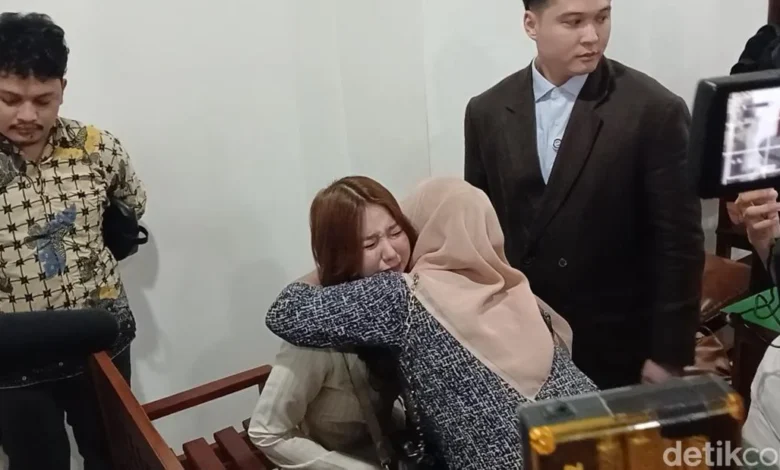
The corridors of the Bekasi District Court were marked by visible distress on Wednesday, November 18, 2026, as the inaugural hearing for a high-profile embezzlement case involving prominent content creator Vilmei commenced. The proceedings, which center on the unauthorized misappropriation of funds from the digital accounts of the popular influencer, took a poignant turn outside the courtroom when Rokayah, the mother of the second defendant, Lusiani, made a public appeal for leniency and reconciliation. Her tearful apology to Vilmei underscored the human toll of the complex legal battle, which has brought to light the murky intersections of social media influence, digital financial platforms, and the legal liabilities of third-party participants.
Chronology of the Alleged Misappropriation
The case originates from a series of events involving the unauthorized access and subsequent transfer of funds from the TikTok account of Vilmei. According to the prosecution’s indictment, the primary defendant, identified as Zahra, allegedly orchestrated the diversion of financial resources—specifically, digital tokens and earnings associated with Vilmei’s account—to external recipients.
While the investigation into the exact digital trail is ongoing, prosecutors allege that these funds were systematically funneled to various individuals, including Lusiani. The timeline, as presented in court documents, suggests that the activities occurred over several weeks, during which time the digital currency was converted and moved across platforms. It was only after a digital audit revealed discrepancies in her account that Vilmei alerted the authorities, leading to the identification of the suspects involved.
The Role of the Second Defendant: Intent vs. Association
A central pillar of the defense’s argument is the question of mens rea, or the guilty mind. Budi Setyadi, the legal counsel representing Lusiani, contends that his client served as an unwitting participant in a scheme she did not fully comprehend. According to the defense, Lusiani and Zahra were former schoolmates who reconnected via live-streaming platforms.
The defense maintains that Lusiani, a resident of Cianjur who worked outside the digital creator industry, believed the funds received from Zahra were legitimate "gift" transactions common in the social media ecosystem. "My client did not understand that the digital tokens she received were the proceeds of a criminal act," Setyadi stated. He emphasized that Lusiani was not an employee of Vilmei and had no professional or contractual relationship with the influencer, suggesting that her involvement was limited to receiving funds she presumed to be legal tips.
The prosecution, however, has charged the defendants under Article 291 of the new Criminal Code, which covers complicity and aiding in the commission of a crime. The state’s case rests on the premise that regardless of whether Lusiani understood the mechanics of the embezzlement, the act of knowingly or negligently receiving and profiting from misappropriated digital assets constitutes a violation of the law.
The Human Cost: A Family’s Plea for Restorative Justice
Rokayah’s public plea outside the courtroom offered a stark contrast to the cold legal arguments presented inside. She described her daughter as a victim of circumstance, manipulated by a former classmate who took advantage of their social media connection. Rokayah insisted that her family, residing in the rural area of Cianjur, had no prior knowledge of the digital crimes until they were contacted by law enforcement.
The emotional weight of the case is compounded by the vast disparity in the financial demands. The defense has proposed a settlement based on the sum explicitly mentioned in the official indictment: Rp 15 million. Setyadi argues that this figure represents the documented amount that can be traced to Lusiani’s involvement. However, reports indicate that the victim, Vilmei, and the broader investigation have cited total losses ranging from Rp 72 million to Rp 200 million.
For the family of the second defendant, the higher demands represent an insurmountable barrier. Rokayah expressed the family’s financial hardship, stating that they are willing to return the specific amount attributed to their daughter but lack the means to cover the total damages claimed by the prosecution. This gap has stalled potential efforts toward restorative justice, a mechanism often favored in Indonesia for resolving disputes outside the courtroom to prevent the further criminalization of individuals who may have played a peripheral role.
The Implications of Digital Crime for Content Creators
The Vilmei case serves as a cautionary tale regarding the vulnerabilities inherent in the digital creator economy. As influencers gain prominence, their accounts effectively become high-value financial entities, often linked to complex payout systems that are susceptible to internal or external manipulation.
Experts in cyber-law note that this case highlights the growing necessity for stronger digital security protocols and a more nuanced understanding of how "gifts" or "tips" on social media platforms can be weaponized. When digital currencies are easily transferred, the line between an innocent recipient and a criminal accomplice can become blurred, leading to protracted legal battles where intent is difficult to prove.
Furthermore, the case underscores the legal challenges of applying traditional criminal statutes to digital offenses. The use of the new Criminal Code (KUHP) suggests that the judiciary is attempting to modernize its approach to financial crimes, yet the reliance on "intent" remains a hurdle. If the court finds that Lusiani acted without criminal intent, it could set a precedent for how digital recipients are treated under the law in future cases of platform-based theft.
The Path Forward: Expectations for Upcoming Hearings
As the trial moves into its next phase, the legal teams are preparing for a battle over the legitimacy of the indictment. The defense has announced its intention to file an eksepsi, or a formal motion to dismiss the charges, arguing that the indictment is based on an incomplete understanding of the defendant’s role. Additionally, Setyadi has indicated that he will file a motion for the suspension of detention for the next hearing, citing the defendant’s cooperation and lack of flight risk.
The court is now faced with a complex balancing act: upholding the rights of the victim to recover her losses and ensuring justice for the unauthorized use of her digital property, while simultaneously determining the culpability of an individual who claims to have been a secondary pawn in a larger scheme.
For the family in Cianjur, the coming weeks represent a period of profound uncertainty. Rokayah’s repeated calls for prayer and reconciliation reflect a hope that the legal system might prioritize the restitution of the Rp 15 million over the punitive incarceration of her daughter. As the court prepares for the next session, the public remains attentive, watching to see whether the judiciary will pursue the full extent of the law or provide a pathway for the restorative resolution that the defense has so urgently requested.
The outcome of this trial will likely resonate within the influencer community, prompting many to revisit their security measures and their relationships with digital associates. Whether the case ends in a conviction or a negotiated settlement, the emotional scenes at the Bekasi District Court have already served as a reminder that behind every digital transaction, there are real lives, real financial burdens, and complex personal narratives.