
Ministry of Forestry Deploys Special Task Force and Expert Panel to Investigate Recurrent Criminal Arson in Bromo Tengger Semeru National Park

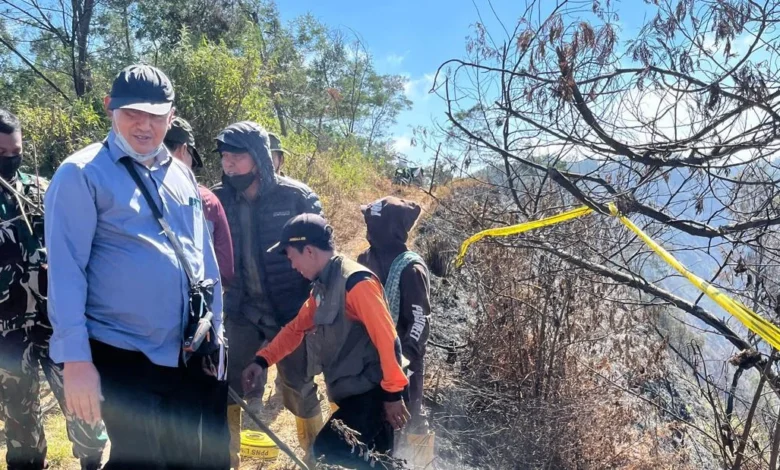
The Ministry of Forestry has escalated its response to the persistent and destructive wildfires plaguing the sensitive ecosystem of the Bromo Tengger Semeru National Park located in East Java. Operating through the Directorate General of Forestry Law Enforcement, the ministry has formally established a dedicated special task force mandated to unearth the root causes behind the blazes and rigorously investigate potential criminal violations linked to the disasters. This decisive administrative action comes in response to a recurring pattern of seasonal fires that repeatedly threaten one of Indonesia’s most iconic and ecologically vital conservation areas.
The investigative initiative aims to meticulously reconstruct the chronology of the fires, pinpoint the precise factors driving their ignition, and establish a bulletproof legal framework grounded in empirical facts and forensic evidence gathered directly from the affected zones. Because the Bromo Tengger Semeru National Park functions as an irreplaceable sanctuary for endemic biodiversity and an indispensable hydrological buffer for the surrounding regions, the recurrence of fires has elevated the incident from a routine environmental hazard to a critical matter of national security and ecological preservation.
Collaborative Framework and Investigative Scope
To ensure a comprehensive and unyielding probe, the Ministry of Forestry is utilizing a multi-agency collaborative approach. The specialized task force brings together personnel from the Directorate General of Forestry Law Enforcement, the Balai Gakkum (Forestry Law Enforcement Agency) for the Java, Bali, and Nusa Tenggara region, the management authority of the Bromo Tengger Semeru National Park, and various other relevant law enforcement and disaster management institutions.
This joint operation has initiated an exhaustive information-gathering campaign, conducting detailed field examinations, mapping burn scars, and tracing qualitative and quantitative leads related to human presence and activities around the ignition sites. Every piece of preliminary data is subjected to a rigorous verification process to separate natural phenomena from anthropogenic catalysts, ensuring that any subsequent legal actions are supported by undeniable evidence.
Integration of Scientific Expertise and Forensic Analysis
A cornerstone of the Ministry of Forestry’s enhanced strategy involves the integration of eminent academic and scientific experts specializing in forest fires and environmental degradation. To elevate the investigation beyond standard procedural reviews, the ministry has enlisted Professor Bambang Hero Saharjo, a renowned authority on forest and land fires, alongside Professor Basuki Wasis, an esteemed expert in soil damage and environmental forensics.
These academic heavyweights are tasked with conducting advanced scientific analyses regarding the thermal dynamics of the fires, the specific vulnerabilities of the park’s soil composition, and the long-term ecological fallout on the landscape. By examining the physical terrain, burn patterns, wind velocity models during the incidents, and localized human activities, the expert panel will help construct a scientifically sound narrative of how the fires started and spread. This forensic backing is designed to withstand judicial scrutiny, ensuring that if cases are brought to court, the evidence is robust enough to secure convictions against perpetrators of environmental crimes.
Official Statements and Institutional Resolve
Aswin Bangun, Head of the Forestry Law Enforcement Agency for the Java, Bali, and Nusa Tenggara Region, emphasized that the investigation is proceeding with extreme diligence and methodical precision. Speaking on the progress of the task force, Bangun outlined the multi-faceted nature of the ongoing field operations.
"We are continuing our rigorous investigation into the various information obtained from the field, which includes on-site inspections, the collection of witness testimonies and material evidence, and the comprehensive analysis of all discovered facts," Bangun stated. "This deep dive is being conducted hand-in-hand with our panel of experts to strengthen our scientific proof, particularly concerning the exact origins of the fires, the precise magnitude of the damage inflicted on the ecosystem, and any other pertinent information required to build an airtight legal case."
Bangun reiterated that the task force refuses to rush blindly into conclusions, prioritizing procedural accuracy to guarantee that every legal step taken possesses an unshakeable foundation capable of withstanding public and judicial accountability.
Echoing this sentiment, Dwi Januanto Nugroho, Director General of Forestry Law Enforcement at the Ministry of Forestry, underscored that safeguarding a national park of this magnitude requires a unified, synchronized front rather than isolated institutional efforts.
"The fires within the Bromo Tengger Semeru National Park represent a matter of grave concern because they directly threaten a conservation zone that holds immense ecological value, social significance, and public utility," Januanto explained. He stressed that the formation of the special task force is a strategic mandate designed to guarantee end-to-end intervention—spanning immediate field suppression, thorough investigative discovery of root causes, and uncompromising law enforcement against any parties found culpable of violating environmental protection laws.
Background Context and Historical Vulnerability of the Conservation Area
Bromo Tengger Semeru National Park spans over 50,000 hectares across four regencies within East Java: Malang, Probolinggo, Lumajang, and Pasuruan. Famous worldwide for its majestic volcanic landscapes, including Mount Bromo, Mount Batok, and Mount Semeru—the highest peak on the island of Java—the park attracts millions of domestic and international tourists annually. However, its unique topography, featuring expansive savannahs, steep mountainous terrain, and dry weather conditions during the dry monsoon cycles, makes it exceptionally susceptible to fire outbreaks.
Historically, the park has suffered numerous devastating fires, many of which have been traced back to human negligence, such as unextinguished campfires, discarded cigarette butts, or agricultural land-clearing practices in adjacent buffer zones. In previous years, major fires have scorched thousands of hectares of prime edelweiss fields, casuarina forests, and endemic grasslands, resulting in catastrophic losses to local flora and fauna, heavy economic burdens for regional tourism, and severe respiratory hazards for local communities due to thick smoke haze.
The vulnerability of the park is further exacerbated by the socio-economic interactions of local communities living along its fringes. While many residents rely on the park for eco-tourism livelihoods and agricultural water supplies, others engage in traditional land management practices that occasionally conflict with strict conservation boundaries. This complex socio-ecological dynamic underscores the necessity of the current ministry-led investigation, which seeks not only to punish criminal negligence and intentional arson but also to understand the systemic vulnerabilities that permit these disasters to recur.
Broader Environmental and Economic Implications
The ongoing crisis at Bromo Tengger Semeru National Park carries profound implications for Indonesia’s broader environmental governance and commitment to international climate agreements. Forest and land fires in designated conservation zones release massive quantities of sequestered carbon dioxide into the atmosphere, directly undermining national carbon emission reduction targets. Furthermore, the destruction of vegetative cover compromises the soil’s structural integrity, drastically increasing the risk of catastrophic landslides and flash floods during the subsequent rainy seasons.
Economically, the recurrence of fires deals a severe blow to the regional tourism industry. When access to iconic viewing points is restricted due to safety hazards or ecological recovery efforts, local businesses, hotels, tour operators, and jeep transport cooperatives experience sharp revenue declines. The ripple effects extend deeply into the local economy, affecting thousands of families whose daily sustenance depends on a thriving, accessible park.
By launching this high-level, scientifically backed investigation, the Ministry of Forestry is signaling a paradigm shift in how environmental crimes within protected areas are handled. Moving away from purely reactive firefighting measures, the government is establishing a deterrent framework aimed at holding individuals and entities accountable for ecological destruction. As the special task force continues its fieldwork and laboratory analyses, the eyes of the nation remain fixed on the Bromo Tengger Semeru National Park, anticipating both the restoration of its fragile landscape and the delivery of justice against those who systematically endanger Indonesia’s natural heritage.