Indonesia Secures Robust Rice Reserves at 4.8 Million Tons to Guarantee National Food Security Through Year-End 2026

JAKARTA — Amid global economic uncertainties and climate-related agricultural challenges, Indonesia’s national food logistics agency, Perum Bulog, has announced that the country’s managed rice stock has reached a historic and robust level of 4.8 million tons. This substantial volume is officially projected to comfortably meet domestic consumption demands and fully backstop major government social assistance programs through the conclusion of 2026.
The announcement was officially conveyed by Perum Bulog President Director Ahmad Rizal Ramdhani during a press briefing held over the weekend. According to Ramdhani, the sheer magnitude of the current national inventory reflects meticulous logistical planning, aggressive domestic procurement strategies, and strategic international trade maneuvers executed over the past several quarters to insulate the domestic market from potential external supply shocks.
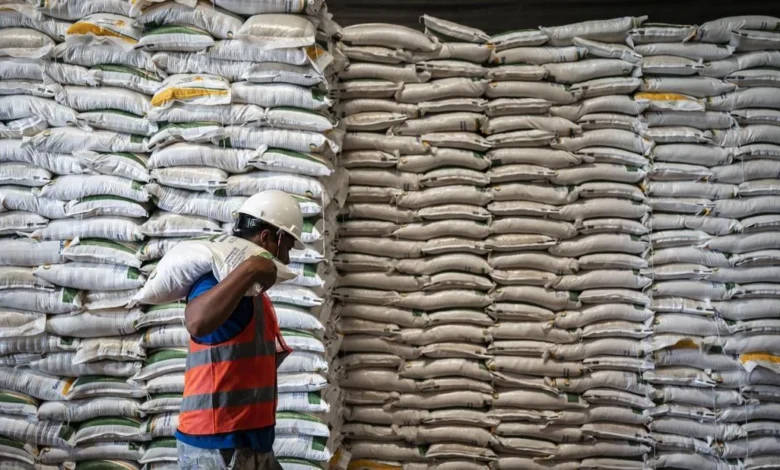
The current rice reserves are strategically consolidated across a vast network of storage facilities nationwide. However, the unprecedented volume has surpassed the spatial capacity of Bulog’s traditional infrastructure, necessitating an expansive logistical pivot. To safely house the surplus, Bulog has had to lease third-party commercial warehouses across multiple provinces, ensuring that every grain of the 4.8 million tons remains protected against spoilage, moisture, and pest contamination.
Operational Logistics and Infrastructure Expansion
The logistical reality of managing 4.8 million tons of staple grain presents formidable challenges for any state-backed agricultural agency. Historically, Perum Bulog’s proprietary warehouse network was designed to handle moderate buffer stocks meant for standard market intervention and localized emergency relief. However, the directive to maintain an elevated buffer stock—mandated by the central government to mitigate the lingering impacts of severe weather phenomena such as El Niño and La Niña—has forced a rapid scaling of the agency’s storage footprint.
"Our own proprietary Bulog warehouses have reached maximum capacity and can no longer accommodate the entirety of the national rice reserves we currently hold," stated Ahmad Rizal Ramdhani. "Consequently, we have had to aggressively rent private warehouses and utilize alternative storage facilities across various regions to properly store these strategic reserves."
This cooperative arrangement with the private sector highlights a broader trend in Indonesia’s agricultural supply chain management, where public-private partnerships are increasingly leveraged to fortify national food security. By integrating private storage capacity into the national reserve grid, Bulog has bypassed infrastructural bottlenecks, ensuring that regional distribution hubs remain well-stocked and responsive to sudden demand spikes.
Targeted Social Assistance and Market Stabilization Programs
The primary mandate of maintaining these substantial reserves goes beyond mere storage; it serves as the foundational fuel for Indonesia’s extensive social safety net and market intervention mechanisms. The 4.8 million tons of rice are not sitting idle but are systematically earmarked for critical government programs designed to shield vulnerable populations from price volatility.
Foremost among these initiatives is the nationwide food assistance program slated for the final quarter of the year. Between October and December 2026, Bulog is tasked with distributing targeted food aid to approximately 33.2 million registered beneficiary families across the archipelago. This massive social protection undertaking is designed to ensure that low-income households maintain consistent access to staple carbohydrates regardless of broader macroeconomic pressures or seasonal harvest fluctuations.
In tandem with the direct social assistance program, Bulog is preparing to flood the open market with an additional 1 million tons of rice under the Stabilisasi Pasokan dan Harga Pangan (SPHP) program. The SPHP initiative has long served as a vital price-control instrument, allowing government intervention to inject affordable, high-quality medium-grain rice directly into traditional markets, modern retail outlets, and neighborhood kiosks. By increasing the SPHP supply quota, authorities aim to suppress speculative price hikes by local traders and maintain consumer price stability during the traditionally high-demand holiday season at the end of the year.
Financial and Inventory Projections Through Year-End
Despite the heavy outflow of commodities designated for the final quarter’s social aid and market stabilization operations, Bulog’s financial and inventory projections remain exceptionally stable. Agency models indicate that even after fulfilling all distribution commitments through December 31, 2026, the national reserve will retain a comfortable ending balance.
"We anticipate that with the scheduled distribution of additional food assistance to 33.2 million beneficiaries, coupled with the deployment of 1 million tons of SPHP rice, our ending inventory at the close of the year will remain robust at a minimum of approximately 3.2 million tons," Ramdhani explained.
An ending buffer stock of 3.2 million tons significantly exceeds the standard baseline safety thresholds historically recommended by international agricultural bodies such as the Food and Agriculture Organization (FAO). This provides Indonesia with an invaluable fiscal and physical cushion as the agricultural sector transitions into the early planting seasons of the following year.
Broader Economic Implications and Analyst Perspectives
Economists and agricultural policy experts have largely praised the current state of Indonesia’s rice reserves, noting the profound macroeconomic implications of maintaining a secure food buffer in Southeast Asia’s largest economy. Food inflation has historically served as a primary driver of overall consumer price index (CPI) volatility in Indonesia, directly impacting poverty alleviation metrics and purchasing power.
By securing a 4.8 million-ton buffer, the government effectively signals to the market that it possesses the requisite leverage to deter speculative hoarding and supply manipulation by intermediaries. When state agencies control a dominant share of marketable surplus, private actors are disincentivized from artificially inflating prices, as consumers have immediate access to government-backed alternatives through the SPHP network.
Furthermore, maintaining high domestic stock levels shields the nation from external geopolitical tensions and export restrictions imposed by major global rice-producing nations, such as India, Thailand, and Vietnam. In recent years, several key exporters have periodically restricted overseas shipments to prioritize their own domestic food security, causing sudden price shocks on the international spot market. Indonesia’s proactive domestic procurement strategy and expansive reserve management insulate the domestic populace from these external market shocks.
Chronology of National Food Security Measures in 2026
The accumulation of the 4.8 million-ton rice reserve is the culmination of a systematic, year-long strategy executed by the Indonesian government, the Ministry of Agriculture, and Perum Bulog.
During the first quarter of 2026, agricultural authorities focused heavily on domestic procurement, capitalizing on the early peak harvest seasons across key production centers in East Java, Central Java, and South Sulawesi. Despite localized weather anomalies, intensified extension services and optimized fertilizer distribution helped sustain robust yield levels.
By the second quarter, as global climate forecasts warned of erratic precipitation patterns moving into the second half of the year, the central government authorized Bulog to aggressively scale up its purchasing targets. This directive empowered the logistics agency to absorb excess paddy directly from domestic farmers at favorable government purchase prices (HPP), protecting agrarian livelihoods while simultaneously swelling national stockpiles.
In the third quarter, attention shifted toward infrastructural readiness and procurement of secondary storage solutions. Recognizing that traditional state-owned facilities were approaching saturation, Bulog initiated contracts for private warehousing leases. This logistical foresight ensured that the massive influx of mid-year harvests could be absorbed without post-harvest loss or logistical gridlock.
As the nation enters the final quarter of 2026, the focus has pivoted decisively toward distribution, execution of social safety net mandates, and aggressive market stabilization via the SPHP program.
Outlook for the Agricultural Sector
Looking ahead, the successful management of the 4.8 million-ton rice stock sets a positive operational precedent for Indonesia’s agricultural sector moving into 2027. However, agricultural analysts emphasize that long-term food security requires continuous investment in farm-level productivity, irrigation infrastructure, climate-resilient seed varieties, and supply chain modernization.
While large buffer stocks provide an essential immediate defense against volatility, sustained structural improvements in domestic production capacity remain the ultimate guarantor of national food sovereignty. For the remainder of 2026, however, Indonesian consumers can take considerable reassurance from the state of the nation’s granaries, knowing that adequate supplies are securely in place to weather the remainder of the year.