Iraqi Economy Faces Systemic Collapse Amid Escalating Geopolitical Conflict in the Middle East

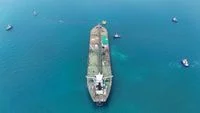
The Iraqi economy is teetering on the precipice of a systemic collapse as the nation becomes increasingly entangled in the intensifying geopolitical friction between the United States, Israel, and Iran. Since late February 2026, the effective paralysis of trade through the Strait of Hormuz—the world’s most vital oil chokepoint—has crippled Iraq’s import-dependent marketplace. With 90% of the country’s federal budget derived from oil exports, the inability to move crude through the Persian Gulf has left Baghdad struggling to maintain basic fiscal stability, triggering a cascade of economic consequences that threaten the livelihood of millions.
A Chronology of Economic Disruption
The current crisis did not emerge in a vacuum but represents the culmination of months of deteriorating regional security. By late February 2026, the escalation of hostilities between Iranian-backed forces and Western-aligned military assets turned the Strait of Hormuz into a high-risk zone. For Iraq, which relies on these waters for the vast majority of its crude exports, the maritime blockade was catastrophic.
By mid-year, the economic fallout began to manifest in the daily lives of Iraqi citizens. In April 2026, the administration of U.S. President Donald Trump, citing concerns over the funding of Iranian-aligned militias, took the drastic step of suspending the delivery of physical cash to Iraq. These funds were derived from Iraqi oil revenue held in U.S. accounts. Although a partial resumption of cash transfers occurred in July, the damage to the banking sector was already profound. Throughout August and September, allegations of systemic dollar smuggling by Iraqi private banks toward Iran further poisoned the relationship between the Central Bank of Iraq (CBI) and the U.S. Federal Reserve, leading to a de facto tightening of liquidity.
Fiscal Stagnation and Revenue Loss
Prime Minister Ali al-Zaidi recently disclosed the staggering extent of the financial damage, estimating that the Iraqi state has lost approximately US$60 billion (roughly 1,068 trillion Iraqi dinars) in potential oil revenue. This figure underscores the fragility of a rentier state that has failed to diversify its economic base despite decades of post-conflict reconstruction.
The dependency is absolute: because oil accounts for over 90% of federal budget revenue, the inability to export roughly 90% of the country’s oil production has effectively gutted the government’s ability to pay public sector salaries, maintain infrastructure, and fund essential social services. Mudher Mohammed Salih, the Financial Advisor to the Prime Minister, provided a grim assessment of the nation’s reserves. According to official data, the CBI’s foreign exchange reserves plummeted from US$106 billion prior to the conflict to just US$80 billion by the end of August 2026. This contraction represents a significant erosion of the "cushion" required to defend the Iraqi dinar, leaving the government with limited tools to combat hyper-inflationary pressures.
The Human Cost: Inflation and Supply Chain Collapse
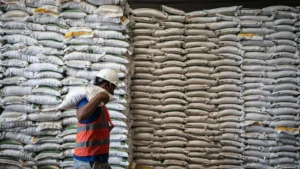
The macroeconomic crisis is filtering down to the streets of Baghdad, where the cost of living has skyrocketed. Alaa-Eddin Sulaibi, a supermarket owner in the capital, provides a microcosm of the supply chain failure. Before the current crisis, his inventory was comprised of 90% imported goods, ranging from foodstuffs to household chemicals. Today, that figure has dropped to 70%, with the remaining shelves filled by domestic products that often fail to meet the quality standards consumers have grown accustomed to.
"We are forced to pivot toward local producers, but the market is not ready for such a sudden transition," Sulaibi explained. "The prices for remaining imported goods have surged between 25% and 30%, making it impossible for many families to maintain their previous standard of living."
The currency market reflects this desperation. In the parallel market—the primary indicator of economic sentiment in Iraq—the dinar recently depreciated to 1,600 per dollar, a significant deviation from the official rate of 1,300 and the pre-war stable level of 1,540. This currency volatility is not merely a reflection of trade imbalances; it is a symptom of a profound loss of confidence in the Iraqi financial system.
Structural Vulnerabilities and Expert Analysis
Ziad al-Hashimi, a researcher specializing in international economics at Anglia Ruskin University, argues that the current crisis is a symptom of deep-seated, structural neglect. According to Hashimi, Iraq has spent the last two decades building an economy that is highly sensitive to external shocks without establishing the institutional "shock absorbers" necessary to survive a regional conflict.
"The crisis has stripped away the illusion of stability," Hashimi noted. "Iraq has long relied on the assumption that oil prices would remain high and that transit routes would remain open. By failing to invest in internal production capacity, industrial diversification, or a resilient banking sector, the government left itself entirely vulnerable to the whims of geopolitical actors."
Hashimi further cautioned that the government’s reliance on short-term fixes, such as borrowing and the depletion of reserves, is a path toward long-term insolvency. "Borrowing is not a solution; it is merely a postponement of a more painful reckoning. Unless Iraq addresses its extreme dependence on oil and its porous, vulnerable supply chains, it will remain a perpetual victim of regional instability."
Official Stance and Future Implications
The Central Bank of Iraq has officially denied that there is an acute dollar shortage, attributing the currency’s volatility to speculative behavior and market panic rather than fundamental insolvency. However, the disconnect between the official narrative and the reality on the ground continues to widen.
As of late September 2026, the diplomatic path forward remains murky. The U.S. government remains focused on its policy of "maximum pressure" against Iranian-linked financial networks, while the Iraqi government finds itself in a precarious balancing act—attempting to appease Washington to regain access to its dollar reserves while managing the internal political backlash from factions that view the U.S. sanctions as an act of economic warfare.
The implications for the broader Middle East are equally concerning. If Iraq’s economic condition continues to deteriorate, it risks triggering civil unrest, further migration waves, and a potential power vacuum that could be exploited by non-state actors. The international community, including regional neighbors and global energy importers, is watching the situation with increasing alarm, as the total cessation of Iraqi oil exports—coupled with the ongoing volatility in the Strait of Hormuz—poses a significant risk to global energy security.
For now, the people of Iraq remain trapped in a cycle of economic uncertainty. The combination of stalled oil revenues, a depreciating currency, and the erosion of foreign exchange reserves presents a "perfect storm" that may require not only immediate financial stabilization but also a total overhaul of the country’s economic strategy to prevent a descent into a long-term humanitarian crisis. As the conflict between the major regional powers shows no sign of abating, the window for Iraq to implement meaningful reform is rapidly closing, leaving the nation’s future as fragile as the supply chains that once sustained its economy.
Related posts: