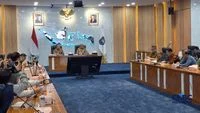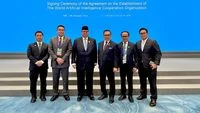
Indonesia has officially solidified its position as a global leader in the technological landscape by becoming a founding member of the World Artificial Intelligence Cooperation Organization (WAICO), a move intended to ensure the nation plays a central role in shaping the future of global AI governance. Coordinating Minister for Economic Affairs Airlangga Hartarto, speaking at a press conference on Friday evening, July 17, 2026, emphasized that Indonesia’s participation as a founder provides a "golden opportunity" to contribute directly to international policy-making, the development of global standards, and the active management of the newly formed institution. This strategic alignment is designed to ensure that Indonesia’s domestic AI development remains synchronized with global advancements, while simultaneously advocating for a model of technology sharing that aligns with the United Nations’ Sustainable Development Goals (SDGs).
The establishment of WAICO marks a significant milestone in international diplomacy, as the organization is designed as an independent, intergovernmental body focused exclusively on the civilian domain of artificial intelligence. By emphasizing an inclusive and non-discriminatory framework, WAICO aims to bridge the digital divide between developed and developing nations. Minister Airlangga noted that Indonesia’s presence among the founding members is a calculated step to ensure that the global trajectory of AI remains human-centric, prioritizing ethics, safety, and equitable benefits for all nations, particularly those in the Global South seeking to modernize their economies through digital transformation.
Economic Projections and the 600 Billion Dollar Vision
The integration of artificial intelligence into the national economy is projected to be a primary catalyst for Indonesia’s digital growth over the next decade. According to data presented by the Coordinating Ministry for Economic Affairs, Indonesia’s digital economy is currently valued at approximately US$130 billion in 2026. However, with the aggressive adoption of AI and enhanced international cooperation through frameworks like WAICO, this figure is expected to surge. Under a baseline scenario, the digital economy is forecasted to reach US$366 billion by 2030. Yet, Minister Airlangga revealed that with active regional and global collaboration, Indonesia has the potential to push this valuation as high as US$600 billion.
This economic optimism is not limited to Indonesia alone but extends to the broader Southeast Asian region. Indonesia is currently a driving force behind the ASEAN Digital Economic Framework Agreement (DEFA), a landmark regional treaty expected to be signed under the Philippine Chairmanship later this year. DEFA is projected to double the value of the ASEAN digital economy from its current US$1 trillion to US$2 trillion by 2030. By positioning itself as an AI governance leader, Indonesia seeks to capture a significant share of this regional growth, moving its contribution from the US$400 billion range toward the ambitious US$600 billion target.
The economic impact of AI in Indonesia is expected to manifest across various sectors, including financial technology (fintech), e-commerce, agriculture, and manufacturing. By utilizing AI for predictive analytics, supply chain optimization, and personalized consumer services, Indonesian enterprises can significantly increase productivity. Furthermore, the government views AI as a tool to enhance the ease of doing business and to attract foreign direct investment (FDI) from global tech giants looking for stable, regulated environments for AI research and development.
Strategic Shift from Consumer to Global Architect
Deputy Minister of Communication and Digital, Angga Raka Prabowo, reinforced the government’s stance that Indonesia must evolve beyond being a mere consumer of foreign technology. For years, Indonesia has been one of the world’s largest markets for digital platforms, but the membership in WAICO signals a shift toward becoming an architect of the rules that govern those platforms. "The benefit is clear: Indonesia is no longer just a spectator," Prabowo stated. He emphasized that active participation in WAICO allows Indonesia to take the lead in drafting the ethical guidelines and technical standards that will dictate how AI is deployed globally, ensuring that the technology respects national sovereignty and local cultural values.
The shift toward a "human-centric approach" is a core pillar of Indonesia’s AI strategy. This involves creating safeguards against the misuse of AI, such as deepfakes, algorithmic bias, and data privacy violations, while maximizing the technology’s potential to solve complex social issues. The Ministry of Communication and Digital is currently working on harmonizing domestic regulations with the principles being established at WAICO to create a seamless regulatory environment for local startups and international investors alike.
A Chronology of Global Cooperation and the Founding Members
The road to the establishment of WAICO has been characterized by intense diplomatic efforts among a diverse group of nations seeking an alternative to fragmented, bilateral AI agreements. The formal declaration and signing ceremony, held in mid-July 2026, saw Indonesia join forces with 29 other nations to sign the founding charter. This group represents a unique cross-section of the global community, including major emerging economies and strategic partners across Asia, Africa, Eastern Europe, and Latin America.
The 30 founding member countries of WAICO are:
- Algeria
- Belarus
- Brazil
- Cambodia
- Cameroon
- Congo
- Cuba
- Ethiopia
- Indonesia
- Kazakhstan
- Kenya
- Kyrgyzstan
- Laos
- Lesotho
- Malaysia
- Mozambique
- Myanmar
- Nicaragua
- Oman
- Pakistan
- Russia
- Senegal
- Serbia
- South Africa
- Tajikistan
- Uzbekistan
- Venezuela
- Zambia
- People’s Republic of China (PRC)
- (And a representative from the host delegation)
The inclusion of such a diverse list of signatories underscores WAICO’s mission to be a truly inclusive organization. Unlike some existing tech alliances that are limited to high-income economies, WAICO’s membership reflects a commitment to ensuring that the "AI Revolution" does not leave developing nations behind. The organization will focus on technical assistance, capacity building, and the creation of "AI for Good" initiatives that address food security, climate change, and public health.
Technical Scope: The Civilian Domain and Inclusivity
A defining characteristic of WAICO is its strict focus on the "civilian domain." While the military applications of AI have dominated much of the global security discourse, WAICO intends to carve out a space specifically for non-military innovation. This focus allows member states to collaborate on high-stakes areas such as smart city infrastructure, healthcare diagnostics, educational tools, and judicial transparency without the complications of defense-related secrecy.
Minister Airlangga emphasized that the non-discriminatory nature of the organization is vital for Indonesia. It ensures that Indonesian researchers and companies can access global AI resources, datasets, and collaborative projects without facing geopolitical barriers. This openness is expected to accelerate the development of "Indo-AI," a localized version of artificial intelligence that understands Indonesian languages, dialects, and social nuances, which is often overlooked by mainstream global AI models.
Implications for the Future of Indonesian Labor and Education
As Indonesia prepares for this AI-driven future, the government is also addressing the potential disruptions to the labor market. The transition to a US$600 billion digital economy will require a massive upskilling of the Indonesian workforce. Membership in WAICO is expected to facilitate "knowledge transfers" where Indonesian educators and students can participate in exchange programs with other founding members, particularly those with advanced AI ecosystems like China and Brazil.
The Ministry of Education and the Ministry of Communication and Digital have already begun discussions on integrating AI literacy into the national curriculum. By aligning these educational efforts with WAICO’s global standards, Indonesia ensures that its graduates are competitive on the international stage. Furthermore, the government plans to use AI to bridge the educational gap in remote regions, utilizing AI-powered tutors and localized digital content to provide high-quality education where physical infrastructure is lacking.
Conclusion: Indonesia’s Role in the New Global Order
Indonesia’s entry into WAICO as a founding member is more than just a diplomatic gesture; it is a strategic economic and geopolitical move. By helping to lead an organization that represents 30 diverse nations, Indonesia is positioning itself as a bridge-builder in the digital age. The focus on human-centric governance, the civilian domain, and inclusive growth reflects Indonesia’s "Bebas Aktif" (Free and Active) foreign policy, applied to the realm of high technology.
As the 2030 deadline for the Sustainable Development Goals approaches, Indonesia’s leadership in WAICO will be crucial in demonstrating how artificial intelligence can be harnessed as a force for equity rather than a wedge for inequality. With a potential US$600 billion digital economy on the horizon, the stakes are high, but the roadmap laid out by Minister Airlangga and the Indonesian government suggests a future where the nation is not just navigating the digital tide, but actively directing its flow. The coming years will be defined by how effectively Indonesia can translate its founding role in WAICO into tangible benefits for its 280 million citizens, ensuring that the AI era is one of shared prosperity and technological sovereignty.