Film See for Me Premieres on Bioskop Trans TV Bringing High-Stakes Thrills and Innovative Assistive Technology to Viewers

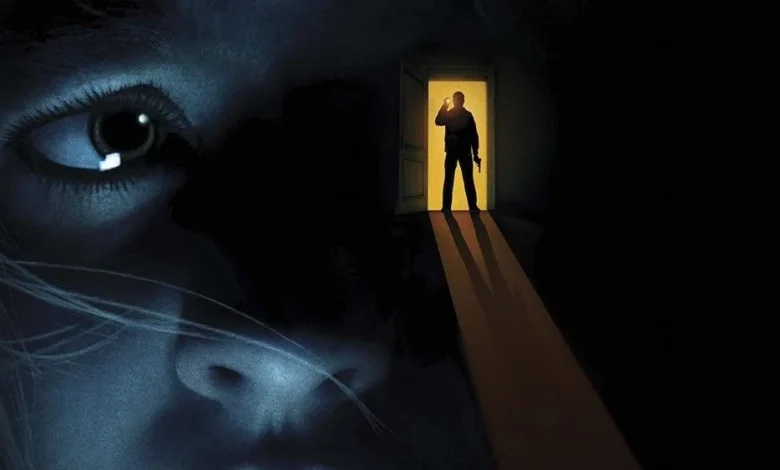
Jakarta – The action-thriller genre receives a unique and modern technological twist as the critically acclaimed feature film See for Me makes its scheduled broadcast on Bioskop Trans TV. Airing on Wednesday, September 30, 2026, at 22:00 Western Indonesian Time (WIB), the 92-minute production directs audience attention toward a high-stakes home invasion narrative complicated by visual impairment and remote digital assistance. Directed by filmmaker Randall Okita and penned by the writing duo Adam Yorke and Tommy Gushue, the cinematic presentation blends traditional suspense elements with contemporary concepts of digital accessibility.
Since its initial festival circuit run, the film has drawn critical interest for its central casting choice, featuring legally blind actress Skyler Davenport in the lead role of Sophie. Alongside Davenport, the ensemble cast includes Jessica Parker Kennedy as Kelly, supported by notable performances from Kim Coates, Laura Vandervoort, Emily Piggford, Joe Pingue, and George Tchortov. By anchoring the narrative on a protagonist navigating a life-threatening criminal conspiracy without the benefit of sight, the production successfully reinterprets conventional home invasion tropes through an innovative lens of sensory limitation and remote cooperation.
Narrative Premise and Character Dynamics
The storyline centers on Sophie, a former competitive alpine skier whose promising athletic career was cut short by the onset of degenerative vision loss. Struggling to adjust to her new reality and seeking financial independence, Sophie accepts a temporary employment opportunity house-sitting and caring for a cat at a luxurious, isolated mansion situated in an upscale yet secluded rural area. The sprawling property presents immediate spatial challenges for its temporary occupant, setting the stage for isolation and vulnerability.
The central mechanism of the plot is introduced early when Sophie finds herself locked out of the residence. To overcome this obstacle, she utilizes a specialized mobile software application known as See for Me. Designed to bridge accessibility gaps, the platform connects visually impaired users with sighted volunteers who can view their immediate environment through the smartphone’s live camera feed and provide verbal descriptions and navigation guidance.
Through this application, Sophie is randomly paired with Kelly, a former military veteran residing miles away. Confined to her own home due to physical injuries and possessing extensive experience playing first-person shooter video games, Kelly utilizes her tactical awareness and spatial visualization skills to help Sophie navigate the physical environment. What begins as a routine assistance call quickly escalates into a desperate survival partnership when a gang of ruthless criminals breaks into the mansion with the primary objective of cracking a hidden security safe containing substantial wealth.
Chronology of Tension and Escalation
The progression of events in See for Me follows a tightening spiral of suspense, moving systematically from initial isolation to open confrontation.
Phase one establishes Sophie’s domestic routine and the geographic isolation of the mansion. The vast architectural layout of the property, combined with its distance from municipal emergency services, creates an immediate logistical barrier against rapid police intervention. When the intruders breach the perimeter, Sophie must rely entirely on auditory cues and Kelly’s remote visual oversight.
Phase two marks the tactical adaptation of the protagonists. Confined to an upper-floor hiding spot, Sophie becomes the physical operative, while Kelly acts as the remote tactical commander. Utilizing the smartphone camera, Kelly maps the movements of the intruders, warns Sophie of approaching threats, and advises her on silent navigation through darkened hallways.
Phase three introduces moral complexity and shifting power dynamics as the home invasion turns violent. The criminals realize the house is occupied, prompting a systematic search of the premises. As options narrow, Sophie is forced to make split-second decisions that test the limits of her physical endurance, her technological reliance, and her emerging tactical partnership with Kelly. The climax hinges on whether the digital lifeline maintained by the mobile application can withstand the physical aggression of armed intruders in a remote environment.
Background Context and Production Insights
See for Me held its world premiere at the prestigious Tribeca Film Festival in 2021, where it garnered attention for its authentic representation of disability within the thriller genre. Director Randall Okita and the screenwriters made a deliberate creative choice to cast a visually impaired lead actress, ensuring that Sophie’s lived experience informed the character’s reactions, movements, and psychological state throughout the ordeal.
The integration of the fictitious yet realistic See for Me application reflects broader technological advancements in assistive software designed to enhance independence for individuals with low vision or blindness. Real-world applications such as Be My Eyes and Aira have normalized the concept of remote visual assistance, utilizing crowdsourced volunteers or professional agents to read labels, navigate unfamiliar transit systems, and describe surroundings. By incorporating this technology into a crime-thriller framework, the filmmakers highlight the dual nature of modern connectivity—its capacity to empower marginalized individuals while exposing them to new vulnerabilities through digital networks.
Industry analysts have noted that the film’s production design effectively maximizes tension through sound design and restricted framing. Because Sophie relies heavily on auditory perception, the soundscape of the film plays a critical role in placing the audience inside her sensory experience, heightening the impact of every creak, whisper, and footstep within the mansion.
Critical Reception and Broader Implications
Upon its release across various theatrical and digital platforms, See for Me received generally favorable reviews from film critics, who praised its tight pacing, atmospheric tension, and the strong chemistry between Skyler Davenport and Jessica Parker Kennedy. The film was commended for avoiding common tropes associated with disability representation in horror and thriller cinema, where characters with impairments are frequently relegated to helpless victims. Instead, Sophie is portrayed as resourceful, resilient, and actively engaged in determining her own survival.
The broadcasting of See for Me on Bioskop Trans TV contributes to a growing lineup of contemporary international thrillers accessible to Indonesian television audiences. By featuring a narrative that bridges high-action sequences with themes of digital accessibility and disability inclusion, the broadcast offers viewers both entertainment and a nuanced perspective on modern assistive technology.
As media platforms continue to diversify their programming to include authentic representations of diverse communities, films like See for Me demonstrate that commercial genres can successfully incorporate complex social themes without sacrificing narrative momentum or suspense. The film’s airing provides a compelling late-night viewing option for audiences seeking a taut, well-crafted thriller that redefines the parameters of the home-invasion subgenre through innovation and psychological depth.