"12 Strong" Returns to Trans TV: An In-Depth Look at the True Story of America’s First Post-9/11 Response in Afghanistan

Jakarta prepares for a significant television event as Trans TV announces the broadcast of the critically acclaimed war drama "12 Strong" on Saturday, July 18, 2026, at 20.15 WIB. The film, a powerful adaptation of Doug Stanton’s non-fiction book "Horse Soldiers," offers audiences a compelling cinematic portrayal of the immediate aftermath of the September 11, 2001, terrorist attacks and the clandestine mission undertaken by a small unit of U.S. Army Special Forces in Afghanistan. Released in 2018, the movie marks the feature film directorial debut of Nicolai Fulgsig and features a star-studded ensemble cast including Chris Hemsworth, Michael Shannon, Michael Peña, Navid Negahban, and Geoff Stults.
The Shadow of 9/11 and the Dawn of Operation Enduring Freedom
The film "12 Strong" immerses viewers directly into the harrowing days following September 11, 2001, when the United States was reeling from the deadliest terrorist attack on its soil. The coordinated assaults on the World Trade Center in New York City, the Pentagon in Arlington, Virginia, and the thwarted attack in Shanksville, Pennsylvania, claimed nearly 3,000 lives and irrevocably altered the global geopolitical landscape. In response, President George W. Bush declared a "War on Terror," identifying al-Qaeda, led by Osama bin Laden, as the perpetrator and the Taliban regime in Afghanistan as their primary sanctuary and supporter.
Within weeks of the attacks, the U.S. launched Operation Enduring Freedom, a military campaign aimed at dismantling al-Qaeda’s operational capabilities and overthrowing the Taliban government that harbored them. Unlike conventional warfare, the initial phase of this operation relied heavily on small teams of Special Operations Forces (SOF) operating covertly in Afghanistan, tasked with linking up with local anti-Taliban factions, particularly the Northern Alliance, and coordinating air strikes. This strategy was unprecedented in its scale and the speed with which it was implemented, demanding extraordinary adaptability and courage from the soldiers on the ground. "12 Strong" focuses precisely on one such mission, highlighting the unique challenges and sacrifices inherent in this new form of warfare.
The Genesis of ’12 Strong’: From Book to Screen
The cinematic narrative of "12 Strong" draws its factual bedrock from Doug Stanton’s 2009 book, "Horse Soldiers: The Extraordinary Story of a Band of US Soldiers Who Rode to Victory in Afghanistan." Stanton, a veteran journalist and author, spent years meticulously researching the story, conducting extensive interviews with the actual Green Berets of Operational Detachment Alpha (ODA) 595, as well as intelligence officers, Afghan warlords, and other key figures involved in the early stages of the war. His book brought to light an incredible, largely untold story of modern warfare, where elite soldiers found themselves fighting on horseback alongside Afghan allies against a formidable enemy.
The adaptation process from such a detailed non-fiction account to a two-hour feature film presented unique challenges. Screenwriters Ted Tally (known for "The Silence of the Lambs") and Peter Craig ("The Town") were tasked with condensing complex military operations and historical nuances into a coherent, dramatic screenplay while maintaining fidelity to the true events. Producer Jerry Bruckheimer, a titan in action and military cinema, took on the project, bringing his signature style of high-octane realism to the production. The film aimed not just to entertain but also to educate audiences about a pivotal moment in contemporary history, showcasing the human element of soldiers thrust into unimaginable circumstances.
The Elite Unit: ODA 595 and the Mission’s Unique Demands
At the heart of "12 Strong" is the story of Operational Detachment Alpha (ODA) 595, a twelve-man Special Forces unit. Led by Captain Mitch Nelson (portrayed by Chris Hemsworth), the film depicts how these highly trained soldiers volunteered for a perilous mission that no one else wanted or thought possible. ODA teams, often referred to as Green Berets, are the backbone of the U.S. Army Special Forces. They are renowned for their rigorous training, linguistic proficiency, cultural sensitivity, and expertise in unconventional warfare, direct action, special reconnaissance, foreign internal defense, and counter-terrorism.
Captain Nelson, fresh off leave and contemplating a new assignment, feels an immediate and profound call to duty after witnessing the 9/11 attacks. He convinces his commanding officers to allow his team, ODA 595, to be the first to deploy into Afghanistan. This decision was not without significant bureaucratic hurdles and emotional conflicts, as the men wrestled with leaving their families amidst such global uncertainty. The film emphasizes the psychological toll and the immense responsibility shouldered by these soldiers, who were not just fighting an enemy but also representing their nation’s immediate response to a grievous attack. Their mission was to travel deep into enemy territory, link up with local forces, and prepare the ground for future operations.
Strategic Imperative: The Battle for Mazar-i-Sharif
The primary objective of ODA 595, as depicted in "12 Strong," was to secure Mazar-i-Sharif, a strategically vital city in northern Afghanistan. Mazar-i-Sharif, meaning "Noble Shrine," is a major urban center and a critical transportation hub, controlling access to key supply routes and airfields. Its capture was considered paramount for disrupting the Taliban’s control over the north, cutting off their supply lines, and establishing a foothold for the Northern Alliance.
The Northern Alliance, officially known as the United Front, was a loose coalition of Afghan anti-Taliban militias, primarily composed of ethnic Tajiks, Uzbeks, Hazaras, and other minorities. They had been fighting the Taliban since 1996 and represented the most viable indigenous force capable of challenging the regime. The challenge for ODA 595 was to effectively integrate with these forces, overcome years of distrust, and coordinate their limited resources with the overwhelming airpower of the U.S. military. The film vividly portrays the difficulties of this alliance, including differing military doctrines, cultural misunderstandings, and the inherent dangers of operating in a highly volatile combat zone.
The Alliance: US Special Forces and General Dostum
A central figure in ODA 595’s mission is General Abdul Rashid Dostum, a powerful and enigmatic Uzbek warlord who commanded a significant faction of the Northern Alliance. Portrayed by Navid Negahban, Dostum is depicted as a pragmatic, battle-hardened leader with his own complex history and motivations. His alliance with the American special forces was one of necessity, a convergence of interests against a common enemy.
The film explores the dynamic and often fraught relationship between Captain Nelson and General Dostum. Dostum, accustomed to his own methods of warfare and local politics, initially views the American soldiers with skepticism. His military tactics, honed over decades of civil war, often clash with the more structured and technologically advanced approach of the U.S. Special Forces. "12 Strong" highlights the painstaking process of building trust and mutual respect between these disparate forces. Nelson must navigate Dostum’s fiercely independent nature, his deep-seated animosities towards the Taliban, and the intricacies of Afghan tribal politics, all while trying to achieve their shared military objectives. The film underscores the critical role of diplomacy and cultural understanding in modern military operations, especially in asymmetric warfare environments.
Unconventional Warfare: Horses, Mountains, and Cultural Divides
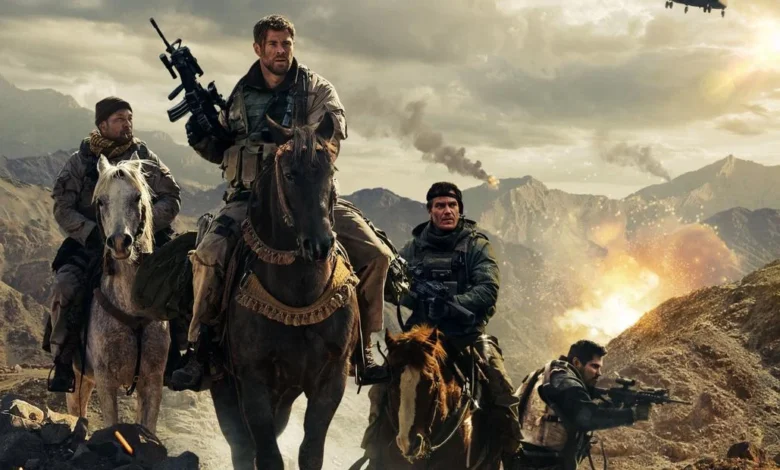
Perhaps the most striking and historically unique aspect of ODA 595’s mission, and a key focus of "12 Strong," was the necessity of fighting on horseback. Afghanistan’s rugged, mountainous terrain, particularly in the northern regions, proved largely impassable for conventional motorized vehicles. The local Northern Alliance forces, and indeed the Taliban, primarily relied on horses for transportation and even combat in certain areas. To effectively operate alongside their Afghan allies and navigate the challenging geography, the American Green Berets were compelled to adapt to this ancient mode of warfare.
The film dramatically illustrates the challenges faced by these modern soldiers, trained in high-tech weaponry and tactics, as they learned to ride and fight on horseback. This unprecedented situation required immense physical and mental fortitude, forcing them to shed conventional military doctrines and embrace a form of combat that had largely vanished from modern battlefields centuries ago. Beyond the logistical and tactical difficulties, the film also delves into the broader cultural divides. The American soldiers, despite their training in cultural sensitivity, confront a society vastly different from their own, with its own customs, honor codes, and perceptions of conflict. This adaptation to both the physical environment and the cultural landscape forms a significant part of the narrative, showcasing the versatility and resilience of the Special Forces.
Behind the Scenes: Production, Cast, and Creative Vision
"12 Strong" brought together a talented cast and crew to bring this extraordinary story to life. Nicolai Fulgsig, a Danish director known for his commercial work, made an impressive transition to feature films with this project. His approach emphasized a grounded realism, attempting to capture the grit and intensity of the actual events while balancing historical accuracy with cinematic storytelling. The film was primarily shot in New Mexico, utilizing its diverse landscapes to stand in for the rugged terrain of Afghanistan. The production team faced the challenge of recreating a convincing wartime environment, including large-scale battle sequences involving both modern military hardware and horse-mounted combat.
The ensemble cast was pivotal to the film’s success. Chris Hemsworth, widely recognized for his role as Thor in the Marvel Cinematic Universe, took on a more dramatic and grounded role as Captain Mitch Nelson, portraying a leader burdened by immense responsibility. Michael Shannon’s portrayal of Chief Warrant Officer Hal Spencer, Nelson’s seasoned second-in-command, added gravitas and a sense of weary wisdom. Michael Peña as Sergeant First Class Sam Diller provided moments of levity and underscored the camaraderie within the unit. The performances were crucial in humanizing the soldiers, moving beyond mere action figures to depict men grappling with fear, duty, and the profound impact of war. The film’s technical aspects, including cinematography, sound design, and practical effects, were meticulously crafted to immerse the audience in the chaotic and dangerous environment of early 2000s Afghanistan.
Reception and Legacy: Critical Acclaim, Box Office, and Historical Portrayal
"12 Strong" had a production budget of approximately US$35 million and went on to gross over US$67 million worldwide, indicating a respectable box office performance for a war drama. From a critical perspective, the film received mixed to positive reviews. On IMDb, it holds a rating of 6.6 out of 10, reflecting a generally favorable audience reception. Critics often praised the film’s action sequences, the performances of the lead actors (particularly Hemsworth and Negahban), and its commitment to depicting a true story.
However, some critiques pointed to a perceived simplification of complex geopolitical issues and a conventional narrative structure common in modern war films. Despite this, "12 Strong" carved out a place for itself as an important film in the "War on Terror" cinematic canon. It offered a crucial perspective on the initial, often overlooked, phase of the Afghanistan conflict, highlighting the bravery and resourcefulness of the Special Forces. The film contributed to the public’s understanding of how the U.S. military adapted to the unique challenges of fighting in Afghanistan and the critical role played by alliances with local forces. Its legacy lies in reminding audiences of the profound human stories that emerged from the ashes of 9/11 and the unconventional tactics employed in a new era of global conflict. It stands as a testament to the "unseen" battles fought by elite units and the sacrifices made in the pursuit of national security.
The Enduring Story: ’12 Strong’ on Trans TV
As "12 Strong" prepares for its broadcast on Trans TV, it offers a renewed opportunity for viewers to engage with this significant historical narrative. The film, with its blend of intense action, dramatic tension, and historical weight, provides a poignant reminder of the events that shaped the 21st century. It serves not only as entertainment but also as a powerful educational tool, shedding light on the sacrifices of soldiers and the complexities of international conflict. For those interested in military history, the human cost of war, and the extraordinary stories of courage that emerge from adversity, the broadcast of "12 Strong" on Saturday, July 18, 2026, at 20.15 WIB, is an event not to be missed. The story of ODA 595, the "Horse Soldiers," continues to resonate, symbolizing a pivotal moment when modern warfare met ancient traditions in the desolate mountains of Afghanistan.