Sarita Abdul Mukti spends over 1 billion rupiah on aesthetic transformation while remaining cautious about her romantic future

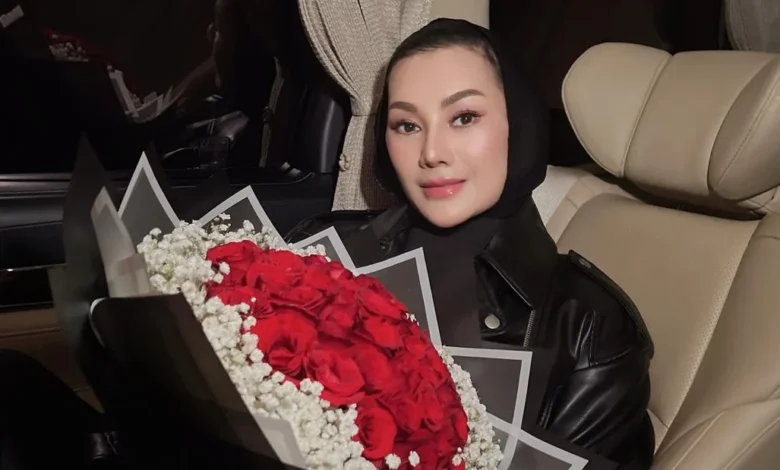
The Indonesian celebrity landscape has long been fascinated by the evolution of Sarita Abdul Mukti, a public figure who gained significant national attention following the high-profile dissolution of her marriage to businessman Faisal Harris. Recently, the focus on her life has shifted from her personal history to her physical transformation. In a candid series of interviews, Sarita revealed that she has invested more than 1 billion Indonesian Rupiah (IDR) into comprehensive aesthetic procedures performed in Bangkok, Thailand. While the transformation has drawn widespread public acclaim for its rejuvenating results, Sarita maintains a guarded stance regarding her romantic prospects, citing deep-seated concerns about the nature of modern intimacy and personal authenticity.
A Detailed Look at the Aesthetic Procedures
The decision to undergo extensive cosmetic surgery is one that Sarita has approached with transparency. During her appearance on the Trans TV program "Pagi-pagi Ambyar" on Wednesday, November 11, 2026, she detailed the specific surgical interventions she underwent abroad. These procedures were designed to shift her aesthetic profile from a "masculine" or "stern" appearance to a softer, more youthful demeanor.
According to medical experts familiar with such procedures, a full aesthetic package involving a facelift, neck lift, nose revision, and hairline lowering typically requires a significant recovery period and high-level medical expertise. The facelift and neck lift are designed to address skin laxity and tissue sagging, common indicators of aging, while the revision rhinoplasty—or nose job—aims to refine the facial silhouette. By lowering the hairline, the surgeon aims to create a more balanced facial proportion. Sarita noted that the results have significantly impacted her self-perception, describing her new look as "ayu" (Javanese for beautiful or graceful) and "imut" (cute).
Chronology of a Public Persona
Sarita Abdul Mukti’s rise to prominence was initially tethered to the public collapse of her marriage, which became a staple of Indonesian tabloid media for several years. Her grace and stoicism during that period earned her a loyal following, turning her into an influential figure on social media.
Following the finalization of her divorce from Faisal Harris, Sarita spent several years focusing on her children, her business ventures, and her personal wellbeing. The recent decision to pursue aesthetic surgery marks a new chapter in her public timeline—a transition from a woman defined by her past relationship to a woman prioritizing her own physical and psychological comfort. The timeline of her recovery, which took place throughout the latter half of 2026, has culminated in this current public reveal, signaling a shift in how she intends to present herself to the public eye.
The Dynamics of Personal Boundaries and Social Circles
Despite her outward confidence, the subject of dating remains a complex territory for Sarita. Her close friend and confidante, Novita, provided a unique perspective on why Sarita remains unattached. In an industry where public figures are often subject to intense scrutiny, the "gatekeeping" of a celebrity’s inner circle is a common phenomenon.
Novita described a social environment where potential suitors face significant hurdles, jokingly referring to Sarita’s inner circle as a phalanx of "bodyguards." This metaphorical barrier serves both as a protection for Sarita and an inadvertent deterrent for potential partners. Novita clarified that she has adopted a policy of non-interference, refusing to play matchmaker. The logic behind this, she explained, is that an individual must be emotionally prepared and willing to seek a partner before external interventions can be successful. For now, the consensus among her close circle is that Sarita is content with her autonomy.
Sociological Perspectives on Celebrity Aesthetic Choices
The expenditure of over 1 billion rupiah for cosmetic procedures is not merely a matter of vanity; it is reflective of a broader societal trend among high-net-worth individuals and celebrities in Southeast Asia. The demand for "medical tourism" in countries like Thailand, which has established itself as a global hub for plastic surgery, has surged. Thailand’s medical infrastructure, combined with competitive pricing for high-quality care, makes it a preferred destination for Indonesian celebrities.
From a psychological perspective, many individuals undergo major aesthetic changes following a significant life trauma, such as divorce. These procedures can serve as a catalyst for reclaiming control over one’s identity. By reshaping her physical appearance, Sarita is actively managing the narrative of her "second act," moving away from the memories associated with her previous marriage.
Addressing the Fear of Intimacy
Perhaps the most poignant aspect of Sarita’s recent disclosures is her vulnerability regarding the prospect of future relationships. She admitted that her hesitation is not born of a lack of desire for companionship, but rather a profound fear regarding the authenticity of being loved.
"I am worried that I won’t be able to be loved for who I really am," she stated, noting that her current emotional state makes the prospect of dating feel distant. This sentiment is often observed in individuals who have experienced public betrayal or high-conflict separations. The fear of being loved for one’s status, appearance, or public persona, rather than one’s intrinsic self, creates a psychological barrier that takes time to dismantle.
Sarita’s rejection of the "selective" label is an important distinction. To be selective implies that she is actively looking and simply rejecting candidates. Instead, she asserts that she has ceased the search entirely. She is not curating her life to attract a partner; she is curating it for her own satisfaction.
Current Relationship with the Past
One of the most significant indicators of Sarita’s personal growth is the status of her relationship with her ex-husband, Faisal Harris. Despite the turbulence of their history, she confirmed that their relationship has reached a point of stability and mutual respect. This resolution is crucial, as it allows her to move forward without the weight of lingering resentment.
The ability to maintain a healthy dynamic with an ex-spouse—especially in a high-profile, public context—is often considered a benchmark for emotional maturity. By closing the door on the conflict of the past, Sarita has effectively cleared the space for her current lifestyle, even if that lifestyle currently excludes a romantic partner.
Broader Implications and Future Outlook
The public reaction to Sarita’s transformation and her honest reflection on her emotional life highlights a shifting discourse in Indonesian media. There is an increasing appreciation for celebrities who discuss the complexities of life after divorce, the realities of aging, and the psychological impact of personal choices.
As Sarita continues to navigate her public and private life, her journey remains a case study in resilience. While she jokes about waiting until she is 70 to find a partner, her focus remains firmly on her current happiness. Her journey demonstrates that aesthetic transformation is only one layer of a complex human experience. Whether she chooses to open her heart to someone new in the future or continues to thrive in her independence, her current trajectory is one of self-defined contentment.
For the public, Sarita Abdul Mukti serves as a reminder that the path to self-reinvention is rarely linear. It involves a combination of physical change, psychological healing, and the establishment of firm personal boundaries. As she continues to evolve, the narrative of her life serves as an example of how one can reclaim agency in the wake of significant personal and public upheaval. The financial investment in her appearance may have made headlines, but it is her candid approach to her own emotional vulnerability that continues to define her public standing.