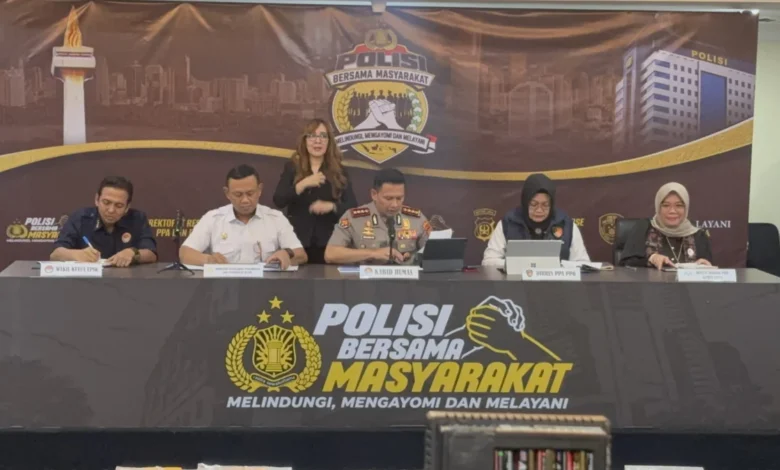
In a sweeping crackdown on organized crime, the Jakarta Metropolitan Police (Polda Metro Jaya) announced on Wednesday, November 11, 2026, the successful dismantling of seven distinct human trafficking rings operating across the capital and its surrounding satellite cities. The operations, which target a wide range of exploitative practices, have highlighted the alarming evolution of human trafficking syndicates that now leverage international geopolitical conflicts and sophisticated digital recruitment strategies to ensnare Indonesian citizens.
The disclosure was led by the Director of the Women and Children Protection and Human Trafficking Investigation Division (Dirres PPA-PPO) of Polda Metro Jaya, Senior Commissioner Rita Wulandari. Speaking during a press conference at the police headquarters, Wulandari confirmed that the arrests were the culmination of intensive investigations conducted by the regional police and its subordinate precincts, including the West Jakarta, North Jakarta, East Jakarta, Tanjung Priok, and Depok Metropolitan Police departments.
A Complex Web of Exploitation
The seven cases uncovered present a grim spectrum of modern-day slavery. While traditional forms of trafficking—such as forced labor and sexual exploitation—remain prevalent, the inclusion of recruitment for foreign military service marks a concerning new trend.
According to the official investigation reports, the modus operandi identified by the authorities includes:
- Military Mercenary Recruitment: Traffickers were found recruiting Indonesian citizens under the guise of lucrative employment, only to funnel them into combat zones as mercenaries for the Russian military. This represents a significant escalation in the transnational nature of these criminal syndicates.
- Illegal Migrant Labor Schemes: Multiple rings were dismantled for facilitating the illegal movement of Indonesian migrant workers to Malaysia and Slovakia, where victims were frequently subjected to debt bondage and poor working conditions.
- Sexual Exploitation of Minors: Several cases involved the organized grooming and sexual exploitation of underage victims, often facilitated through social media platforms.
- Labor Exploitation of Seafarers: Investigations revealed systematic abuse of crew members working on fishing and cargo vessels, characterized by contract violations and hazardous environments.
- Mail-Order Brides: The "pengantin pesanan" or mail-order bride phenomenon remains a persistent issue, where women are coerced or deceived into marriages with foreign nationals, leading to domestic servitude and legal isolation.
Chronology and Operational Scope
The operation represents a strategic shift in how the Indonesian National Police approach human trafficking. Rather than treating these as isolated incidents, the Polda Metro Jaya has adopted a "follow-the-money" and "follow-the-network" approach, linking local incidents to broader criminal hierarchies.
The investigation intensified following a series of reports in late 2026 regarding the disappearance of young men who had allegedly been promised high-paying logistics jobs in Eastern Europe, only to find themselves drafted into military operations. The investigation by the West Jakarta Police served as the anchor point for the subsequent expansion into the seven-case sweep.
Between September and early November 2026, intelligence units monitored recruitment channels that used encrypted messaging apps to bypass standard security screening processes. The coordinated raids on November 11 were the result of months of surveillance, data analysis, and cross-border cooperation with immigration and international labor agencies.
Data and Trends in Human Trafficking
Human trafficking remains a critical challenge for Indonesia, a nation that serves as both a source and transit hub for human capital. According to the Global Slavery Index, the vulnerability of Indonesian migrant workers remains high due to a combination of economic desperation and a lack of formal oversight in recruitment processes.
Data from the Ministry of Manpower and the Indonesian Migrant Worker Protection Agency (BP2MI) suggests that since the beginning of 2026, there has been a 15% increase in intercepted illegal migration attempts compared to the previous year. The transition toward online recruitment has made it increasingly difficult for authorities to track the initial stages of these crimes.
Furthermore, the involvement of Indonesian citizens in foreign conflicts—such as the mercenary case uncovered by the police—raises significant diplomatic and national security concerns. The government is now under pressure to strengthen its "Early Warning System" at the provincial level to identify individuals attempting to leave the country under suspicious recruitment circumstances.
Official Responses and Legal Framework
During the press briefing, Commissioner Rita Wulandari emphasized that the authorities are committed to prosecuting not only the recruiters but also the financiers behind these operations. "We are looking at the entire supply chain of human trafficking," Wulandari stated. "From those who place the advertisements on social media to the facilitators who arrange travel documents and the employers who ultimately exploit the victims, all will be held accountable under the Law on the Eradication of the Criminal Act of Trafficking in Persons."
The legal framework used for these prosecutions is robust, primarily relying on Law No. 21 of 2007, which carries heavy penalties for human trafficking, including life imprisonment and substantial fines. In addition to criminal charges, the police are working with the Witness and Victim Protection Agency (LPSK) to ensure that the victims—many of whom are traumatized—receive psychological support and, where applicable, compensation.
The Broader Implications
The dismantling of these seven syndicates serves as a stark reminder of the global nature of modern human trafficking. The inclusion of countries like Slovakia and Russia in the investigation suggests that trafficking rings are no longer limited to regional labor markets but are exploiting the post-pandemic global demand for labor and the instability of current geopolitical climates.
Economic Vulnerability: The primary driver remains the economic disparity between rural Indonesian communities and the promised wealth of overseas employment. Traffickers exploit this by fabricating "legal" pathways, charging exorbitant fees for fake training, documentation, and transportation.
Digital Literacy and Security: A recurring theme in all seven cases is the reliance on digital platforms. Recruitment ads are often disguised as legitimate business opportunities, targeting vulnerable populations who lack the resources to verify the authenticity of these offers. The Indonesian government is now considering a formal partnership with major social media platforms to implement more rigorous monitoring of recruitment advertisements targeting Indonesian citizens.
Diplomatic Relations: The mercenary recruitment case, in particular, presents a delicate diplomatic challenge. The Ministry of Foreign Affairs is expected to coordinate with international counterparts to identify the extent of the syndicate’s reach and ensure the safety of any Indonesian citizens currently trapped in conflict zones.
Moving Forward: A Multidisciplinary Approach
The success of the Polda Metro Jaya in this operation is a positive step, but experts argue that law enforcement alone is insufficient to eradicate the scourge of human trafficking. A multifaceted approach is required:
- Community Education: Intensified awareness campaigns in rural provinces, focusing on the dangers of "too-good-to-be-true" job offers and the importance of official, government-sanctioned migration channels.
- Public-Private Cooperation: Working with financial institutions to flag suspicious transactions related to recruitment agencies and travel bureaus.
- Enhanced Border Controls: Improving the integrity of travel documentation and increasing the capacity of immigration officers to identify potential victims during the departure process at major airports and seaports.
- Regional Cooperation: Strengthening ties within ASEAN and beyond to share intelligence on transnational syndicates, as these organizations often shift their operations across borders to avoid detection.
As the investigation continues, the police have urged the public to remain vigilant and to report any suspicious recruitment activities to the nearest precinct. While the dismantling of these seven rings is a significant blow to the perpetrators, it is clear that the fight against human trafficking in Indonesia is an ongoing battle that requires the constant vigilance of both the state and the society it protects. The outcome of these cases will likely set a precedent for how Indonesia manages the delicate balance between facilitating labor migration and protecting its citizens from the grave violations of human rights that occur under the shadow of global exploitation.
Related posts: