
Unveiling Suweg: The Edible "Corpse Flower" Relative Captivating Bekasi Residents and Promising a Future as a Local Superfood

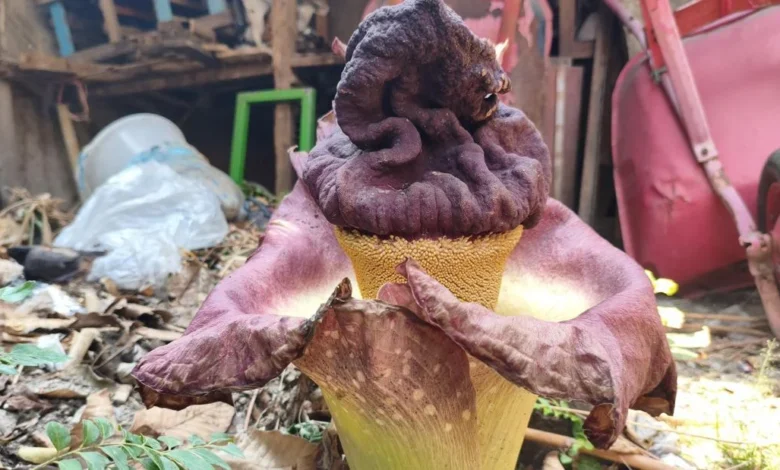
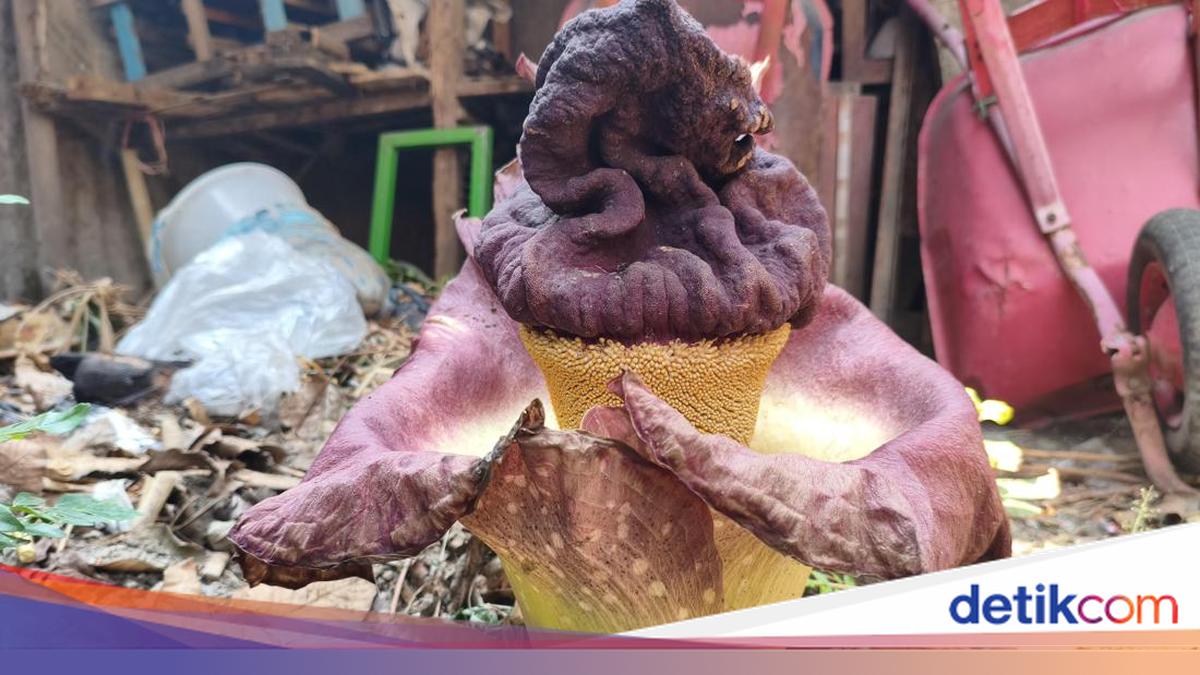
Kota Bekasi – A plant strikingly reminiscent of the infamous corpse flower recently emerged in the residential backyard of a home in Kranji, Kota Bekasi, captivating local residents and sparking widespread curiosity. Its distinctive appearance, featuring a large spathe and a towering spadix, immediately drew comparisons to its more notorious botanical relatives, though this particular specimen, identified as Suweg, lacked the pungent, decaying odor characteristic of the true corpse flower.
The discovery unfolded on Saturday, July 18, 2026, along Jalan Lapangan Bola in Kranji. Residents of the area were drawn to the unusual sight flourishing in the yard of a rental property. The plant, with its prominent, almost alien-like bloom, stood out amidst other garden flora. While its form strongly echoed the dramatic inflorescence of a corpse flower, observers quickly noted the absence of the characteristic foul stench that typically accompanies Amorphophallus titanum, the giant corpse flower. Furthermore, its stature, while impressive, was not as towering as its more famous cousins.
Warsini, the owner of the property where the plant blossomed, clarified that the specimen was, in fact, Suweg, scientifically known as Amorphophallus paeoniifolius. She explained that her husband, Juari, had brought the tuber from his hometown in Pacitan, East Java, and planted it in their yard. This seemingly simple act of cultivation brought an unexpected botanical marvel to the urban landscape of Bekasi, igniting local interest and prompting a deeper look into this fascinating, often misunderstood plant.
The Botanical Identity of Suweg: A Closer Look at Amorphophallus paeoniifolius
Suweg, or Amorphophallus paeoniifolius, belongs to the genus Amorphophallus, which is part of the Araceae family. This places it in the same botanical lineage as the true corpse flower (Amorphophallus titanum) and other unique aroids. Despite sharing a genus, it is crucial to differentiate Suweg from its more famous relatives. While Amorphophallus titanum is known for its colossal size and intensely putrid smell that mimics rotting flesh, Amorphophallus paeoniifolius is generally smaller, its scent is significantly milder, and most importantly, its tuber is edible after proper processing. It is also often mistakenly identified as Rafflesia, another large, odorous flower, but Rafflesia is a parasitic plant entirely distinct from the Amorphophallus genus.
According to information from the Research and Development Center for Various Tuber Crops (BRMP Tanaman Aneka Umbi), an operational unit under the Agency for Agricultural Research and Development (BPTP) of the Ministry of Agriculture (Kementan RI), Suweg is characterized by its distinctive mottled stem, often displaying patterns of green and brown, and its deeply lobed, palmate leaves. Below ground, it develops a substantial, rough-skinned tuber with a creamy-yellowish flesh. This tuber is the primary edible part of the plant and holds significant nutritional value.
The most iconic feature of Suweg is undoubtedly its bloom. When the foliage of the plant naturally senesces and withers, the dormant tuber often sends up an exotic and unique flower stalk. This inflorescence typically consists of a broad, pointed spathe, which is a modified leaf surrounding the flower cluster, colored in shades of purplish-maroon or deep red. Encased within this spathe is a prominent central spadix, a fleshy spike bearing numerous tiny flowers, usually pale yellow in color. Similar to its Amorphophallus relatives, when the Suweg flower unfurls, it releases a distinct, albeit less intense, aroma. This scent, often described as mildly unpleasant or musky, serves a critical ecological purpose: attracting carrion flies and other insect pollinators that aid in its reproduction. This unique pollination strategy underscores the plant’s remarkable adaptation to its environment.
Geographically, Amorphophallus paeoniifolius is widely distributed across tropical and subtropical regions of Asia, including vast areas of Indonesia, India, and Southeast Asia. It thrives in shaded, moist environments, often found growing wild in secondary forests, along riverbanks, and in disturbed areas. Its adaptability to various soil types and relatively low maintenance requirements make it a resilient species, capable of flourishing even in semi-cultivated settings like residential backyards, as demonstrated by Warsini’s plant in Bekasi.
Historical Context and Cultural Significance: Suweg as a Traditional Staple
For centuries, Suweg has held a significant, though often understated, place in the culinary and cultural landscape of various Indonesian communities, particularly in rural areas. Historically, it served as an important supplementary food source, especially during periods of food scarcity or as a famine food. Its large, starchy tubers provided essential carbohydrates and energy when staple crops like rice were scarce or harvests failed. In regions like Pacitan, East Java, where Juari originated, Suweg cultivation and consumption are deeply embedded in local traditions.
Traditional knowledge regarding Suweg cultivation is passed down through generations. Farmers appreciate its resilience and relatively low-input requirements. It grows well in various soil conditions and does not demand intensive care, making it an ideal crop for subsistence farming. Beyond its role as a food security crop, Suweg has also been incorporated into specific regional dishes and practices, though often after meticulous preparation to mitigate its inherent challenges. While not as universally consumed as rice or corn, its historical presence underscores its importance in local food systems. The plant’s ability to provide sustenance when other options were limited highlights its enduring value in ensuring food resilience for countless communities across the archipelago.
Suweg’s Nutritional Prowess: A Local Superfood Champion
Beyond its exotic appearance and historical utility, Suweg is increasingly being recognized for its exceptional nutritional profile, earning it the moniker of a "local superfood." The tuber, despite its rough exterior, is packed with valuable nutrients that contribute significantly to human health.
The primary component that elevates Suweg to superfood status is its high concentration of glucomannan. Glucomannan is a soluble dietary fiber, a polysaccharide that has garnered significant scientific attention for its diverse health benefits. Unlike many other starches, glucomannan has a remarkable ability to absorb water, expanding considerably and forming a viscous gel. This property is crucial for its health-promoting effects.
A detailed analysis of Suweg’s nutritional composition reveals it to be a good source of complex carbohydrates, which provide sustained energy release. It also contains moderate amounts of protein and various essential minerals such as calcium, phosphorus, and iron, along with some B vitamins. However, its true power lies in its fiber content.
The health benefits attributed to glucomannan-rich foods like Suweg are extensive:
- Diabetes Management: Glucomannan helps regulate blood sugar levels. Its ability to slow down gastric emptying means that glucose is absorbed more gradually into the bloodstream, preventing sharp spikes in blood sugar after meals. This makes Suweg an excellent dietary choice for individuals managing diabetes or seeking to prevent its onset.
- Weight Management: The high fiber content of Suweg promotes a feeling of fullness or satiety. When consumed, glucomannan expands in the stomach, reducing appetite and overall caloric intake, thereby aiding in weight loss and management. Its low caloric density, combined with its satiating properties, makes it a valuable component of weight-conscious diets.
- Digestive Health: As a soluble fiber, glucomannan acts as a prebiotic, fostering the growth of beneficial gut bacteria. This contributes to a healthy gut microbiome, which is essential for overall digestive function, nutrient absorption, and immune system strength. It can also help alleviate constipation by adding bulk to stool and promoting regular bowel movements.
- Cholesterol Reduction: Studies have shown that glucomannan can help lower levels of LDL ("bad") cholesterol and total cholesterol. It does this by binding to cholesterol in the digestive tract, preventing its absorption and facilitating its excretion from the body.
Compared to other common staple crops, Suweg offers a unique combination of high fiber, low glycemic impact, and gluten-free properties, positioning it as an attractive alternative for health-conscious consumers and those with specific dietary needs.
Navigating the Challenge: Processing Suweg to Eliminate Irritation
Despite its impressive nutritional profile and "superfood" status, raw Suweg presents a significant challenge: it contains calcium oxalate crystals. These microscopic, needle-like crystals, known as raphides, are a common defense mechanism in many plants from the Araceae family. When ingested or even when in contact with skin and mucous membranes, these crystals can cause intense irritation, itching, and a burning sensation in the mouth and throat. This characteristic is precisely why raw Suweg is not consumed directly.
However, centuries of traditional wisdom have provided effective solutions to mitigate this issue. The key lies in thorough processing, primarily involving a combination of careful preparation, washing, and heat treatment.
The traditional method involves several crucial steps:
- Slicing: The Suweg tuber is first peeled and then sliced thinly. This increases the surface area, facilitating the leaching of oxalates and ensuring uniform processing.
- Soaking in Salt Water: The thin slices are then immersed in a solution of salt water. This step is critical as salt helps in drawing out the calcium oxalate crystals from the plant tissues. The soaking period can vary but is often prolonged to ensure maximum effectiveness.
- Boiling/Steaming: After soaking, the Suweg slices are typically boiled or steamed for an extended period. High heat further breaks down or dissolves any remaining calcium oxalate crystals and renders the tuber safe for consumption. Multiple changes of water during boiling can enhance the removal process.
- Drying: For long-term storage or further processing into flour, the boiled slices are often dried, traditionally under the sun or using modern dehydrators.
The scientific basis behind these methods is that calcium oxalate is sparingly soluble in water, but its solubility increases with heat and in the presence of certain ions like sodium (from salt). The physical disruption of slicing, combined with the chemical action of salt and the thermal energy of boiling, effectively neutralizes the irritant compounds, transforming the raw, unpalatable tuber into a safe and nutritious food.
From Traditional Brew to Modern Culinary Innovation
Historically, Suweg’s culinary applications were relatively simple but essential. Once properly processed to remove the irritating oxalates, the boiled or steamed Suweg tuber was often enjoyed as a humble accompaniment to morning coffee or tea, providing a filling and nutritious start to the day. Its mild, earthy flavor made it a versatile ingredient, though its consumption was often dictated by practicality rather than gourmet appeal.
However, with increasing awareness of its health benefits and the advent of modern food processing techniques, Suweg has undergone a culinary transformation. One of the most significant advancements is its conversion into flour. The dried Suweg tubers can be ground into a fine, gluten-free flour, opening up a world of possibilities for its application in contemporary cuisine.
The inherently gluten-free nature of Suweg flour makes it particularly valuable in today’s market. With a rising prevalence of celiac disease and non-celiac gluten sensitivity, as well as a growing consumer preference for gluten-free diets, Suweg flour offers a healthy and nutritious alternative to traditional wheat flour.
Modern culinary applications of Suweg flour are diverse and innovative:
- Baked Goods: It can be incorporated into recipes for brownies, cookies, cakes, and muffins, offering a unique texture and contributing to the nutritional profile. Its binding properties, due to glucomannan, can also influence the texture of baked goods.
- Noodles and Pasta: Suweg flour can be mixed into doughs for various types of noodles and pasta, providing a gluten-free option with added fiber. This is especially relevant in Asian cuisine where noodles are a staple.
- Thickeners and Binders: Due to its high glucomannan content, Suweg flour can act as an excellent natural thickener for sauces, soups, and gravies, or as a binder in meatless patties and other processed foods.
- Functional Foods: Beyond basic cooking, Suweg is increasingly being used in the development of functional foods, such as dietary supplements, health drinks, and energy bars, capitalizing on its glucomannan content for targeted health benefits.
This evolution from a subsistence crop to a versatile ingredient highlights Suweg’s adaptability and its potential to contribute to diverse food industries, catering to both traditional tastes and modern dietary trends.
Economic and Agricultural Potential: Cultivating a Sustainable Future
The growing recognition of Suweg’s nutritional and culinary attributes is catalyzing interest in its commercial cultivation and economic potential. For many rural farming communities in Indonesia, Suweg could represent a valuable alternative cash crop, offering diversification and increased income opportunities.
The demand for glucomannan-rich products is expanding globally, driven by the health and wellness industry. This includes demand for dietary supplements, weight management products, and gluten-free food alternatives. Indonesia, with its indigenous Suweg varieties and suitable climatic conditions, is well-positioned to become a significant player in this market.
Government bodies like the Ministry of Agriculture (Kementan RI) and its affiliated research units, such as BRMP Tanaman Aneka Umbi, play a crucial role in promoting the sustainable cultivation and processing of Suweg. Their initiatives often include:
- Research and Development: Investing in research to improve Suweg varieties, enhance cultivation techniques, and optimize processing methods to maximize yield and nutritional quality while minimizing processing costs.
- Farmer Education and Support: Providing farmers with training on best practices for Suweg cultivation, pest management, and post-harvest handling. This includes disseminating knowledge about its economic value and market linkages.
- Market Linkages and Promotion: Facilitating connections between Suweg farmers and processors, as well as promoting Suweg-based products in both domestic and international markets. This includes advocating for its inclusion in national food security programs.
- Value Addition: Encouraging the development of value-added Suweg products, such as flour, chips, and noodles, to increase profitability for farmers and processors.
The cultivation of Suweg also aligns with principles of sustainable agriculture. As a relatively low-input crop that can thrive in various conditions, it offers an environmentally friendly alternative to more resource-intensive crops. Its role in diversifying agricultural landscapes can also contribute to biodiversity conservation.
Conclusion: Suweg’s Promising Future
The unexpected appearance of a Suweg plant in a Bekasi backyard, initially mistaken for a rare corpse flower, has done more than just pique local curiosity. It has served as a poignant reminder of Indonesia’s rich botanical heritage and the untapped potential of its indigenous plants. From its fascinating botanical characteristics and historical role as a famine food to its modern recognition as a nutritional powerhouse and a versatile culinary ingredient, Suweg embodies resilience, adaptability, and significant promise.
As research continues and awareness grows, Suweg stands poised to transition from a regional curiosity to a globally recognized local superfood. Its unique combination of being gluten-free, diabetes-friendly, and rich in glucomannan positions it as an invaluable asset for promoting health, enhancing food security, and fostering economic growth in rural communities. The journey of Amorphophallus paeoniifolius from a wild tuber to a cultivated crop, and now to an ingredient of choice for innovative food products, underscores the importance of valuing and investing in traditional knowledge and indigenous plant resources for a sustainable and healthy future.