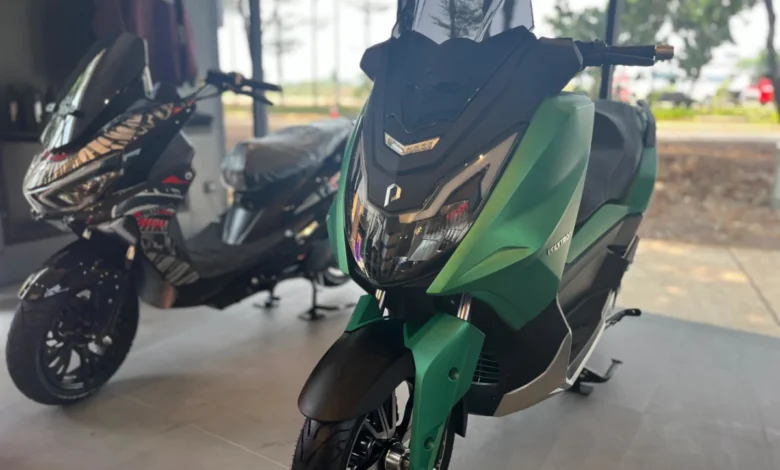
The Indonesian electric vehicle (EV) market has entered a new phase of maturity with the introduction of the Polytron Fox 500. Positioned as a flagship model within the company’s electric two-wheeler lineup, the Fox 500 represents a significant shift toward high-performance electric motorcycles capable of challenging traditional internal combustion engine (ICE) scooters in terms of power, speed, and daily usability. Unveiled to address the growing demand for commuter-friendly yet sporty electric mobility, this model combines a 5,000-watt motor with a sophisticated battery-as-a-service (BaaS) business model, setting a new benchmark for domestic electric motorcycle manufacturers.
Evolution of the Polytron Electric Lineup
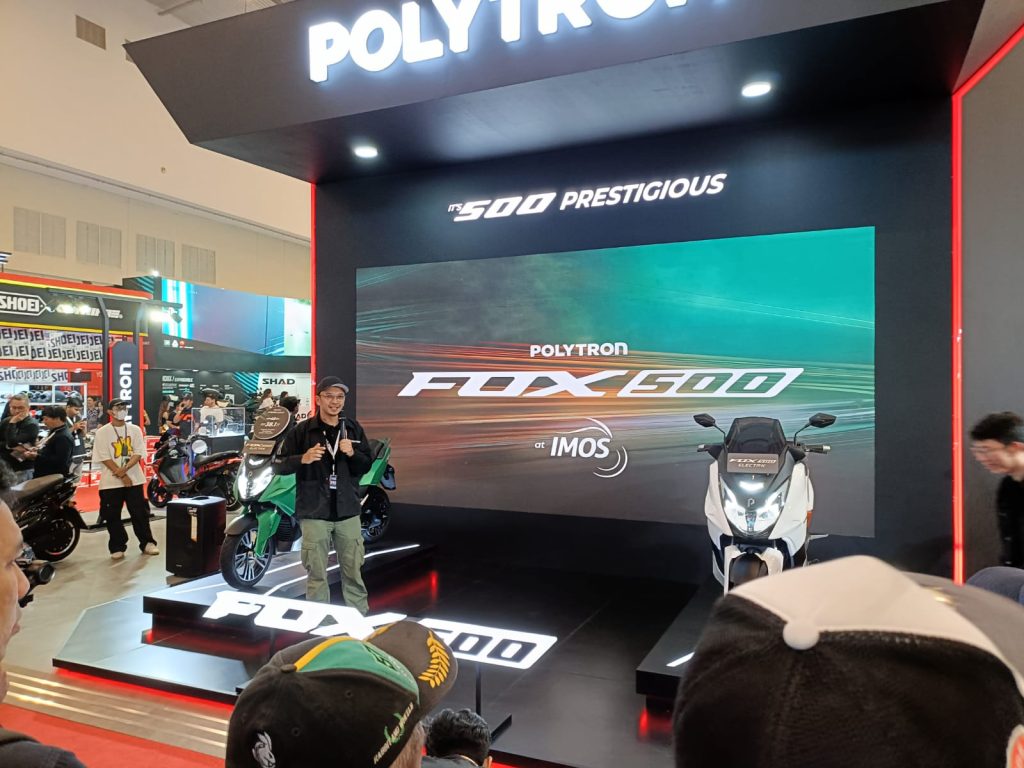
Polytron, historically known for its consumer electronics dominance, successfully pivoted into the electric mobility sector with the release of the Fox-R and Fox-S models. The introduction of the Fox 500 at the Indonesia Motorcycle Show (IMOS) 2024 served as a strategic expansion of its portfolio. While its predecessors targeted the entry-level and mid-range markets, the Fox 500 is engineered for consumers seeking high-speed capabilities and robust construction.
The decision to adopt a "mid-drive" motor configuration—where the motor is centrally mounted rather than housed within the rear wheel hub—marks a technical departure that optimizes the vehicle’s center of gravity and handling. This design choice, coupled with the larger frame, reflects Polytron’s intent to compete directly with premium electric scooters and established gasoline-powered maxi-scooters that dominate the Indonesian urban landscape.
Pricing Structure and Regional Availability
The pricing strategy for the Polytron Fox 500 is designed to balance accessibility with the premium nature of its performance. As of late 2024, the manufacturer has established a standardized on-the-road (OTR) pricing framework that fluctuates slightly based on logistical costs and regional tax structures.
In the Jabodetabek and Banten regions, the base price is set at Rp43,000,000. In West Java, the price rises slightly to Rp43,500,000, while in Central Java and Yogyakarta, it remains at the baseline of Rp43,000,000. For consumers in East Java and Bali, the OTR price is approximately Rp44,000,000. Industry observers note that these figures are highly sensitive to promotional cycles, such as those seen during major automotive exhibitions like IMOS, where dealer-specific discounts can bring the entry price down to the range of Rp38,100,000 to Rp38,200,000.

Crucially, Polytron employs a distinct business model: the separation of hardware and energy storage. By utilizing a battery rental system—priced at Rp200,000 per month—the company effectively lowers the initial barrier to entry for the consumer. This model also shifts the long-term responsibility of battery health and degradation to the manufacturer, providing users with a "lifetime warranty" on the power cell, provided they adhere to the subscription terms.
Technical Specifications: Power and Efficiency
The engineering core of the Polytron Fox 500 is its 5,000-watt electric motor, which achieves a remarkable peak power output of 14,700 watts. This power-to-weight optimization allows the vehicle to achieve a top speed of 130 km/h, making it suitable for both metropolitan commuting and inter-city travel. Acceleration metrics are equally impressive, with the vehicle capable of sprinting from 0 to 100 km/h in approximately 13.63 seconds.
The energy source is a 3.89 kWh (72V 54Ah) Lithium Iron Phosphate (LiFePO4) battery pack. This chemistry is widely recognized in the industry for its thermal stability and longer cycle life compared to traditional Lithium-ion alternatives. Under optimal conditions, this capacity provides a range of up to 130 km per full charge. Charging times are rated between four to five hours, a duration that necessitates strategic planning for users without home-charging infrastructure, though the battery rental program aims to mitigate the anxiety associated with battery replacement costs.
Design and Ergonomics
The physical stature of the Fox 500 is noticeably larger than its smaller siblings, featuring a length of 2,190 mm, a width of 770 mm, and a height of 1,280 mm. This dimension is specifically curated to provide a stable ride at higher speeds, which is a common pain point for smaller, lightweight electric scooters. The vehicle is equipped with 14-inch wheels (110/70 front and 140/60 rear), ensuring better stability on uneven road surfaces. To manage the increased speed and weight, the braking system features dual-disc setups, enhancing safety and stopping power.
Comparative Analysis: The Competitive Landscape
The Indonesian electric motorcycle market is currently crowded with competitors, yet few match the specific output of the Fox 500. When compared to the Alva Cervo and the United TX3000, the Fox 500 occupies a unique middle ground.
The Alva Cervo, priced at approximately Rp37,750,000, offers a more compact form factor with a motor output of 9.8 kW. While its top speed of 103 km/h is lower than that of the Fox 500, it utilizes a dual-battery system, which some consumers may find more convenient for rapid "swapping" in areas with established charging networks.
Conversely, the United TX3000 serves as a more expensive alternative at Rp50,900,000. With a 3,000-watt motor and a top speed of 90 km/h, the TX3000 is geared more toward utility and durability rather than pure speed. The Polytron Fox 500 effectively positions itself as the "performance-per-rupiah" leader, offering higher top speeds than the Alva and lower entry costs than the United, albeit with the commitment of a monthly rental fee.
Broader Market Implications
The emergence of the Polytron Fox 500 signifies a broader trend in Indonesia’s automotive transition: the shift from "economy" electric bikes to "performance" electric motorcycles. This transition is essential for the widespread adoption of EVs, as it bridges the gap for users who were previously hesitant to switch due to concerns regarding speed, power, and highway-capability.
However, the success of the Fox 500 will depend on more than just hardware. The viability of the battery rental model remains a subject of analysis. While it reduces the upfront purchase price, it introduces a recurring cost that may deter some budget-conscious buyers in the long term. Furthermore, the infrastructure for service and maintenance of the mid-drive system requires a robust dealer network, which Polytron is currently expanding across the archipelago.
Conclusion and Future Outlook
The Polytron Fox 500 is a testament to the rapid advancements in domestic electric motorcycle manufacturing. By prioritizing high peak power, stable chassis design, and a flexible ownership model, Polytron has successfully carved out a competitive niche in the Indonesian market. As the government continues to incentivize the transition to electric vehicles, models like the Fox 500 are likely to play a pivotal role in changing public perception, demonstrating that electric mobility does not have to come at the expense of performance or long-distance utility.
For prospective buyers, the choice between the Fox 500 and its rivals will ultimately come down to the trade-off between the monthly subscription model and the desire for outright ownership, alongside specific preferences for top-end speed versus infrastructure convenience. As the market matures, one can expect further refinements in battery technology and charging speed, which will only solidify the role of vehicles like the Fox 500 in the future of Indonesian transportation.