Spain Claims Second World Cup Title with Thrilling 1-0 Victory Over Argentina in 2026 Final

Spain has officially been crowned champions of the 2026 FIFA World Cup, securing their second global title after a hard-fought 1-0 victory over Argentina in a dramatic final held at MetLife Stadium in New Jersey on Monday, July 20, 2026, according to Western Indonesian Time. The decisive moment came in extra time, with Ferran Torres netting the solitary goal that propelled La Furia Roja to football’s pinnacle, etching their name once again into the annals of history, 16 years after their inaugural triumph in South Africa.
The atmosphere at MetLife Stadium, packed with 82,500 roaring fans, was electric from the moment the first whistle blew, signaling the start of a highly anticipated clash between two footballing giants. Spain, under the astute guidance of head coach Luis de la Fuente, immediately asserted their signature dominance, controlling possession with clinical precision. Throughout the 120 minutes of play, Spain maintained an overwhelming 68% of ball possession, systematically dictating the tempo and flow of the game, while Argentina, despite their renowned attacking prowess, found themselves largely relegated to a reactive role, managing only 32% of possession.
A Tactical Masterclass Unfolds
Spain’s tactical approach was evident from the outset: a meticulously orchestrated blend of relentless pressing, intricate passing sequences, and disciplined defensive positioning. The midfield trio, anchored by the tireless Rodri and flanked by creative forces like Gavi and Pedri, effectively suffocated Argentina’s attempts to build attacks from deep. This control limited the supply lines to Argentina’s talismanic captain, Lionel Messi, who, despite entering the final as a player widely tipped to be a decisive factor, struggled to find space and exert his customary influence against Spain’s watertight defense. The Spanish backline, led by veteran Aymeric Laporte and the emerging Pau Cubarsí, formed an impenetrable barrier, denying Messi and his attacking partners clear sight of goal.
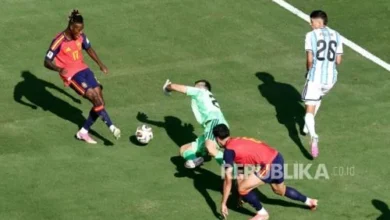
As the match progressed through regulation time, Spain consistently hammered at the Albiceleste’s defensive fortifications. By the 105th minute mark, La Furia Roja had unleashed a staggering 20 shots, with 11 of those testing the reflexes of Argentina’s goalkeeper, Emiliano Martinez. Martinez, who had been instrumental in Argentina’s 2022 World Cup success, delivered another masterclass in goalkeeping, pulling off a series of spectacular saves that repeatedly denied Spain a breakthrough. His heroic interventions, including point-blank blocks and acrobatic dives, kept Argentina in the contest, pushing the game into extra time and raising the tension to unbearable levels.
The Road to Glory: Spain’s Journey
Spain’s path to the 2026 World Cup final was a testament to their resurgence as a global footballing force. After a somewhat inconsistent period following their 2010 triumph, the team underwent a significant generational shift, blending experienced veterans with a new wave of incredibly talented youngsters. Their group stage campaign saw them comfortably top Group C, securing maximum points against relatively strong opponents like Uruguay, Morocco, and Australia. Their attacking fluidity and defensive solidity were on full display, signaling their intentions early in the tournament.
In the knockout stages, Spain navigated a challenging bracket with remarkable resilience. They dispatched Mexico in the Round of 16 with a convincing 3-1 victory, showcasing their clinical finishing. The quarter-final clash against a formidable England side proved to be a tactical battle, with Spain emerging victorious after a dramatic penalty shootout. The semi-final against defending champions France was another epic encounter, decided by a solitary goal from Álvaro Morata in the 85th minute, sealing their spot in the final. Throughout these matches, Spain’s tactical discipline and ability to control the midfield were key factors in their progression, highlighting Luis de la Fuente’s strategic brilliance.
Argentina’s Valiant Campaign
Argentina, the reigning champions from 2022, also had a formidable journey to the final, marked by moments of brilliance from their captain, Lionel Messi. They topped their group, which included strong contenders like Germany and Japan, demonstrating their championship pedigree. In the Round of 16, they overcame a resilient Ecuador side, with Messi delivering a crucial assist. Their quarter-final match against Brazil was a South American classic, settled by a late winner from Lautaro Martínez, showcasing their never-say-die attitude. The semi-final against Italy was a cagey affair, eventually won by Argentina through a penalty shootout, with Messi converting the decisive spot-kick. Despite their strong run, the final against Spain presented a different tactical challenge, one that ultimately proved insurmountable.
The Decisive Moment in Extra Time
As the match entered the second period of extra time, with both teams visibly fatigued but refusing to yield, the decisive moment arrived in the 108th minute. A swift counter-attack initiated by Pedri saw him thread a perfectly weighted pass to Ferran Torres, who had made a surging run into the box from the right wing. Torres, showing remarkable composure under immense pressure, took a single touch to control the ball before unleashing a powerful, low shot that zipped past the outstretched arm of Emiliano Martinez and nestled into the bottom corner of the net. The Spanish contingent in the stadium erupted in a cacophony of cheers, while the Argentine fans were left in stunned silence.
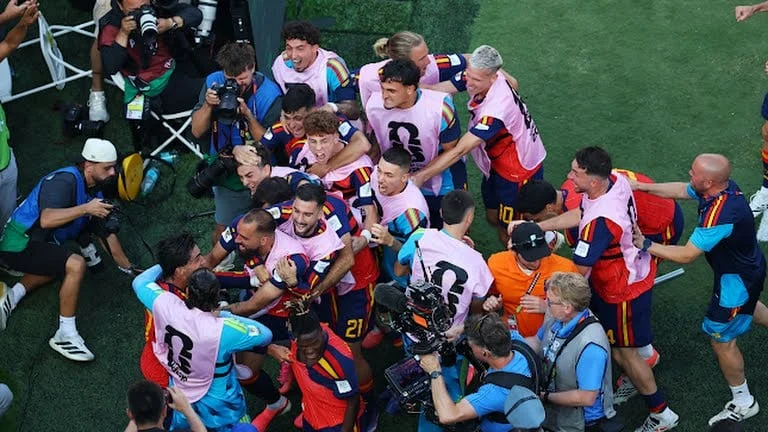
The goal, Ferran Torres’s sixth of the tournament, was a moment of individual brilliance that broke the deadlock and ultimately decided the contest. Argentina, spurred by desperation, launched a furious offensive in the remaining minutes, pushing every available player forward in search of an equalizer. However, Spain’s defense held firm, expertly managing the clock and repelling every Argentine foray. The final whistle was met with jubilant scenes from the Spanish players and coaching staff, who collapsed in joyous celebration, their dream of a second World Cup title realized.
Reactions from the Pitch and Beyond
The immediate aftermath saw a blend of euphoria and heartbreak. Luis de la Fuente, visibly emotional, praised his team’s unwavering commitment. "This team has shown incredible character, resilience, and belief," he stated in the post-match press conference. "We faced a phenomenal opponent in Argentina, but our players executed the game plan perfectly. This victory is for every Spaniard, for all the hard work and dedication that has gone into building this new generation."
Ferran Torres, the hero of the final, expressed his overwhelming joy. "It’s an indescribable feeling," he beamed, clutching his winner’s medal. "To score in a World Cup final and bring the trophy home… it’s what every child dreams of. This team is a family, and we fought for each other until the very end." Veteran midfielder Rodri, widely lauded for his consistent performances throughout the tournament, added, "We knew it would be tough, but we never stopped believing in our style. To lift this trophy again, 16 years after the first, is a testament to the enduring quality of Spanish football."
On the other side, the mood was somber. Lionel Scaloni, Argentina’s coach, while disappointed, lauded his team’s effort. "We gave everything we had," Scaloni remarked, his voice tinged with sadness. "Spain played an excellent game, and Martinez was phenomenal for us. We just couldn’t find that final touch. This is football, sometimes it’s cruel, but I am incredibly proud of my players." Lionel Messi, in what was widely speculated to be his final World Cup appearance, cut a forlorn figure. While he did not make an immediate statement, his quiet walk to collect his runner-up medal spoke volumes about the weight of the moment and the unfulfilled desire for a back-to-back title.
The Broader Implications: A New Era for Spain, A Reflective Moment for Argentina
Spain’s 2026 World Cup victory solidifies their position as a modern footballing powerhouse, proving that their 2010 triumph was not an anomaly but rather a foundational moment for a sustained era of excellence. This second star on their national crest elevates them into an elite group of multiple World Cup winners, reaffirming the success of their youth development programs and the tactical evolution under coaches like de la Fuente. The victory is expected to ignite further passion for football across Spain, inspiring a new generation of players and fans.
For Argentina, the defeat marks a poignant moment, particularly for Lionel Messi. While his legacy as one of the greatest players of all time is undisputed, this final could potentially signify the end of an extraordinary era for the Albiceleste. The team now faces the challenge of transitioning into a post-Messi landscape, a task that will require strategic planning and the emergence of new leaders to maintain their competitive edge on the international stage.
The 2026 FIFA World Cup itself, co-hosted by the United States, Canada, and Mexico, was a monumental success. The expanded 48-team format provided thrilling matches and showcased football’s growing global reach. The final at MetLife Stadium, one of the premier sporting venues in North America, served as a fitting culmination to a tournament that broke attendance records and captivated billions worldwide. This final not only celebrated Spain’s achievement but also underscored the enduring magic and universal appeal of the beautiful game. The reverberations of this historic final will be felt across the footballing world for years to come, shaping narratives, inspiring aspirations, and forever etching the names of the 2026 Spanish squad into football folklore.