Unearthing Depok’s Hidden Past: How a Dutch Merchant’s Estate Evolved Into an Autonomous "Republic" With Its Own Presidents

Long before it officially attained municipality status within the province of West Java on April 27, 1999, and well before it functioned merely as a bustling satellite city neighboring Jakarta, Depok held a status that remains astonishingly obscure to most modern Indonesians: it was once an independent, self-governing entity functioning essentially as a mini-republic, complete with its own democratically elected presidents, a distinct civil administration, and a sovereign territory carved out of raw wilderness. This fascinating historical anomaly challenges conventional narratives of the colonial archipelago, revealing a hyper-local experiment in self-rule that predated the birth of the Republic of Indonesia itself.
The Genesis of a Colonial Enclave: Cornelis Chastelein and the Purchase of Depok
The genesis of Depok’s unique political trajectory traces back to the closing decades of the seventeenth century. In 1696, a wealthy and devout Dutch merchant named Cornelis Chastelein acquired a massive swathe of land totaling approximately 12.44 square kilometers for the sum of 2.4 million guilders. Significantly, this tract of land held the legal status of a private estate, or particuliere land, placing it outside the direct bureaucratic jurisdiction of the Dutch East India Company (VOC) and later the Dutch colonial government.
At the time of purchase, the territory was largely an untamed jungle. To render the land productive, Chastelein brought in a large labor force comprising enslaved individuals originating from various islands across the archipelago, including Bali, Sulawesi, Timor, and the Moluccas, alongside laborers from Bengal. Under his direction, these enslaved workers cleared the dense forests to establish sprawling agricultural estates that cultivated pepper, coffee, fruit orchards, and other cash crops.
The geographical footprint of this private estate was vastly larger than the modern city limits of Depok. Chastelein’s dominion stretched from the boundaries of contemporary Depok northward through what are now densely populated urban centers, including Pasar Minggu in South Jakarta, all the way to Gambir in Central Jakarta. The laborers who toiled on these plantations formed the foundational demographic of the region, eventually developing a distinct socio-cultural identity as the Belanda Depok (Depok Dutch), though they were ethnically indigenous and Asian.
From Christian Philanthropy to Democratic Governance: The 1714 Testament

Chastelein was known as a devout adherent of Protestant Christianity, a religious conviction that heavily influenced his management of the estate and his ultimate legacy. Unlike many of his contemporaries who exploited their labor force with extreme brutality, Chastelein maintained a paternalistic and benevolent approach toward his enslaved workers. He converted them to Christianity, provided them with education, and taught them agricultural skills.
On June 28, 1714, shortly before his death, Chastelein drafted a landmark testament that would fundamentally alter the destiny of the land and its inhabitants. In his will, he manumitted his enslaved workforce, granting them absolute freedom upon his passing. Furthermore, in an unprecedented move for the colonial era, he bequeathed his vast landholdings, residential properties, livestock, and farming equipment collectively to these newly freed men and women.
Recognizing that sudden liberation without a centralized authority could trigger chaotic power struggles among the diverse ethnic groups within the community, Chastelein appointed a trusted leader, Jarong van Bali, to oversee the administration of the estate and maintain public order during the transition. However, as the community grew and generations shifted, the inhabitants recognized the necessity of establishing a formalized, enduring political structure to manage their sovereign-like enclave.
Chronology of the Depok Republic: The Presidential Era (1913–1952)
To prevent authoritarianism and internal conflict, the community adopted a uniquely progressive system of governance: a republic led by a democratically elected president. The political apparatus, formally recognized under Dutch colonial law as Het Gemeente Bestuur van Het Particuliere Land Depok (The Municipal Government of the Private Land of Depok), was formally structured in 1913 with the assistance of a Batavia-based attorney who helped draft its foundational laws and administrative framework.
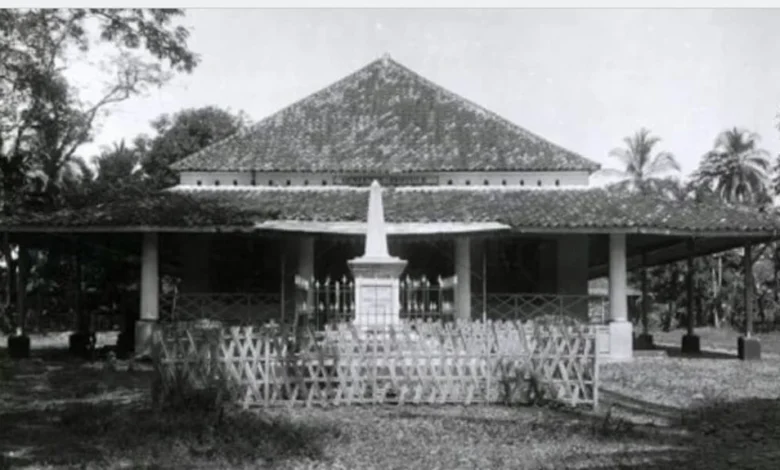
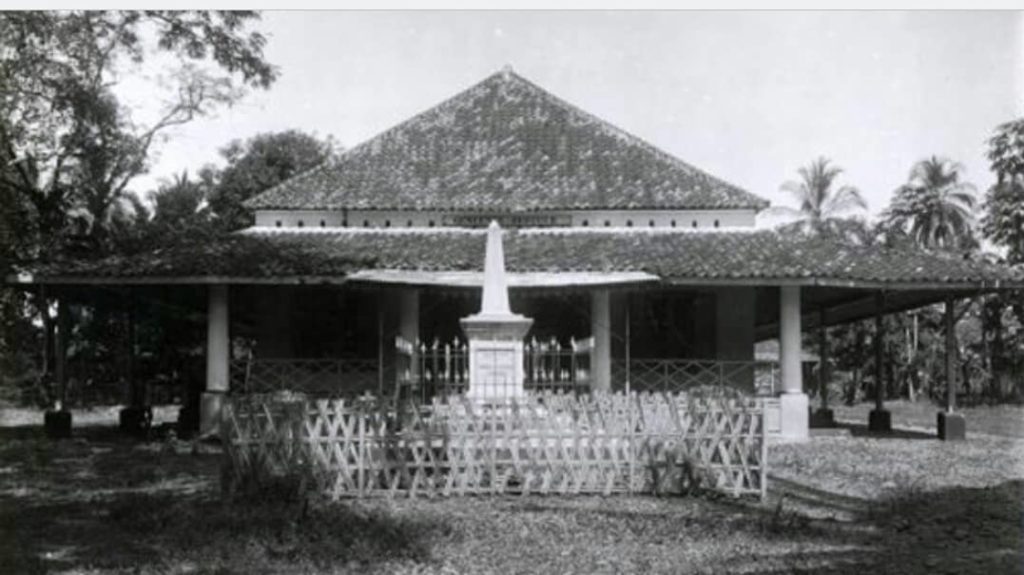
Under this system, the citizens of Depok elected a president every three years through universal suffrage. The government deliberately omitted the position of a vice president; instead, executive duties were streamlined, with the president relying on a dedicated secretary to manage administrative affairs. The administrative heart of this micro-state was established at Kilometer 0, a central point marked by the Depok Monument, located adjacent to the primary government building—a structure that still stands today and now functions as the Harapan Hospital.
The historical record documents four individuals who held the highest office in the Depok Republic, each serving relatively brief, three-year terms:
- Gerrit Jonathans (Inaugurated in 1913): As the first president, Jonathans laid the administrative groundwork for the newly minted municipal government, navigating the delicate balance of maintaining autonomy while existing within the broader framework of the Dutch East Indies.
- Martinus Laurens (Inaugurated in 1921): Laurens oversaw the community during the interwar period, managing the agricultural output and internal social cohesion of the estate as external nationalist movements began to stir across the rest of Java.
- Leonardus Leander (Inaugurated in 1930): Leander’s tenure coincided with the global economic depression, presenting severe fiscal and economic challenges for the agrarian-dependent republic.
- Johannes Matjis Jonathans (Inaugurated in 1952): Serving as the fourth and final president of Depok, Jonathans presided over the terminal phase of the enclave’s autonomous existence amidst the geopolitical tremors of Indonesian independence.
Regrettably, despite the fascinating nature of this administrative experiment, detailed archival records documenting the daily legislative actions, policy debates, and internal socio-political dynamics of each presidential administration remain scarce, leaving historians to piece together the narrative primarily through land deeds, colonial-era newspapers, and genealogical records of the descendants.
Dissolution and Integration Into the Indonesian Republic
The unique political experiment of the Depok Republic came to an end following Indonesia’s hard-won independence from Dutch colonial rule in 1945 and the subsequent recognition of Indonesian sovereignty by the Netherlands in 1949. The existence of a semi-autonomous private European-style estate governed by its own elected president became untenable within the centralized administrative framework of the newly formed unitary state of the Republic of Indonesia.
The final transition of power occurred in 1952. In an official ceremony, the fourth and final president of Depok, Johannes Matjis Jonathans, formally surrendered the private estate’s administrative rights and land titles to the Indonesian government through a formal deed of transfer (akta penyerahan tanah partikulir). With this act, the independent enclave was officially dissolved, and its territories were integrated into the administrative structure of the West Java province, initially as a district within the Bogor Regency before achieving full municipal status (kotamadya) nearly half a century later in 1999.
Implications and Historical Legacy
When evaluated through the lens of modern municipal governance, Depok’s official age as an autonomous city in West Java is relatively young, having crossed its 25th anniversary as an independent municipality. However, when historians incorporate its colonial-era status as a self-governing republic, the region’s organized political history spans over three centuries, predating the modern nation-state of Indonesia by several decades.
The history of the Depok Republic serves as a profound historical case study in early democratic experimentation within Southeast Asia. It highlights a rare instance where subaltern populations—initially bound by the chains of chattel slavery—transitioned not merely into freed laborers, but into citizens exercising the democratic right to elect their own head of state. While largely eclipsed by the grand narratives of the Indonesian national revolution, the legacy of Chastelein’s testamentary vision and the short-lived presidency of Depok remain a captivating testament to the complexity of the archipelago’s colonial past.