Major League Soccer Valuation Boom: Inter Miami Leads Historic Surge in North American Professional Football

The professional landscape of North American soccer, specifically Major League Soccer (MLS), has undergone a tectonic shift in financial valuation, cementing its status as a formidable global commercial entity. According to the latest 2026 valuation report published by Forbes, the league has officially entered a new era of prosperity, characterized by surging club valuations, record-breaking sponsorship deals, and an unprecedented influx of elite international talent. For the first time in the history of the competition, five distinct franchises have surpassed the USD 1 billion valuation threshold, signaling a maturation of the league that was once considered a secondary tier in the global sporting hierarchy.
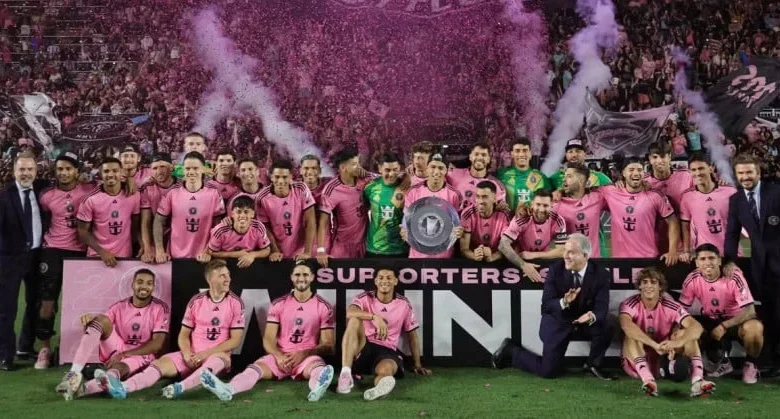
At the vanguard of this financial revolution stands Inter Miami CF. Driven by the "Messi Effect" and an aggressive expansion of its commercial footprint, the club has achieved a staggering valuation of USD 1.35 billion. This figure not only positions Inter Miami as the most valuable franchise in the league but also underscores the transformative power of individual brand equity in professional sports.
The Rise of Inter Miami and the Messi Catalyst
The trajectory of Inter Miami CF serves as a case study for modern sports business development. Ownership, led by Jorge and Jose Mas alongside global icon David Beckham, has successfully leveraged the arrival of Lionel Messi to catalyze exponential revenue growth. In 2022, prior to the arrival of the Argentine superstar, the club generated USD 56 million in revenue. By the conclusion of the 2025 fiscal year, that figure had skyrocketed to USD 200 million.
This growth is not merely a byproduct of shirt sales or ticket premiums. The club’s success on the pitch—most notably the historic capture of their first-ever MLS Cup—has created a virtuous cycle of increased broadcast viewership, domestic partnership renewals, and global exposure. The imminent transition to their permanent home, the state-of-the-art Nu Stadium at Miami Freedom Park, is projected to further enhance this valuation. The new venue is designed to be a multi-purpose entertainment complex, expected to unlock additional revenue streams through premium hospitality and year-round event programming, setting a new benchmark for stadium monetization in the United States.
The Competitive Landscape: LAFC and LA Galaxy
While Inter Miami holds the top spot, the competition for financial and sporting supremacy remains fierce. Los Angeles FC (LAFC), which dominated the valuation charts for three consecutive years, now sits comfortably in second place with a valuation of USD 1.32 billion. Despite being dethroned by Miami, LAFC’s business model remains robust, anchored by a massive supporter base and an aggressive recruitment strategy.
In 2025, LAFC reported revenues of USD 167 million. The club’s recent decision to invest heavily in the transfer market has garnered significant industry attention. The acquisition of Son Heung-min from Tottenham Hotspur for a record-breaking fee of up to USD 26.5 million marks a shift in the league’s transfer philosophy. By targeting established stars from top European leagues, LAFC is clearly positioning itself to capture the lucrative Asian market, a move that aligns with the broader MLS strategy of international brand expansion.
Rounding out the top three is the historical titan of the league, LA Galaxy. With a valuation of USD 1.08 billion and annual revenues reaching USD 106 million in 2025, the six-time MLS Cup champions continue to demonstrate the long-term viability of the MLS franchise model. The Galaxy’s ability to remain a top-tier financial powerhouse despite the emergence of new, high-spending challengers speaks to the strength of their legacy and the stability of their corporate partnerships.
Chronology of MLS Commercial Evolution
The current financial climate in MLS is the result of a deliberate, multi-decade strategy focused on expansion and infrastructure. A timeline of the league’s evolution highlights the milestones that paved the way for the current billion-dollar valuations:
- 1996: The inaugural season of Major League Soccer kicks off with ten teams and a centralized ownership model designed to ensure league survival.
- 2007: The implementation of the "Designated Player Rule" (often referred to as the Beckham Rule) allows teams to sign marquee players outside the salary cap, fundamentally changing the quality of the product.
- 2015-2020: The league experiences a rapid expansion phase, adding clubs in major markets such as Atlanta, Los Angeles (LAFC), and Austin, driving up franchise fees and media rights values.
- 2023: The landmark partnership between MLS and Apple TV for the MLS Season Pass global broadcast deal shifts the league’s media presence to a digital-first model, providing a foundation for international growth.
- 2025: Inter Miami wins their first MLS Cup, and the league officially records five clubs with valuations exceeding USD 1 billion.
Industry Analysis: The Macroeconomic Impact
The surge in valuations is not merely a reflection of individual club performance but a testament to the overall health of the North American sports market. Institutional investors, including private equity firms and sovereign wealth funds, have increasingly looked toward MLS as an asset class with significant upside potential.
The implications for the league are multi-faceted. First, the increase in capital allows clubs to invest in superior training facilities, youth academies, and scouting networks. This internal investment is critical for the long-term goal of transforming the MLS into a "selling league" that develops world-class talent, or conversely, a "destination league" that retains elite players well into their prime.
Second, the rising valuations reflect the success of the league’s real estate development strategy. Clubs like Inter Miami, LAFC, and others are no longer just sports teams; they are property developers. By owning their own stadiums and the surrounding real estate, these clubs are diversifying their portfolios and insulating themselves from the volatility of television rights cycles.
Official Perspectives and Stakeholder Sentiment
While official statements from individual clubs often remain focused on sporting objectives, the sentiment within the league front office suggests a high degree of confidence in the current trajectory. In recent industry conferences, MLS Commissioner Don Garber has frequently highlighted the league’s ability to attract "blue-chip" investors and global partners as proof of the "MLS 4.0" era.
Stakeholders within the player union and broader sporting community have also noted the improved conditions. The increased revenue is leading to higher salary budgets and improved travel and logistics for players, which in turn elevates the competitive standard of the league. However, some analysts caution that the rapid escalation in costs—particularly regarding transfer fees and player wages—requires a sustainable approach to avoid the financial pitfalls seen in other developing leagues globally.
Future Outlook and Strategic Challenges
As the league looks toward the 2026 FIFA World Cup, which will be hosted in the United States, Canada, and Mexico, the visibility of MLS is expected to reach an all-time high. The infrastructure improvements and the current financial momentum are perfectly timed to capitalize on the expected surge in interest.
However, the challenge for the coming decade will be maintaining this growth across the entire league, not just the top-tier franchises. The gap between the "billion-dollar clubs" and the smaller-market teams remains a point of discussion. Ensuring competitive balance while allowing individual clubs to capitalize on their specific market advantages will be the primary directive for league leadership.
Furthermore, the integration of global digital platforms like Apple TV will be tested as the league seeks to convert casual World Cup viewers into long-term subscribers for the MLS Season Pass. The success of this conversion will be the primary metric for the next wave of valuation increases.
Conclusion
The data provided by Forbes for 2026 serves as a definitive marker of the success of the Major League Soccer experiment. With five clubs now commanding valuations in excess of USD 1 billion, the league has proven its capacity to attract significant capital and deliver high-value entertainment. Led by the commercial powerhouse of Inter Miami and the sustained influence of legacy clubs like LAFC and LA Galaxy, MLS has effectively transitioned from a niche domestic competition into a significant player in the global football landscape. As the league continues to refine its commercial model and leverage the upcoming international spotlight, the next phase of its evolution will likely focus on deep-market penetration and the continued professionalization of the sport at all levels of the North American soccer pyramid. The trajectory is clear: MLS is no longer a league of the future; it is a vital, high-value component of the global sporting economy of the present.