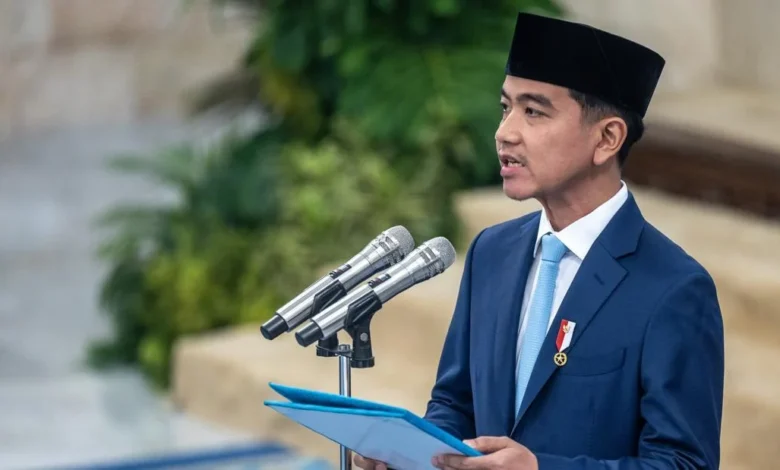
The political landscape in Indonesia has once again been shaken by intense friction between major political factions following renewed calls for the resignation of Vice President Gibran Rakabuming Raka. The controversy, which centers around ongoing disputes regarding academic credentials and constitutional procedures, has drawn sharp reactions from various political parties, most notably the Indonesian Democratic Party of Struggle (PDIP) and the Indonesian Solidarity Party (PSI). While senior members of PDIP have aggressively pushed for Gibran to step down or face potential impeachment proceedings in the House of Representatives (DPR), allied and opposition parties have begun drawing battle lines over the procedural fairness and political motivations behind these demands.
The latest verbal sparring erupted after Andreas Hugo Parera, Chairman of the Central Executive Board (DPP) of PDIP and concurrently Deputy Chairperson of Commission XIII of the DPR, publicly suggested that Vice President Gibran Rakabuming Raka should voluntarily relinquish his position. According to Parera, this step would prevent a protracted constitutional crisis that could further destabilize the national government. However, this hardline stance has met immediate resistance from the Indonesian Solidarity Party (PSI). Bestari Barus, Chairman of the DPP PSI, strongly criticized the urgency demonstrated by PDIP and other political elements, arguing that due process, transparency, and a fair opportunity for direct clarification must precede any drastic measures such as resignation demands or impeachment initiatives.
Background Context and the Origin of the Academic Credential Controversy
To understand the gravity of the current political standoff, one must examine the underlying catalyst that has reignited tensions between the executive branch and certain legislative factions. The controversy revolves around persistent public and political debates regarding the authenticity and validity of Vice President Gibran Rakabuming Raka’s educational background, specifically his secondary and tertiary school diplomas. Critics and political opponents have intermittently raised questions about these documents since the 2024 presidential election campaign cycle, a period marked by intense scrutiny over the eligibility of candidates.
Although the General Elections Commission (KPU) previously verified and cleared all candidates—including Gibran—to contest the election in accordance with prevailing laws and regulations, the issue has refused to dissipate. Opponents of the administration have kept the controversy alive through legal challenges, social media campaigns, and parliamentary inquiries. The debate intensified recently when defenders of the Vice President publicly reiterated his academic history, quoting Gibran’s previous assertions that his possession of legitimate high school and university credentials serves as undeniable proof of his educational qualifications.
Despite these defenses, opposition lawmakers and critical observers argue that the cloud of suspicion surrounding the credentials undermines the moral authority of the vice presidency. This friction has provided an opening for legislative figures from parties outside the ruling coalition—as well as opposition voices within the parliamentary complex—to step up pressure on the former Solo mayor.
Chronology of Recent Political Escalations
The timeline leading up to the current exchange highlights a rapidly deteriorating relationship between the Vice President’s office and critical elements within the legislature:
November 9, 2026: Andreas Hugo Parera, speaking on behalf of PDIP, publicly states that the most viable resolution to the lingering controversy is for Gibran Rakabuming Raka to resign from the vice presidency. Parera warns that if voluntary resignation is not pursued, the DPR may be forced to initiate formal impeachment mechanisms under constitutional provisions. He notes that repeated appeals from various political observers and parliamentarians for accountability have been largely ignored by the executive office and its supporters.
November 10, 2026: PSI counters the narrative pushed by PDIP. Bestari Barus holds a press briefing in which he questions the rush toward impeachment and resignation. Bestari emphasizes that the Vice President has not yet been granted a formal, structured platform to address the allegations directly in an official public hearing or inquiry. He argues that bypassing standard investigative and clarifying stages in favor of immediate political punishment sets a dangerous precedent for Indonesian democracy.
The Debate Over Due Process and Impeachment Mechanisms
The core argument presented by PSI centers on the sanctity of constitutional procedures and the principle of due process. Bestari Barus pointedly asked why political actors, particularly large and influential parties like PDIP, appear to prioritize expedited punitive actions—such as impeachment—over transparent dialogue and factual verification.
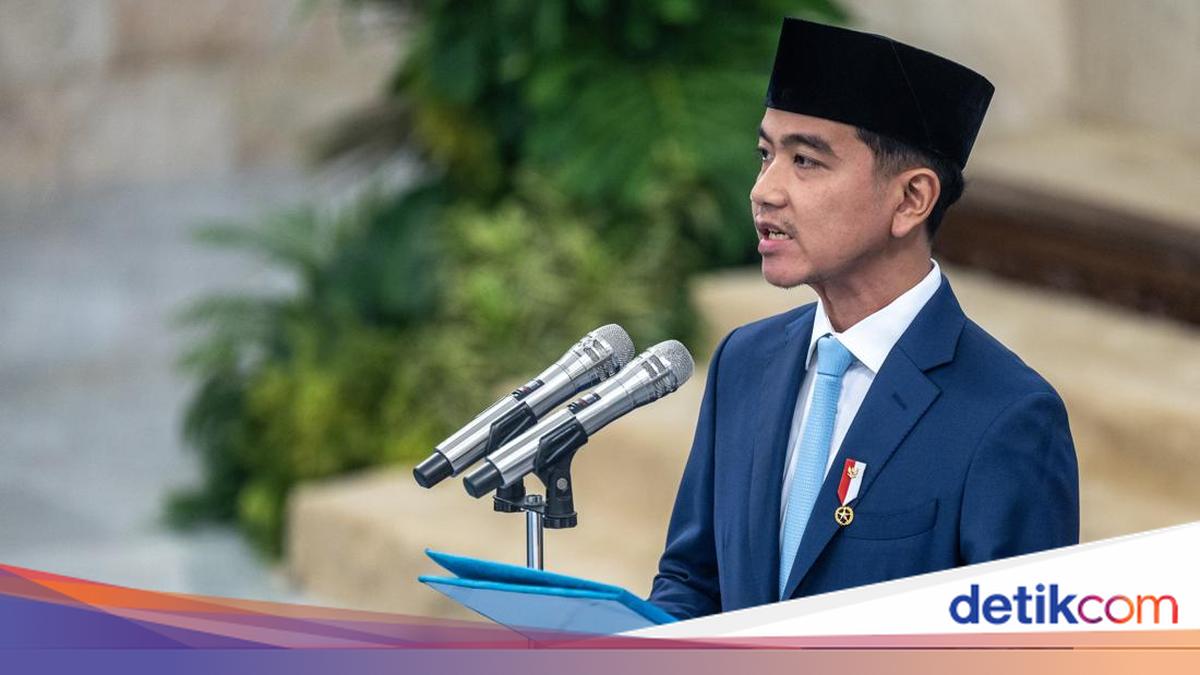
"The diploma controversy, should it really lead to a resignation like that?" Bestari remarked during his statement to journalists. "There must be an opportunity given to the Vice President, Pak Gibran, to clarify directly. That space for clarification has not yet been properly extended to him. Why the sudden rush?"
Under Indonesian constitutional law, specifically Article 7A and 7B of the 1945 Constitution, the impeachment of a president or vice president is a rigorous, multi-tiered process. It requires concrete evidence of severe legal violations—such as treason, corruption, bribery, other major crimes, or moral turpitude—and must pass through several institutional checkpoints, including investigations by the House of Representatives (DPR), a constitutional review by the Constitutional Court (MK), and a final plenary decision by the People’s Consultative Assembly (MPR).
PSI’s stance highlights that while impeachment is a constitutional instrument available to lawmakers, weaponizing it prematurely without establishing factual predicates or allowing the accused official to defend their record sets a troubling precedent. Bestari stressed that major political organizations carry a heavy responsibility to educate the public and uphold institutional integrity rather than engaging in politically motivated shortcuts.
PDIP’s Hardline Stance: Accountability and the Call for Resignation
Conversely, PDIP maintains that the ongoing controversy is no longer merely a personal or administrative dispute, but a systemic issue affecting the credibility of state institutions. Andreas Hugo Parera argued that the administration’s refusal to address the doubts surrounding the credentials in a convincing manner has forced the hands of lawmakers.
According to Parera, numerous stakeholders, including civil society groups and legal experts, have signaled that the prolonged uncertainty is distracting the government from pressing national issues, such as economic recovery, inflation management, and structural reforms. PDIP’s perspective is rooted in the belief that leaders holding the highest offices in the land must possess unquestionable legitimacy. When public trust is severely eroded, voluntary resignation is framed by these critics as an honorable and stabilizing gesture to prevent protracted national turmoil.
Furthermore, PDIP representatives pointed to previous public statements made by Gibran and his supporters, where the Vice President staunchly defended his educational history by asking rhetorically how he could have pursued higher education without a valid high school diploma. Rather than quelling the controversy, PDIP contends that defensive postures without substantive, independently verified documentation have only fueled further skepticism. Some loyalist groups have even declared that they would rather face an impeachment trial than see the Vice President step down voluntarily, a sentiment that PDIP views as defiant and unhelpful for national stability.
Broader Implications for the National Political Landscape
The public disagreement between PDIP and PSI over the future of Vice President Gibran Rakabuming Raka carries significant implications for Indonesia’s political stability and the broader governing coalition.
First, the standoff highlights the deep ideological and strategic fractures persisting in the post-election era. Although the current administration was formed through broad-based political coalitions designed to ensure legislative dominance, underlying tensions between opposition-leaning parties and administration loyalists continue to bubble to the surface. The debate over Gibran’s status serves as a proxy war for larger questions regarding executive power, accountability, and the distribution of political influence.
Second, the controversy risks paralyzing legislative productivity. If parliamentary debates become consumed by discussions surrounding potential impeachment proceedings and academic credential verifications, critical legislative agendas—such as state budget deliberations, labor reforms, and foreign investment policies—could be sidelined. Economic markets and foreign investors closely monitor political stability in Southeast Asia’s largest economy; prolonged uncertainty at the apex of government inevitably generates investor jitters and market volatility.
Third, the exchange underscores the vital importance of institutional channels in resolving political disputes. Legal analysts note that if the academic credential issue is to be put to rest permanently, it must be handled through transparent, legally binding mechanisms rather than being fought solely through media soundbites and partisan posturing. Whether through judicial review, formal parliamentary oversight hearings, or independent administrative audits, establishing an objective truth is essential to restoring public confidence.
As the political maneuvering continues, both sides remain entrenched in their respective positions. While PDIP presses forward with the narrative that accountability demands drastic political consequences, PSI and other pragmatic voices urge caution, procedural adherence, and the preservation of democratic norms. The coming weeks in the DPR will likely determine whether this simmering polemic develops into a full-scale constitutional crisis or subsides into formal, regulated inquiries.