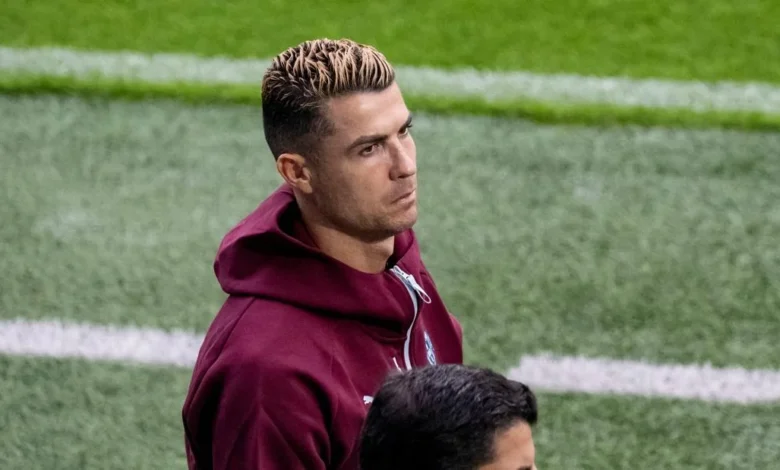
COPENHAGEN — The European football landscape was sent into a state of intense speculation and shock on the eve of a high-stakes fixture, as veteran superstar Cristiano Ronaldo abruptly departed the Portugal national team training camp in Copenhagen. The unexpected exit occurs just hours before A Seleção is scheduled to face Denmark at the iconic Parken Stadium in the third matchday of Group 4 in the UEFA Nations League A.
While the Portuguese Football Federation (FPF) has maintained a strict silence regarding the circumstances surrounding the player’s departure, multiple authoritative reports from European media outlets indicate that the forward chose to board his private jet and return to his residence in Madrid. The sudden move has immediately cast a heavy shadow over the national team’s camp, amplifying underlying tensions between the legendary goalscorer and recently appointed head coach Jorge Jesus.
The unfolding drama threatens to destabilize Portugal’s campaign in the continental tournament, transforming what should have been a standard tactical preparation into a major crisis management scenario for the national football governing body, the coaching staff, and the squad as a whole.
The Build-Up to the Copenhagen Showdown and the Missing Captain
Portugal arrived in the Danish capital with the objective of continuing their strong run in the UEFA Nations League A Group 4. The match against Denmark, slated for Friday, October 2, 2026, represents a pivotal fixture in the group stage. As part of the standard protocol for visiting teams participating in European competitions, the defending champions scheduled an official training session at the Parken Stadium to allow the players to familiarize themselves with the pitch conditions, lighting, and general atmospheric environment of the venue.
However, as the squad stepped onto the turf for the pre-match workout, observers and journalists quickly noticed a glaring omission. Cristiano Ronaldo, the captain, talisman, and all-time leading scorer for the national team, was entirely absent from the session.
Initial assumptions by traveling media suggested a minor fitness concern or load management strategy, a common practice for elite athletes in the latter stages of their careers. Quickly, however, investigative reports from Portuguese broadcaster SIC Noticias revealed a far more dramatic reality. According to the reports, Ronaldo did not merely skip a training session due to physical discomfort; he chose to pack his belongings, leave the team hotel, and depart the Danish capital entirely. His private aircraft, which had been stationed at a local airfield in Copenhagen, was reportedly mobilized specifically to transport him back to Madrid, signaling a decisive break from the team’s immediate activities.
The Roots of Tension: The Norway Match and Tactical Realities
The catalyst for this sudden departure appears to stem from mounting frustration regarding squad selection and tactical deployment under head coach Jorge Jesus. The friction between the veteran player and the managerial staff became public during Portugal’s previous fixture against Norway, played away from home just one week prior.
In that encounter, which saw Portugal secure a hard-fought 2-1 victory, Ronaldo was left entirely on the bench, failing to register a single minute of playing time. For a player who has defined his illustrious career by breaking records, demanding utmost involvement, and commanding a permanent place in the starting lineup regardless of age, the total omission was viewed as a significant snub.
Post-match inquiries directed at Jorge Jesus were met with pragmatic, albeit blunt, explanations. The manager insisted that his decision to bench the 41-year-old forward was purely tactical, dictated by the specific demands of the opponent, the physical pace of the game, and the overarching structural framework he wishes to implement for the national team. Jesus defended his stance by emphasizing that no individual player supersedes the collective tactical needs of the squad, signaling a significant shift in how the national team is managed compared to previous eras.
Furthermore, internal leaks suggest that Jorge Jesus had already communicated to Ronaldo that he would once again be omitted from the starting eleven for the upcoming clash against Denmark. Compounding the issue, tactical projections for the return fixture against Norway, scheduled for October 5, 2026, indicated that the forward might face a similar benching. Faced with the prospect of an extended spell outside the starting lineup, Ronaldo reportedly opted to remove himself from the environment rather than accept a reduced squad role.
Age, Evolution, and the Demands of Modern International Football
The current standoff between Cristiano Ronaldo and the Portugal national team highlights a broader, perennial challenge in elite sports: how legendary athletes manage the twilight of their careers while maintaining the competitive drive that made them icons in the first place.
At 41 years old, Ronaldo continues to defy conventional athletic aging, maintaining an astonishing level of physical conditioning and goalscoring output at the club level. However, the physical demands of modern international football—characterized by high-intensity pressing, rapid transitions, and rigorous tactical discipline—require careful resource management.
Jorge Jesus, known for his demanding tactical systems and uncompromising managerial style, appears to be steering Portugal toward a more dynamic, fluid attacking structure that relies on younger, high-pressing forwards. In Jesus’s tactical vision, maintaining a static target man who does not actively participate in defensive block formation can compromise the team’s defensive shape. While previous managers accommodated Ronaldo’s positional freedom to maximize his lethal finishing ability, Jesus seems prepared to make the pragmatic, albeit politically volatile, decision to phase out the veteran for the benefit of tactical balance.
This philosophical clash was perhaps inevitable. Ronaldo has built his entire career on being the central focal point of every team he has represented, from Manchester United and Real Madrid to Juventus and Al-Nassr, as well as the national team. Accepting a rotational, bench-ready, or situational role runs counter to the ultra-competitive mindset that propelled him to five Ballon d’Or awards and numerous UEFA Champions League titles.
Silence from the Portuguese Football Federation
In the wake of Ronaldo’s departure, the Portuguese Football Federation (FPF) has maintained a cautious and measured silence. As of Thursday evening, no official press release has been issued to clarify whether Ronaldo has officially retired from international duty, whether he has been suspended by the manager for breach of discipline, or if there remains a possibility of reconciliation.
Media attempts to reach FPF president and federation officials have yielded no substantive comments, reflecting the delicate nature of the situation. The federation finds itself in an unenviable position: attempting to protect the authority and autonomy of the national team coach while managing the immense public relations fallout associated with the nation’s most celebrated sporting icon.
In modern football governance, a conflict of this magnitude involving a player of Ronaldo’s stature poses a severe test for federation leadership. A heavy-handed disciplinary response from the FPF could alienate millions of fans and fracture the dressing room, whereas failing to support Jorge Jesus would undermine the manager’s authority and set a dangerous precedent for squad discipline.
Implications for Portugal’s UEFA Nations League Campaign
As the squad prepares to take the pitch at Parken Stadium, the immediate sporting implications of Ronaldo’s absence cannot be ignored. Tactically, the team must now pivot entirely toward a game plan that does not feature their historical talisman, either on the field or as a late tactical option from the bench.
While Portugal boasts an embarrassment of riches in attacking talent—including elite forwards playing in Europe’s top leagues who are fully accustomed to Jorge Jesus’s tactical demands—the psychological impact of losing their captain on the eve of a major match remains an unknown variable. Denmark, known for their defensive solidity, tactical organization, and strong home support, will undoubtedly look to capitalize on any internal discord within the Portuguese camp.
Beyond the immediate match against Denmark, the longer-term implications point toward an accelerated generational transition for Portuguese football. Whether this episode marks the definitive, unceremonious end of Cristiano Ronaldo’s international career or merely a temporary rift that can be mended ahead of future qualification cycles, it signals a watershed moment.
For nearly two decades, the narrative of the Portugal national team has been inextricably linked with Cristiano Ronaldo. As the team steps onto the pitch in Copenhagen without him, Portuguese football faces a stark preview of its inevitable future: a national team learning to navigate the highest levels of international competition in the post-Ronaldo era.
Related posts: