MilkLife Soccer Challenge Garut Seri 1 2026 – 2027 Draws 1,516 Student Athletes and Sparks New Hope for Indonesian Women Football

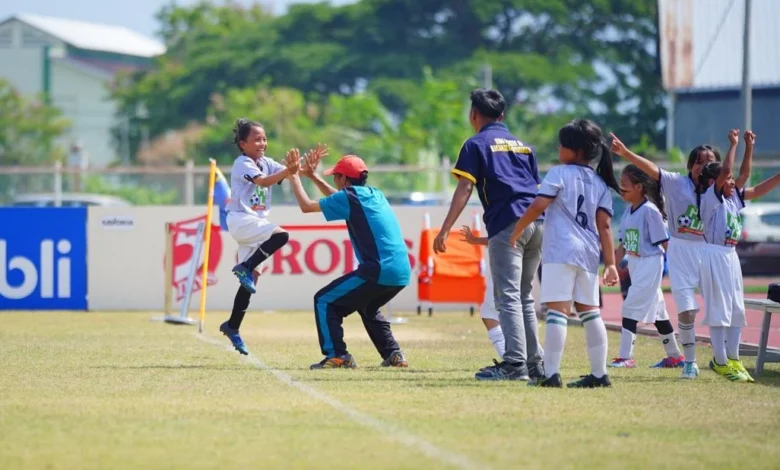
The landscape of Indonesian women’s football has received a significant and unexpected boost from the foothills of West Java, where the MilkLife Soccer Challenge (MLSC) Garut Seri 1 2026 – 2027 officially concluded a week of intense, high-energy competition. Staged across two prominent venues—Lapangan Dalem Bintang RAA Adiwijaya and Stadion Jayaraga—the tournament brought together an astounding 1,516 elementary school girls. This massive turnout not only overwhelmed early logistical projections but also underscored a surging, grassroots appetite for female participation in a sport historically dominated by male athletes in the archipelago.
Over the course of six days, from November 3 to November 8, 2026, young athletes representing various primary schools clashed in competitive group stages and exhilarating knockout rounds. When the dust settled on the final day, SDN 1 Cinunuk emerged as the undisputed champion of the Under-10 (KU 10) category, while SDN 1 Mekarmukti dominated the Under-12 (KU 12) division with a staggering display of athletic prowess and tactical discipline. The tournament’s organizers, participants, and local observers alike have hailed the event as a watershed moment for early-childhood sports development in the region, providing a structured, professional-grade platform for girls to showcase their talents on the pitch.
Exceeding Expectations: A New Frontier in Garut
When the Djarum Foundation and its sports development arm, Bakti Olahraga Djarum Foundation, decided to introduce Garut as a new host city for the MilkLife Soccer Challenge series, they anticipated a receptive audience. However, the sheer volume of participation eclipsed all preliminary forecasts. Registering over 1,500 female students for a regional series serves as a clear indicator that the cultural barriers traditionally discouraging young girls from playing contact and team sports are steadily eroding.
Satia Chandra Wiguna, a representative of the Bakti Olahraga Djarum Foundation, expressed his astonishment and delight at the reception during a press briefing following the tournament’s conclusion. "As a new host city, the reception in Garut was truly beyond our expectations," Satia stated. He emphasized that the immense enthusiasm demonstrated by the 1,516 participants throughout the week-long event generates a vital, positive energy essential for cultivating the future of women’s football in Indonesia.
The structural design of the tournament focuses heavily on nurturing fundamental skills, teamwork, and sportsmanship from an early age. By dividing the competition into distinct age brackets—Under-10 and Under-12—organizers ensure that children compete against peers of similar physical and cognitive development levels, thereby reducing injury risks and maximizing tactical learning opportunities. Satia noted that the standard of play observed across both age groups was remarkably high, highlighting technical abilities that suggest a bright future for these young athletes should they choose to pursue professional pathways later in life.
Chronology and Venue Dynamics: A Week of Intense Competition
The tournament officially commenced on November 3, 2026, transforming the Lapangan Dalem Bintang RAA Adiwijaya and Stadion Jayaraga into vibrant hubs of athletic activity. From the opening whistle of the preliminary matches, the atmosphere was charged with competitive fervor. Hundreds of supporters, including parents, teachers, and schoolmates, packed the sidelines to cheer on the young footballers, whose ages ranged roughly from eight to twelve years old.
The scheduling was meticulously managed to accommodate the large pool of teams while maintaining competitive integrity. The group stage matches occupied the first three days of the event, testing the physical endurance and mental resilience of the players under changing weather conditions typical of the West Java highlands. As teams were culled through the knockout phases, the intensity escalated dramatically leading up to the finals on November 8.
In the KU 10 division, matches were characterized by tight, tactical battles where individual brilliance often decided the outcome. The final showdown between SDN 1 Cinunuk and SDN 2 Muarasanding proved to be a nail-biting affair, keeping spectators on the edge of their seats until the final whistle. Meanwhile, the KU 12 division witnessed a historic campaign by SDN 1 Mekarmukti, whose path to the championship was marked by an unprecedented statistical dominance that left opponents and pundits alike in awe.
Statistical Dominance and Tactical Triumph
While the tournament celebrated participation above all else, the level of competition allowed several standout teams and individual players to etch their names into the history books of the MilkLife Soccer Challenge.
In the Under-12 category, SDN 1 Mekarmukti put on a masterclass in both offensive efficiency and defensive solidity. Under the guidance of Head Coach Irman Muhamad Asmara, the team clinched the championship title with a jaw-dropping record: scoring more than 100 goals across the tournament while maintaining a clean sheet throughout every single match they played. This rare defensive and offensive perfection highlights not only the exceptional talent of individual players but also the rigorous, systematic training regime implemented by the school’s coaching staff.
The driving force behind SDN 1 Mekarmukti’s historic run was Raisya Rena Alfiani, who captured the prestigious Top Scorer accolade by netting an astonishing 49 goals. Raisya’s positional awareness, clinical finishing, and relentless work rate made her an unstoppable force in the opposition’s half. Teammates Naffisa Aqila Himawan and Suci Nurani complemented Raisya’s brilliance, earning the Best Player and Best Goalkeeper awards respectively, cementing SDN 1 Mekarmukti’s total sweep of individual honors in the KU 12 bracket.
In the Under-10 category, the battle for supremacy was fiercely contested. SDN 1 Cinunuk claimed the ultimate prize, outlasting a determined challenge from runner-up SDN 2 Muarasanding. The final was a showcase of youthful grit and determination. Yasmin Nur Anisa of SDN 2 Muarasanding secured the Top Scorer title with 9 goals, demonstrating remarkable composure in front of goal for her age. Meanwhile, the championship-winning side, SDN 1 Cinunuk, saw their stellar teamwork recognized through individual awards: Alika Nayla Putri was named Best Player, and Chelviana Maulia Anten claimed the Best Goalkeeper honors, while SDN 3 Cimareme was awarded the Fairplay Team title for their exemplary conduct on and off the pitch.
Voices from the Sidelines: The Importance of Structured Grassroots Pathways
Behind the tactical brilliance on the field lies months of unseen preparation. Head Coach Irman Muhamad Asmara of SDN 1 Mekarmukti opened up about the dedication required to reach the pinnacle of the tournament. He expressed profound gratitude to his young squad for executing the game plan flawlessly and revealed that the team had undergone rigorous, routine training sessions over the preceding months specifically to prepare for the challenges of the MLSC Garut Seri 1 2026 – 2027.
Irman also underscored the vital role that corporate-backed initiatives play in bridging the gap between school sports and professional development in Indonesia. "I want to express my deepest gratitude to the organizers of the MLSC. For early childhood development, a tournament like this is immensely meaningful," Irman remarked. He emphasized that without dedicated platforms, talented young girls often hit a ceiling where their athletic aspirations stall due to a lack of competitive infrastructure. "When a platform like MLSC exists, talented children finally have a clear pathway toward higher levels of achievement," he added.
Sports analysts have long argued that Indonesia’s potential in women’s football has been bottlenecked by an absence of structured youth leagues. Historically, male football has commanded the vast majority of resources, scouting networks, and institutional attention. Tournaments like the MilkLife Soccer Challenge act as localized scouting hubs, bringing visibility to remote regions like Garut where raw, unpolished talent might otherwise go unnoticed by national talent scouts.
Comprehensive List of Winners: MLSC Garut Seri 1 2026 – 2027
To accurately document the competitive results of the week-long tournament, the official podium finishes and individual accolades are cataloged below:
Category: Under-10 (KU 10)
- Champion: SDN 1 Cinunuk
- Runner-up: SDN 2 Muarasanding
- Semifinalists: SDN 1 Cimareme & SDN Cirapuhan
- Top Scorer: Yasmin Nur Anisa (SDN 2 Muarasanding) – 9 goals
- Best Player: Alika Nayla Putri (SDN 1 Cinunuk)
- Best Goalkeeper: Chelviana Maulia Anten (SDN 1 Cinunuk)
- Fairplay Team: SDN 3 Cimareme
Category: Under-12 (KU 12)
- Champion: SDN 1 Mekarmukti
- Runner-up: MIN 4 Garut
- Semifinalists: SDN 2 Sukatani & SDN 2 Mangkurayat
- Top Scorer: Raisya Rena Alfiani (SDN 1 Mekarmukti) – 49 goals
- Best Player: Naffisa Aqila Himawan (SDN 1 Mekarmukti)
- Best Goalkeeper: Suci Nurani (SDN 1 Mekarmukti)
- Fairplay Team: MI Ma’arif As Shidiqiyyah
Broader Implications for Indonesian Football Development
The resounding success of the Garut series carries implications that stretch far beyond local bragging rights for primary schools. As the national football governing body, PSSI, continues its push to revitalize the national women’s team—known colloquially as the Garuda Pertiwi—the foundational pipeline remains the single most critical variable for long-term success.
Countries that consistently perform well in international women’s football, such as Japan, the United States, and various European nations, owe their dominance to robust, multi-tiered youth competition structures that identify and train players before they reach their teens. Initiatives like the MilkLife Soccer Challenge mirror these international best practices by introducing competitive pressures, tactical awareness, and physical conditioning standards at an age where motor skills and spatial awareness are rapidly developing.
Furthermore, the enthusiastic participation of 1,516 girls in Garut demonstrates a cultural shift in how families perceive female athletes. Parental support is foundational at the primary school level; children cannot participate, travel to venues, or maintain training schedules without the active endorsement of their parents and educators. The crowded sidelines throughout the week at Lapangan Dalem Bintang RAA Adiwijaya and Stadion Jayaraga serve as tangible proof that communities are increasingly embracing sports as a valid, valuable pursuit for young girls.
As the MilkLife Soccer Challenge continues its multi-city circuit, the discoveries made in Garut will undoubtedly serve as a benchmark for future iterations. With hidden gems like Raisya Rena Alfiani scoring nearly fifty goals and defensive units displaying unprecedented tactical discipline, the future of women’s football in Indonesia appears to have found fertile ground in the heart of West Java. Organizers and stakeholders will now look toward subsequent series to maintain this momentum, ensuring that the energy generated in Garut translates into sustained, long-term developmental milestones for Indonesian sports.